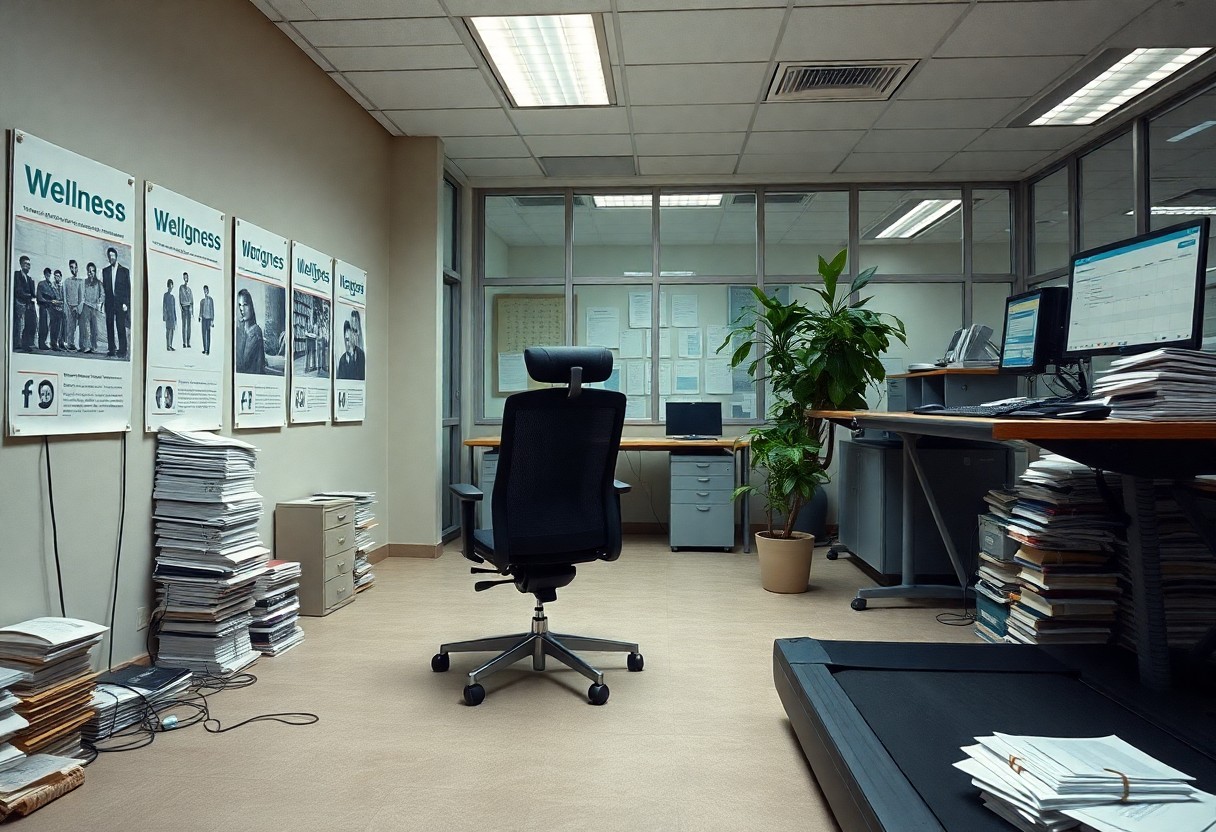
With wellness initiatives on the rise, many employees still report worsening burnout. You’re offered meditation apps while working under relentless deadlines. Yoga classes appear alongside 60-hour workweeks. These programs often ignore the root cause: a work structure built on unsustainable demands. You’re told to manage stress while the system creating it remains unchanged.
Key Takeaways:
- Wellness initiatives such as meditation apps or subsidized gym memberships often fail to reduce burnout when employees face unrealistic deadlines, constant interruptions, or unclear role expectations. A mid-sized SaaS firm found that despite offering free yoga classes, 70 percent of its engineering team reported chronic stress, primarily due to understaffed sprints and last-minute scope changes.
- Work design that prioritizes speed over sustainability creates systemic fatigue, rendering individual wellness efforts ineffective. One healthcare provider saw no improvement in employee well-being scores after launching a mental health stipend program, only later realizing that mandatory 16-hour shifts were the primary driver of turnover.
- Organizations that first restructure workflows-such as implementing meeting-free days, capping workloads, or clarifying decision rights-see measurable improvements in engagement and retention. A manufacturing company reduced absenteeism by 40 percent within six months of introducing protected time blocks for focused work, a change that preceded any formal wellness offering.
The Band-Aid on a Broken Bone
Offering meditation apps while maintaining 70-hour workweeks treats symptoms, not causes. Wellness initiatives cannot compensate for systemic overload. A tech startup’s free yoga classes did nothing to reduce turnover when deadlines remained unrelenting. Relief feels hollow when the source of harm stays unchanged.
Surface level solutions for deep structural wounds
Free smoothies and nap pods distract from unsustainable workloads. Perks do not repair flawed processes. One consulting firm introduced mindfulness training the same month it eliminated paid overtime. Employees saw through the gesture immediately.
The myth of individual resilience in toxic systems
Expecting mindfulness to offset chronic understaffing places blame on workers. Resilience is not a substitute for reasonable expectations. A mid-sized SaaS firm celebrated employee “grit” while ignoring repeated weekend deployments.
Training individuals to breathe through chaos implies the problem lies in their reaction, not the environment. When a financial team collapsed after three consecutive all-nighters, leadership praised their dedication rather than examining workflow design. No amount of personal coping can sustainably counteract structural neglect. The real failure was not in effort, but in management’s refusal to adjust capacity.
The Architecture of Exhaustion
Workplaces designed for constant output ignore the biological reality of human stamina. When recovery time is treated as inefficiency, fatigue becomes the operating system. A mid-sized SaaS firm, for example, saw absenteeism rise 40% after eliminating breaks in the name of productivity, proving that systems overriding rest inevitably collapse under their own strain.
How job demands outpace human biological limits
Extended focus beyond 90 minutes without rest degrades cognitive performance. Your brain operates in natural ultradian cycles, and ignoring them leads to decision fatigue. Surgeons, air traffic controllers, and software developers all face similar thresholds-exceeding them results in measurable drops in accuracy and response time, regardless of motivation or skill.
The invisible weight of poorly defined roles
Unclear responsibilities create chronic low-grade stress that rarely appears in incident reports. You spend hours clarifying who owns a task, rewriting deliverables, or backtracking on duplicated work. This ambiguity activates the same neural pathways as physical threat, keeping cortisol elevated without a clear resolution.
Role confusion persists even in high-functioning teams where job descriptions were never updated after a pivot. You may hold overlapping accountabilities with no escalation path, leading to silent disengagement. One financial consultancy reduced turnover by 30% simply by mapping decision rights, revealing that ambiguity-not compensation-was the primary driver of exit interviews.
The Efficiency Trap
Why optimization often leads to employee depletion
Efficiency gains frequently come at the expense of human capacity, as streamlined workflows compress time and increase output expectations. You absorb the pressure through extended focus and reduced downtime, mistaking speed for progress. Workloads expand to fill the time you save, leaving no recovery window, turning short-term productivity into long-term fatigue.
The cost of constant connectivity on cognitive health
Uninterrupted access to email and messaging fragments your attention, making deep work nearly impossible. You respond to pings instead of prioritizing thinking, eroding mental clarity over time. Continuous partial attention diminishes memory retention and decision quality, silently undermining performance even when output appears steady.
Research shows that frequent task-switching due to digital interruptions can reduce effective IQ during work hours, comparable to missing a full night’s sleep. You may feel busy, but your brain struggles to consolidate information or sustain concentration. Afternoon decision fatigue often traces back to morning notification overload, revealing how connectivity norms degrade cognitive reserves without visible cause.
The Cultural Engine of Burnout
Burnout does not emerge in isolation, it is fueled by workplace norms that glorify overwork and equate long hours with dedication. When teams celebrate employees who answer emails at midnight or skip breaks to meet deadlines, the message is clear: availability matters more than sustainability. A mid-sized SaaS firm, for example, saw turnover spike after managers praised staff who worked weekends, inadvertently signaling that disengagement from personal time was expected.
Performance metrics that prioritize presence over impact
Measuring success by hours logged or responsiveness distorts priorities, rewarding visibility rather than value. When promotions go to those who stay late instead of those who solve critical problems efficiently, employees learn that performance is performative. One engineering team shifted KPIs from daily stand-up attendance to project completion rates, resulting in a 30% drop in after-hours work without sacrificing output.
The erosion of trust through surveillance-based wellness
Wellness apps that track keystrokes, screen time, or bathroom breaks send a damaging message: management monitors behavior, not support recovery. When employees discover their downtime is logged or their focus measured by software, the perception shifts from care to control. A healthcare administrator reported resigning after learning her wellness incentive was tied to data from a mandatory productivity tracker.
Monitoring tools marketed as wellness solutions often become instruments of quiet coercion. If a platform flags reduced keyboard activity as a “wellness risk,” it pressures employees to appear busy even when overwhelmed. This kind of oversight undermines psychological safety, turning wellness into another metric to game. One tech company discontinued its wellness dashboard after internal surveys revealed 68% of staff felt pressured to manipulate their usage data, defeating the program’s original intent.
Re-engineering the Workflow
Work redesign must precede wellness initiatives, as What do Workplace Wellness Programs do? Evidence from … reveals that isolated health interventions fail without structural change. You cannot optimize employee well-being while maintaining workflows that normalize overload, chronic urgency, and reactive tasking. Sustainable performance begins with intentional workflow architecture, not after-the-fact coping strategies.
Prioritizing sustainable output over short-term gains
Chasing quarterly targets at the expense of team capacity leads to accelerated attrition and declining innovation. You achieve more consistent results by protecting focus time and reducing context switching, even if immediate output dips. A mid-sized SaaS firm that shifted to outcome-based milestones saw a 40% drop in employee burnout within one year.
Implementing radical boundaries within the daily schedule
You reclaim cognitive control by enforcing strict start and end times, blocking deep work slots, and eliminating after-hours messaging. These boundaries prevent the erosion of recovery time that undermines both health and performance. One engineering team adopted “no-meeting Wednesdays” and reported a 30% increase in code deployment quality.
Radical boundaries require cultural enforcement, not just personal discipline. When leaders model disconnection-by not sending late-night emails or scheduling meetings outside core hours-teams internalize these limits as norms. You sustain this shift by embedding boundary practices into performance reviews, team charters, and meeting protocols, making them structural rather than optional.
The Management Blind Spot
Leaders often overlook how work itself contributes to poor health, focusing instead on wellness perks while ignoring toxic workloads and unrealistic deadlines. A LinkedIn post by Jonathan Watcham highlights that Why Corporate Wellness Programs Fail and How to Fix Them lies in confronting systemic design flaws, not just offering yoga classes or meditation apps.
Shifting responsibility from the employee to the organization
Wellness should not be an individual burden when the root causes are structural. Expecting employees to meditate through burnout while enduring back-to-back meetings and after-hours emails places unfair accountability on those least able to change their conditions. Real progress begins when companies stop treating stress as a personal failure and start redesigning the demands they impose.
Redefining success beyond the quarterly balance sheet
Profit alone is no longer a sufficient measure of organizational health. Companies that prioritize sustainable performance track metrics like team capacity utilization and meeting load alongside financial results. A mid-sized SaaS firm, for example, reduced voluntary turnover by aligning project timelines with human limits, not just market deadlines.
Long-term viability depends on recognizing that employee well-being directly influences innovation, retention, and customer satisfaction. When leadership evaluates success through operational sustainability rather than short-term output, they create conditions where people can consistently perform at their best without burning out. This shift reframes well-being as a strategic outcome, not a peripheral perk.
Conclusion
You implement mindfulness sessions while expecting employees to respond to emails at midnight, and wonder why engagement drops. A meditation app cannot offset a workload that demands 70-hour weeks. You offer subsidized gym memberships while piling on back-to-back meetings that leave no time for lunch, let alone exercise. You roll out resilience training while using performance reviews to penalize anyone who doesn’t answer messages during vacation. The program isn’t the problem. The work design is.
FAQ
Q: Why do wellness programs fail even when employees participate regularly?
A: Wellness programs often target individual behaviors such as exercise, sleep, or mindfulness while leaving intact the underlying work structures that drive stress. A mid-sized SaaS firm, for example, offered subsidized gym memberships and weekly meditation sessions, yet saw no reduction in turnover or self-reported burnout. Employees described meditating before 7 a.m. stand-up calls and logging 10,000 steps by pacing between back-to-back virtual meetings. The issue lies not in the quality of the wellness offerings but in the unchanged demands of the work itself. When employees are expected to recover from stress they are simultaneously being asked to generate, the cycle continues unabated.
Q: Can offering mental health days or flexible hours fix the problem?
A: Mental health days and flexible scheduling can provide temporary relief but often act as pressure-release valves rather than solutions. One financial services company introduced quarterly mental health resets-four-day workweeks for one week each quarter. Participation was high, but performance reviews still emphasized constant availability and rapid response times. Employees reported using the extra day to catch up on delayed work rather than rest. Flexibility without structural change becomes another form of self-management, asking individuals to optimize around dysfunction rather than eliminating the dysfunction itself. Real improvement requires rethinking how work is assigned, measured, and expected to be completed.
Q: What does a work redesign look like in practice?
A: A manufacturing plant in Ohio reduced chronic overtime and absenteeism not by launching a wellness campaign but by reorganizing shift handoffs and simplifying reporting chains. Supervisors began using visual boards to track workflow bottlenecks, allowing teams to adjust task loads in real time. One team reduced meeting time by 60% simply by replacing daily check-ins with shared digital updates. Another department capped email responses at two per hour during core work blocks, reducing cognitive switching. These changes were not framed as wellness initiatives but as operational improvements. The result was a measurable drop in stress-related incidents and a 22-day increase in average annual leave usage, indicating employees felt safer taking time off.
Leave a Reply