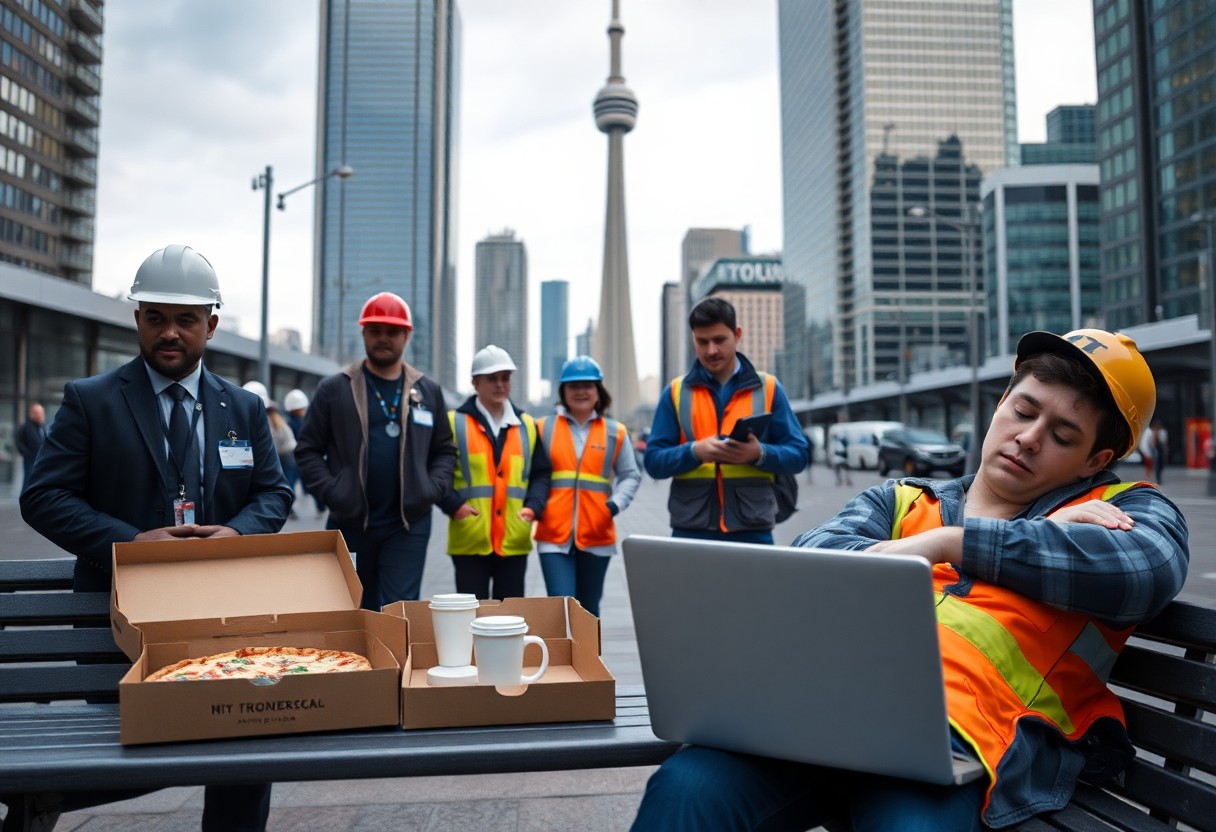
Many days, you leave your desk feeling drained, another week blurred into the next with little relief. Free pizza Fridays and beanbag lounges are common in Toronto offices, yet chronic fatigue and burnout remain widespread. These perks mask deeper issues-understaffing, unrealistic deadlines, and stagnant wages-that no amount of lunchtime calories can resolve. You’re not imagining the exhaustion. It’s systemic.
Key Takeaways:
- A free pizza lunch offered by a Toronto tech startup last quarter did not reduce employee turnover, which remained above 30 percent within 12 months, illustrating how minor perks fail to address deeper workplace dissatisfaction.
- Workers in the city’s service and gig economies regularly report 50- to 60-hour weeks with inconsistent scheduling, a pattern seen in a 2023 advocacy group survey of ride-share and food delivery drivers across five downtown neighborhoods.
- Mental health days offered without structural changes to workload or staffing levels often result in employees returning to the same unsustainable conditions, as seen in a mid-sized marketing agency where burnout-related absences increased by 40 percent despite expanded wellness benefits.
The Corporate Facade
Free pizza Fridays and brightly lit break rooms mask deeper systemic issues. These gestures create an illusion of care while overtime hours quietly increase and permanent roles are replaced with contract positions. You’re expected to feel grateful for crumbs while the structural foundation of fair work erodes beneath you.
Stale Crusts and Empty Gestures
A mid-sized SaaS firm in downtown Toronto hands out gift cards after mandatory weekend deployments. The pizza arrives late, cold, and in insufficient quantity. These moments highlight how symbolic rewards are substituted for fair compensation, especially during crunch periods with no additional pay.
Language of False Gratitude
Leadership emails often open with “We’re so grateful for your dedication” before announcing another round of hiring freezes. That phrasing reframes exploitation as loyalty, turning exhaustion into a virtue and making resistance feel ungrateful.
When executives describe burnout as a sign of passion, they redefine imbalance as commitment. You’ve likely seen performance reviews reward those who silently absorb extra work, while those who set boundaries are labeled “not team players.” This rhetoric doesn’t just misrepresent effort-it actively discourages structural accountability by praising the very conditions that demand change.
The Reality of the Grind
Long hours, shrinking breaks, and unpaid overtime define your workweek, not the occasional free pizza lunch. A pizza chain fined for not paying wages exemplifies how deeply exploitation is embedded-compensation violations are not anomalies, they’re symptoms of a system prioritizing profit over people. This is not an outlier, it’s the norm.
Commuting Through Concrete Canyons
Two hours each day vanish into subway delays and overcrowded buses, time you’ll never recover. Toronto’s transit strain forces you into packed cars and unpredictable schedules, draining energy before your shift even begins. The city’s growth has outpaced infrastructure, leaving commuters exhausted before clocking in.
Erosion of the Private Life
Your evenings blur into reply-all email chains and after-hours Slack pings, boundaries dissolving with every notification. Employers expect constant availability, turning dinner, weekends, and holidays into de facto work time without compensation. Personal time is no longer yours-it’s company-adjacent.
Remote work was supposed to offer flexibility, yet for many Toronto professionals, it has enabled an unrelenting encroachment on personal hours. A mid-sized SaaS firm recently implemented “core collaboration windows” from 7 a.m. to 8 p.m., effectively demanding availability across 13 hours. This normalization of extended digital presence turns homes into satellite offices, erasing the distinction between work and rest. The expectation to respond instantly, even during family time or illness, reinforces a culture where disconnection is seen as disengagement.
The Failure of Superficial Perks
Free snacks, nap pods, and Friday pizza lunches create the illusion of care while sidestepping real employee needs. These gestures rarely offset the strain of long hours and high expectations. What’s offered is comfort, not compensation, and no amount of cold slices can replenish depleted energy or restore work-life balance eroded by relentless demands.
Caloric Rewards for Systemic Exhaustion
Lunchtime pizza may temporarily satisfy hunger, but it does nothing to address the fatigue built up over 60-hour weeks. Feeding tired workers more calories is not a solution-it’s a distraction. One mid-sized tech startup in downtown Toronto saw turnover rise by half within a year, despite maintaining a fully stocked kitchen.
Neglect of Substantial Compensation
Salary stagnation persists even as productivity climbs, particularly in service and tech sectors. Hourly wages have not kept pace with living costs in Toronto, where rent alone consumes an increasing share of income. Perks are no substitute for fair pay, yet many employers treat them as such.
A growing number of employees at a downtown marketing agency recently reported skipping meals to save money, despite access to daily catered lunches. Their contracts include no raises for inflation, no profit sharing, and limited health benefits. The absence of meaningful financial recognition undermines morale far more than the lack of free coffee ever could. Employers who confuse snacks with support risk losing skilled staff to organizations that offer both respect and real compensation.
Demanding Real Structural Change
Real change requires dismantling the systems that equate overwork with dedication. You are not burned out because you lack resilience, but because the structure demands unsustainable output. Equating pizza with care obscures the need for enforceable limits on work hours, transparent promotion paths, and collective input into workflow design. Solutions must be systemic, not symbolic.
Restitution of Time and Autonomy
Time is the one resource you cannot reclaim. Employers who dictate schedules down to the minute erode your ability to make meaningful choices. True autonomy means control over when and how work happens, not just permission to log off after finishing a packed inbox. Flexibility without agency is just a different kind of constraint.
Living Wage Over Pepperoni
A slice of pepperoni does not cover rent, medication, or a child’s school supplies. When wages fail to meet basic needs, free lunch becomes a substitute for fair compensation. You deserve a paycheck that reflects the value you generate, not crumbs disguised as generosity. Survival should not depend on employer goodwill.
Consider a mid-sized SaaS firm that introduced biweekly pizza lunches while freezing salaries for three years. Employee satisfaction scores initially rose, but turnover spiked within 18 months as workers left for roles offering higher pay and remote options. The cost of those pizzas could have funded a 3% wage increase across the board. Instead, leadership mistook appetite for allegiance, and the gesture revealed more about power than appreciation.
Summing up
You see the pattern: free pizza on Fridays, flashy nap pods, and team outings don’t compensate for unsustainable hours, stagnant wages, or the erosion of work-life boundaries. A mid-sized SaaS firm in downtown Toronto recently reported a 40% increase in employee burnout despite doubling its budget on office perks. You are not misled by the snacks. Real change means collective bargaining, enforceable limits on after-hours communication, and living wages-not performative generosity that masks deeper systemic failures.
FAQ
Q: Why are pizza lunches ineffective in addressing worker fatigue in Toronto?
A: Pizza lunches may offer a brief moment of relief but do not address the root causes of exhaustion such as excessive workloads, long commutes, and inflexible schedules. A mid-sized SaaS firm in downtown Toronto introduced biweekly pizza events to boost morale, yet employee turnover remained high and internal surveys showed no improvement in perceived work-life balance. These gestures often serve more as public relations tools than meaningful interventions, leaving systemic issues like understaffing and after-hours expectations unchallenged.
Q: What structural changes would have a measurable impact on worker well-being in urban workplaces?
A: Real improvements come from policy shifts such as standardized four-day workweeks, transit subsidies, and enforceable limits on after-hours communication. One unionized legal aid office in the city implemented a firm-wide email blackout from 7 p.m. to 7 a.m., resulting in a noticeable drop in self-reported burnout within three months. Remote work options with company-provided ergonomic setups and mental health days built into contracts have also demonstrated sustained benefits in sectors like tech and education.
Q: How does Toronto’s cost of living amplify workplace fatigue?
A: High rent, rising grocery prices, and overcrowded transit force many workers to take on second jobs or longer hours just to maintain stability. A 2023 city housing report found that over half of renters spend more than 50 percent of their income on rent alone, increasing financial pressure to accept demanding roles. This economic strain makes employees less likely to push back on overtime or advocate for better conditions, effectively trapping them in cycles of fatigue masked by occasional free meals or office perks.
Leave a Reply