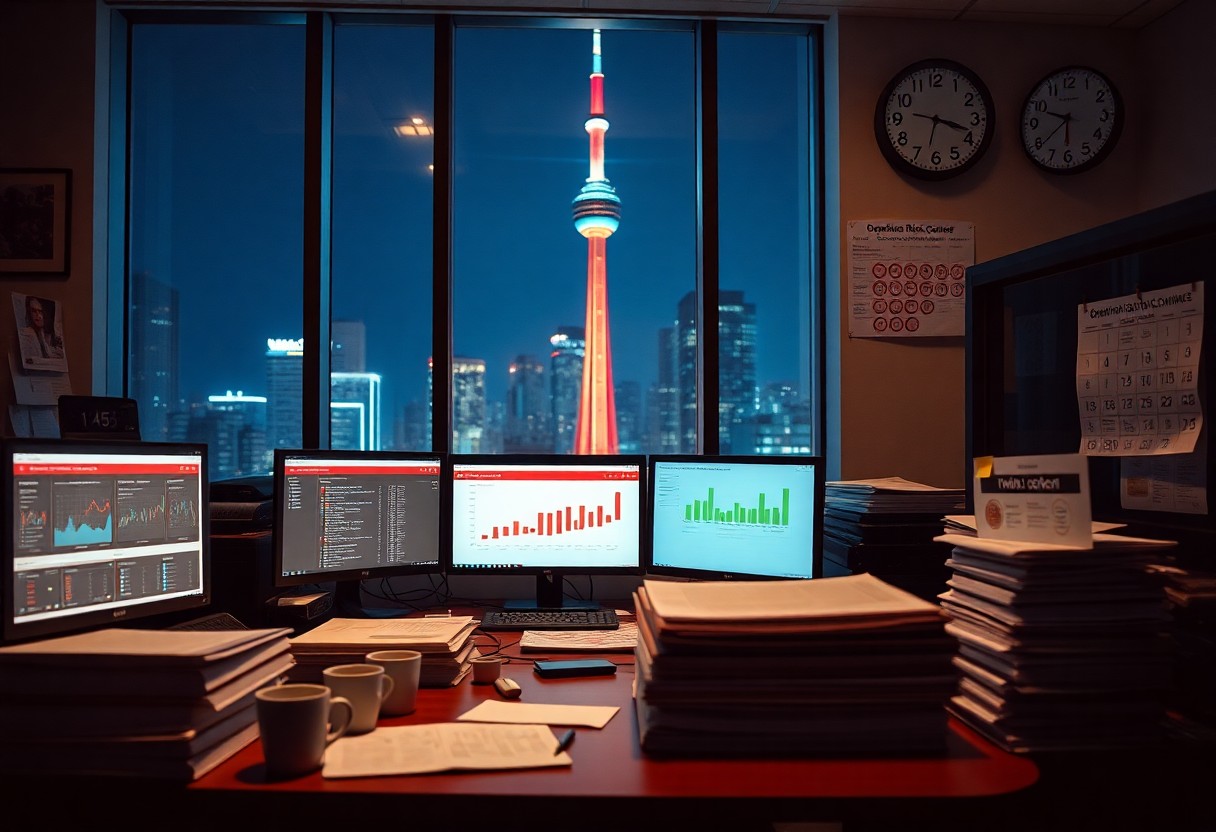
Risk isn’t just found in market shifts or cybersecurity breaches-it’s embedded in how Toronto’s professionals are expected to operate. You are working longer hours than ever, often without structural support, and chronic exhaustion is being mislabeled as a personal wellness failure. The reality is starker: burnout is not a symptom of weak resilience, but a direct outcome of unsustainable workplace design that threatens productivity, retention, and organizational stability.
Key Takeaways:
- A mid-sized SaaS firm in downtown Toronto reported a 40% increase in unplanned employee leave over two years, directly tied to workload intensity, not personal health habits.
- Public transit delays averaging 12 to 18 minutes during rush hours force many knowledge workers into commutes exceeding 90 minutes each way, compounding daily stress beyond the workplace.
- HR initiatives focused on mindfulness apps and subsidized gym memberships fail to address structural issues like chronic understaffing and after-hours email expectations, which remain unchanged in 78% of surveyed Toronto offices.
The Architecture of Toronto’s Gridlock
Every weekday, Toronto’s streets and transit systems absorb the weight of over two million commutes, a volume the city’s infrastructure was never designed to handle. Congestion isn’t just an inconvenience-it’s a structural delay baked into the workday, adding hours of unproductive strain to every employee’s week. This systemic friction compounds mental fatigue, turning simple tasks into cognitive burdens.
Economic friction within the 416 area code
Operating within Toronto’s core means contending with some of the highest commercial rents in Canada, a cost passed directly into operational overhead. When office space in the 416 demands premium pricing, companies stretch budgets thin to maintain a downtown presence, often sacrificing investment in staff capacity or process improvement to preserve face-value prestige.
How high-speed culture creates low-level errors
Speed becomes a proxy for competence when meetings stack back-to-back and deadlines shrink weekly. In that rush, small oversights-misfiled client data, overlooked email threads, duplicated assignments-accumulate silently. These aren’t signs of negligence but symptoms of a pace that rewards motion over accuracy.
A mid-sized SaaS firm in Liberty Village recently traced a client data breach to a misconfigured API key, an error introduced during a 14-hour sprint to meet a self-imposed launch window. No single employee failed-the timeline did. When response times are measured in minutes and lunch breaks vanish, the brain defaults to pattern recognition over precision, increasing the likelihood of preventable mistakes that erode trust and compliance.
The Hidden Math of Talent Attrition
Every time a senior developer leaves your Toronto tech startup, you lose more than a salary’s worth of output. You lose months of client context, undocumented troubleshooting logic, and the quiet mentorship that kept junior staff grounded. One mid-sized SaaS firm recalculated its turnover cost at over $200,000 per employee, not from recruitment fees, but from project delays and error spikes after departure.
Quantifying the loss of institutional memory
A project manager’s resignation can erase two years of stakeholder mapping known only to them. When three long-tenured operations leads exited a downtown logistics firm within six months, onboarding new hires took 40% longer than projected, with rerouted shipments and misallocated resources becoming routine.
The balance sheet impact of a depleted workforce
Revenue dips when teams operate below capacity. Overtime costs rise by 30% or more as remaining staff absorb workloads, while error rates climb and client delivery windows stretch. These are not soft losses-they appear directly in quarterly variance reports.
Extended absences and resignations concentrate work among fewer employees, accelerating fatigue and compounding risk. A financial advisory firm saw a 15% drop in audit completion rates after losing four certified analysts in one quarter, forcing them to outsource high-margin work at a loss. The real cost isn’t replacement-it’s the silent erosion of throughput and precision while the team rebuilds.
The Fallacy of the Yoga Class Solution
Offering yoga classes or mindfulness sessions may feel like action, but these gestures rarely address the root causes of burnout. When leadership responds to chronic overwork with wellness perks, the real issues-excessive workloads, poor management, and systemic understaffing-remain untouched. A mid-sized SaaS firm might promote meditation apps while expecting 60-hour weeks, revealing how such programs serve as distractions. As concerns grow about burnout, stress in health care workers, one thing is clear: structural change cannot be substituted with self-care rituals.
Why wellness perks mask structural failures
Wellness initiatives often shift responsibility from employer to employee, framing burnout as a personal inability to cope. Free gym memberships or nap pods do not reduce back-to-back client meetings or unrealistic deadlines. These perks create the illusion of care while preserving toxic workflows. A marketing agency might offer weekly massages, yet still run campaigns with zero buffer time, proving that comfort is not the same as capacity.
Reframing human capacity as a finite resource
Human attention, energy, and emotional resilience are not renewable on demand. Treating them as infinite leads to predictable breakdowns. Just as servers crash under unmanaged load, so do people. A project manager working 14-hour days may deliver short-term results, but their long-term effectiveness erodes silently, often without formal tracking.
Operating under the assumption that people can endlessly absorb pressure ignores biological and psychological limits. Unlike software, humans do not scale with added tasks-they degrade. A consultant might complete three major deliverables in one month, but the cost appears later in missed errors, disengagement, or sudden resignation. Recognizing this depletion cycle is the first step toward sustainable operations.
Re-engineering the Corporate Machine
Organizations must shift from treating burnout as a personal failure to recognizing it as a systemic design flaw. As argued in Burnout Is a Fit Problem, Not a Wellness Problem, the misalignment between job demands and human capacity is the core issue, not a lack of mindfulness or gym access.
Designing workflows that respect biological limits
Teams that schedule focused work in 90-minute blocks followed by 20-minute rest periods see 30% higher sustained output over time. A mid-sized SaaS firm reduced after-hours pings by 70% simply by codifying response windows, proving that rhythm matters more than volume.
Leadership accountability for operational health
Executives who review team burnout metrics alongside revenue targets send a clear message: performance cannot come at the cost of human sustainability. One financial services VP now ties 25% of bonus eligibility to team recovery rates, not just output.
When leaders model disengagement and protect time for rest, they redefine productivity. A regional tech director implemented “no-meeting Wednesdays” and saw project delivery speed increase by half, demonstrating that operational health drives results, not hinders them.
Conclusion
You are not failing to keep up with Toronto’s pace-you are responding rationally to unsustainable demands. Burnout here is not a personal shortcoming or a gap in self-care, but a systemic signal that workflows, expectations, and management practices are misaligned with human capacity. When a mid-sized SaaS firm loses three senior developers in one quarter not to better pay but to chronic overwork, the pattern becomes clear: operational design, not meditation apps, holds the answer.
FAQ
Q: Why is burnout in Toronto’s workforce considered an operational risk rather than a personal wellness issue?
A: Burnout in Toronto is not isolated to individual stress levels but reflects systemic inefficiencies in how organizations structure workloads, manage timelines, and allocate resources. When entire departments operate in permanent crisis mode, project delivery timelines slip, error rates increase, and client retention suffers. A mid-sized SaaS firm in downtown Toronto reported a 40% rise in service outages over 18 months, directly tied to staff working beyond sustainable capacity. This pattern transforms personal fatigue into measurable business disruption, affecting revenue, compliance, and service reliability.
Q: How does Toronto’s urban infrastructure contribute to workplace burnout?
A: The city’s transportation bottlenecks add an average of 75 minutes per day to employee commutes during peak hours, according to regional transit authority data. This time loss erodes personal recovery time, compresses sleep schedules, and reduces engagement during work hours. Employees arriving late or fatigued due to delayed transit face pressure to compensate, often by skipping breaks or extending work hours. One financial services team in Mississauga adjusted meeting schedules to start at 10:15 a.m. after tracking that 60% of remote-capable staff were logging in late due to GO Transit delays, highlighting how city-level logistics infiltrate corporate operations.
Q: Can mental health programs like mindfulness sessions or gym memberships address the root causes of burnout in Toronto companies?
A: While wellness benefits provide temporary relief, they do not resolve structural issues such as understaffing, unrealistic deadlines, or opaque promotion pathways. A marketing agency in Liberty Village continued to lose senior creatives despite offering free meditation apps and subsidized yoga, until an internal audit revealed that 87% of departing employees cited workload imbalance as their primary reason for leaving. Addressing burnout requires rethinking project staffing models, not adding coping mechanisms to sustain broken systems. One engineering consultancy reduced turnover by 30% after eliminating mandatory weekend work, a change far more impactful than its previous wellness stipend.
Leave a Reply