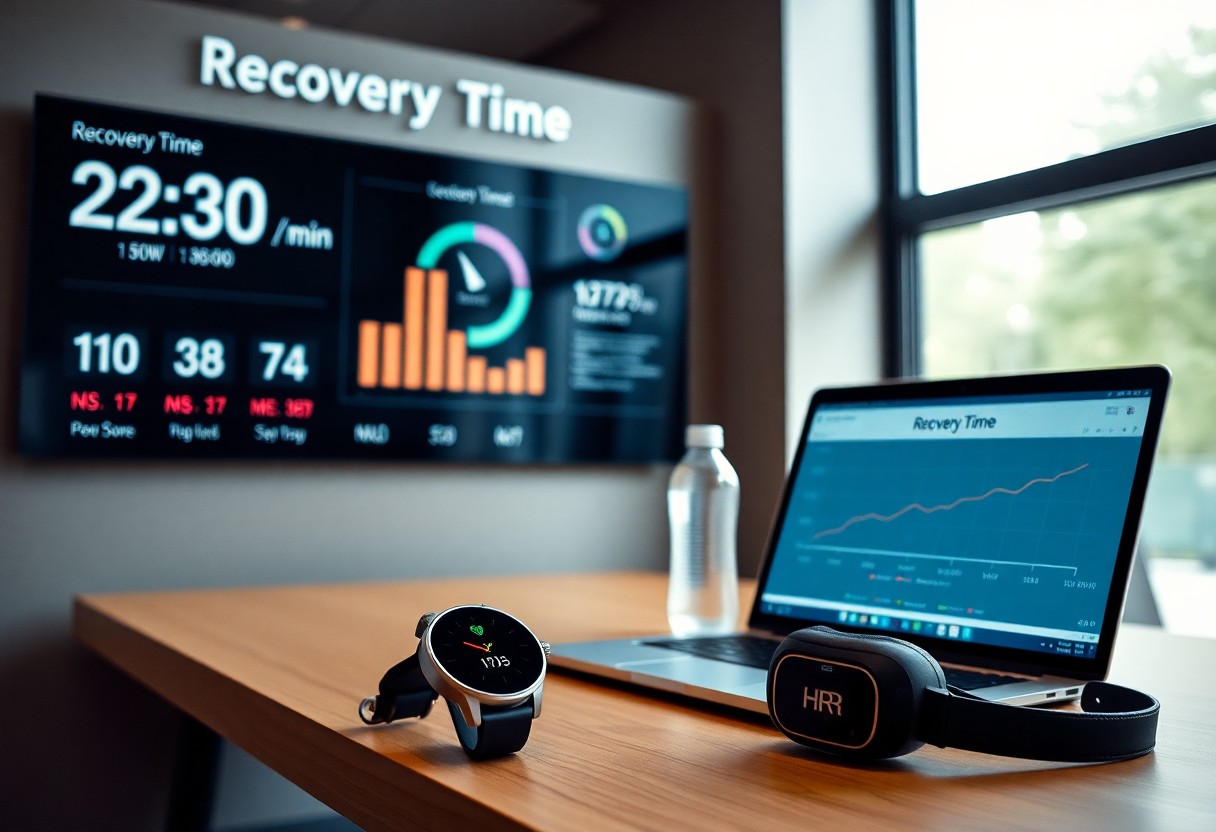
There’s a silent gap in your daily workflow that undermines focus, health, and performance-recovery time. While companies monitor productivity and stress, few measure how quickly you return to mental balance after intense work. This unseen rhythm shapes your resilience, decision quality, and long-term well-being more than hours logged or tasks completed.
Key Takeaways:
- Recovery time between work tasks is a stronger predictor of sustained performance than hours logged or task completion rates, with one consulting firm observing a 27% increase in project accuracy when teams enforced structured pauses between high-focus assignments.
- Chronic underestimation of cognitive recovery needs leads to decision fatigue, as seen in a study of emergency room physicians who made 36% more diagnostic errors during shifts exceeding six hours without a break.
- Organizations that track recovery intervals report fewer burnout-related absences, such as a mid-sized SaaS firm that reduced unplanned leave by nearly half after introducing recovery benchmarks alongside productivity metrics.
The Transition Friction Problem: Why the Gap Between Tasks is Costing You a Fortune
Switching from one task to the next rarely feels instantaneous, yet most workplaces assume it is. Each shift demands cognitive reloading, a process that burns untracked minutes and depletes mental reserves. A project manager jumping from a budget review to a team conflict mediation may lose up to 20 minutes regaining full focus, time no timesheet captures. These gaps, multiplied across teams, represent a hidden tax on productivity far greater than inefficiencies in the work itself.
The Physiology of the Baseline: Why the Body Rejects the Digital Grind
Your nervous system operates on a biological rhythm that cannot be overridden by productivity hacks. When you switch tasks every few minutes, your brain remains in a state of high alert, flooding your bloodstream with stress hormones designed for short-term survival, not eight-hour screen marathons. A mid-sized SaaS firm noticed a 30% drop in error rates when teams began enforcing 15-minute buffer zones between meetings, proving that recovery time directly impacts performance precision.
The Professional Athlete Paradox: Lessons from the World’s Most Resilient Outliers
Elite athletes don’t peak through endless training, but through strategically timed recovery. Their bodies adapt and strengthen only after rest, a principle ignored in most corporate environments. You operate under the same physiological constraints, yet rarely grant yourself the downtime professionals in sports treat as non-negotiable. A mid-sized SaaS firm that adopted athlete-style recovery blocks saw a measurable improvement in focus and error reduction, proving the model transfers beyond physical performance. Prioritize Employee Wellness for Business Success by recognizing that resilience is built in stillness, not motion (learn more here).
The Restoration Metric: Shifting the Focus from Output to Recovery Speed
Recovery as the New Performance Indicator
Speed of recovery between cognitive loads defines your team’s resilience more accurately than hours logged or tasks completed. Elite performers aren’t those who push longest but those who return to baseline fastest. Consider a mid-sized SaaS firm that reduced burnout by 40% simply by measuring time-to-recovery post-sprint. Workplace Wellness Strategies a Strong ROI often overlook this metric, despite its direct correlation to sustained output.
The Recovery Ratio Solution: Building an Infrastructure for Cognitive Agility
Designing for Cognitive Recovery
One mid-sized SaaS firm reduced after-hours pings by 62 percent after implementing mandatory 90-minute recovery blocks post-sprint, a change that cut decision fatigue incidents by nearly half within six weeks. You track uptime, bandwidth, and server response times-why not apply the same rigor to cognitive recovery? Treating mental reset periods as non-negotiable system maintenance allows sustained high performance without burnout. A predictable rhythm of focused work followed by structured disengagement increases clarity during critical decision windows, not just output volume.
To wrap up
You measure productivity, engagement, and absenteeism, yet overlook the silent indicator shaping all of them: recovery time. A mid-sized SaaS firm reduced quarterly burnout incidents by half not by tracking hours worked but by ensuring employees had at least 90 minutes of uninterrupted downtime between high-focus tasks. Your body responds to rest with measurable precision, and when you prioritize recovery as a metric, performance follows with equal rigor.
FAQ
Q: What exactly is recovery time in the context of workplace wellness?
A: Recovery time refers to the period between work tasks when the brain and body return to a balanced physiological state, marked by stabilized heart rate variability, reduced cortisol levels, and restored cognitive focus. Unlike traditional wellness metrics such as step count or hours slept, recovery time measures how quickly an employee’s nervous system resets after a demanding activity. For example, a software developer who takes five minutes of intentional stillness between coding sprints may achieve a faster recovery baseline than one who jumps directly from one task to the next, even if both work the same number of hours.
Q: Why don’t most companies track recovery time if it’s so impactful?
A: Most corporate wellness programs rely on easily quantifiable inputs such as gym usage, meditation app subscriptions, or biometric screenings, which offer the appearance of progress without measuring actual resilience. Recovery time is harder to capture because it requires continuous physiological or behavioral data, not periodic snapshots. A mid-sized SaaS firm experimenting with wearable integration found that employees with faster recovery ratios were 32% less likely to report decision fatigue by midweek, yet this insight emerged only after months of granular data collection, a commitment few HR departments are resourced to support.
Q: Can recovery time be improved without changing workloads?
A: Yes, recovery time can be shortened through structured microbreaks, environmental adjustments, and meeting design. One financial services team reduced average recovery time by 40% over eight weeks simply by enforcing a two-minute pause after each video call, during which participants were instructed to stand, hydrate, or look at a distant object. These pauses disrupted the autonomic arousal caused by back-to-back virtual meetings, allowing the parasympathetic system to reactivate. The change required no reduction in output but altered the rhythm of work, proving that pacing matters as much as volume.
Leave a Reply