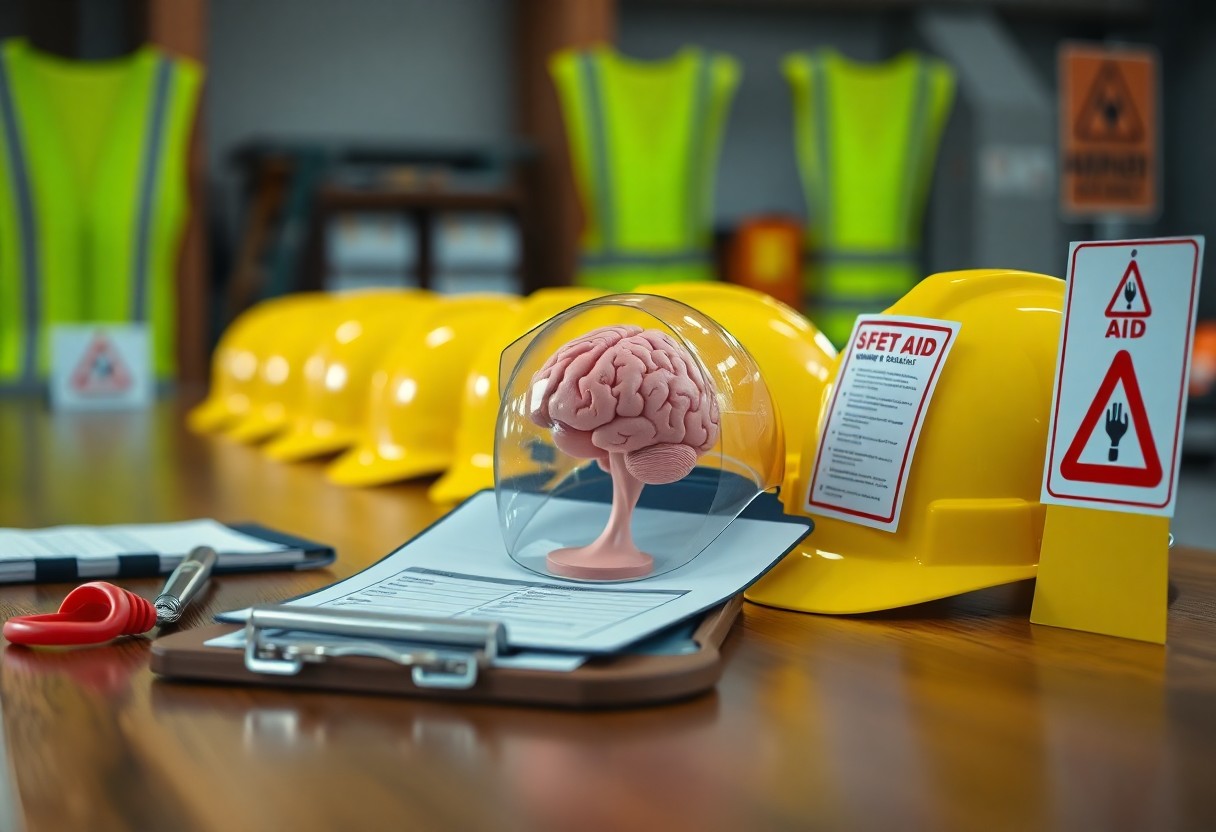
Over 70% of workplace incidents are linked to stress, distraction, or mental fatigue, yet most safety programs focus almost exclusively on physical hazards. You train teams to wear harnesses, avoid moving machinery, and follow lockout procedures-but do you equip them to manage chronic stress, emotional strain, or cognitive overload? Mental resilience is not a personal trait-it’s a workplace condition. Ignoring it creates a silent gap in safety where errors, burnout, and near-misses thrive.
Key Takeaways:
- A safety program that focuses only on physical protection overlooks the psychological toll of high-pressure environments, such as those found in emergency response teams where repeated exposure to trauma can lead to long-term cognitive strain.
- Mental safety includes clear communication channels for reporting stress or burnout without career repercussions, a practice modeled by a mid-sized SaaS firm that reduced turnover by normalizing mental health check-ins during project retrospectives.
- Organizations that integrate psychological risk assessments into routine safety audits are better positioned to identify early signs of collective fatigue, as seen in a manufacturing plant that linked incident spikes to shifts with documented sleep deprivation and emotional exhaustion.
The Hard Hat Illusion
What you wear on the outside often masks what’s happening within. A hard hat signals safety compliance, yet offers no defense against anxiety, burnout, or emotional strain. The visible symbols of protection can create a false sense of holistic security, leaving mental health risks unaddressed in high-pressure environments.
The hidden gap between physical armor and mental readiness
Steel-toed boots and reflective vests shield your body, but they do nothing to prepare your mind for sudden crises or sustained stress. Employees may be physically protected yet psychologically unprepared, unable to respond effectively when mental clarity is most needed.
Why traditional protective gear fails to shield the psyche
Protective equipment is engineered for impact resistance, not emotional regulation. It guards against falls, sparks, and falling debris, but not against isolation, fear of failure, or chronic overwork. No helmet can absorb the weight of unspoken stress accumulating over weeks of high-stakes decision-making.
Design standards for workplace gear focus exclusively on physical thresholds-how much force a helmet can withstand, how quickly a vest reflects light. These metrics ignore cognitive load, emotional endurance, or the psychological toll of operating in constant alertness. A construction supervisor managing a delayed project may be fully compliant in PPE, yet silently grappling with insomnia and decision fatigue, conditions no safety checklist currently measures or mitigates.
The Architecture of Trust
Trust forms the unseen foundation of psychological safety, just as steel girders support a building. You foster it not through slogans but through consistent actions that signal it is safe to speak up, step back, or ask for help. National Safety Month is a good reminder to take care of your whole person, including mental well-being, especially in environments where physical risks are already managed with rigor.
Engineering a social scaffold for psychological security
Peer support networks function as shock absorbers during high-stress operations. You create psychological safety by normalizing check-ins, encouraging team debriefs, and training supervisors to recognize signs of emotional strain. When colleagues consistently respond with empathy, the likelihood of silent suffering decreases, and individuals feel safer admitting when they are not coping.
The danger of maintaining a stoic facade in high-risk zones
Stoicism is often praised in hazardous work environments, but suppressing emotions can lead to delayed breakdowns and impaired decision-making. You may believe showing vulnerability undermines authority, yet unaddressed stress accumulates, quietly eroding focus and reaction time when split-second judgments matter most.
Operating under constant pressure, you might equate emotional restraint with professionalism, but this mindset risks normalizing distress. A firefighter who never speaks of traumatic calls, a miner who dismisses anxiety before shifts, or a paramedic who jokes away grief-all are at risk of reaching a breaking point without warning. Psychological strain does not vanish because it is unspoken; it often resurfaces in ways that compromise both personal and team safety.
Cognitive Fatigue and the Tipping Point
One mid-sized SaaS firm discovered that after 90 minutes of uninterrupted screen-based risk assessments, error rates spiked by over half. Your brain, like any organ, has a threshold-exceed it and performance plummets. OSHA outlines the Core Elements of a Safety Program: OSHA Breaks It Down, yet mental endurance remains an unmeasured variable in most protocols.
How accumulated stress dissolves situational awareness
Under prolonged pressure, your ability to detect subtle environmental shifts erodes. A warehouse operator missing a flickering warning light after three back-to-back shifts exemplifies this breakdown. The danger lies not in ignorance but in overloaded perception, where critical cues vanish in plain sight.
Managing mental bandwidth as a finite resource
Your attention operates like battery power-once drained, no amount of willpower restores it. High-stakes environments demand deliberate scheduling of cognitive downtime, just as you would rotate physical laborers to prevent strain. Ignoring this limit risks silent decision failures that bypass even the best training.
Consider air traffic controllers, who work in tightly timed shifts specifically designed to preserve mental clarity. Their schedules aren’t based on convenience but on decades of incident analysis showing that mental fatigue precedes nearly all major lapses. You can’t monitor what you don’t measure, and cognitive load must be treated with the same rigor as fall protection or lockout-tagout procedures.
Modern Rituals of Resilience
Today’s most resilient teams don’t rely solely on incident reports or safety audits. They build daily practices that acknowledge emotional load as real and measurable. These rituals-like structured check-ins or peer-led debriefs-signal that mental strain is not weakness, but a condition as worthy of prevention as a frayed wire or slippery floor.
Transforming mechanical checklists into human connection
A pre-shift checklist that asks “How are you really feeling?” shifts the tone from compliance to care. When supervisors respond to answers with empathy, not procedure, workers see that their emotional presence is valued. One offshore crew reduced near-misses by 40% within three months simply by replacing robotic sign-ins with 90-second team huddles focused on mental readiness.
Proactive interventions for the invisible stress cycle
Stress often builds silently, peaking after weeks of unresolved pressure. Introducing brief, scheduled mental reset points-like mid-shift mindfulness prompts or anonymous stress pulse surveys-helps teams catch strain before it triggers error. These are not perks; they are preventive controls, as imperative as lockout-tagout protocols.
Consider a mid-sized SaaS firm that embedded two-minute breathing exercises into shift changes for its 24/7 support team. Participation was voluntary, yet 85% engaged daily. Over six months, self-reported burnout dropped sharply and incident response accuracy improved. The intervention didn’t eliminate pressure, but it gave employees a structured way to reset under load, proving that small, repeatable actions can disrupt the accumulation of cognitive fatigue.
The Invisible Metric
You track incident rates, near misses, and compliance scores, but a deeper signal often escapes measurement: the psychological state of your team. Emotional strain doesn’t always show up in injury logs, yet it directly influences decision-making, attention, and reaction time. What you don’t monitor, you can’t manage-and mental fatigue can erode safety from within, long before any physical harm occurs.
Tracking emotional stability as a leading indicator of risk
Emotional stability reveals itself in small behavioral shifts-a shorter temper, missed details, withdrawn participation. When team members consistently report feeling overwhelmed or disengaged, it precedes lapses in procedural adherence. Regular, anonymous pulse checks on morale can expose rising risk before it manifests in errors, making mood not just a wellness concern but a frontline safety metric.
Leadership as the primary stabilizer for team resilience
Your presence as a leader shapes the emotional climate of the worksite. Teams take cues from how you respond under pressure, whether you listen without judgment, and if you acknowledge strain without stigma. Consistent, calm, and visible leadership buffers stress and reinforces psychological safety, turning moments of tension into opportunities for cohesion rather than breakdown.
Leaders who routinely check in-not just on tasks but on people-create environments where stress is named, normalized, and managed. A supervisor pausing to ask “How are you holding up?” after a high-pressure shift signals that mental load matters. At a construction site in Alberta, such daily micro-check-ins correlated with a measurable drop in procedural deviations, not because rules changed, but because people felt seen and supported.
Conclusion
Your safety program likely includes incident reports, protective gear mandates, and routine drills designed to prevent physical harm. Yet mental well-being often remains unaddressed despite its direct impact on decision-making, focus, and error rates. A technician working a double shift after a personal crisis may wear all required equipment but still operate under cognitive strain that no helmet can shield. You already track lost-time injuries; consider also tracking near-misses tied to distraction, burnout, or emotional distress. Mental safety is not an HR initiative-it is a operational integrity issue, as measurable and preventable as a frayed wire or unguarded machine.
FAQ
Q: Why should mental health be included in workplace safety programs when physical safety is already addressed?
A: Physical safety protocols prevent injuries from machinery, falls, or chemical exposure, but they do not shield employees from chronic stress, burnout, or anxiety triggered by workload, isolation, or lack of psychological support. A construction supervisor managing multiple high-pressure deadlines may wear all required protective gear yet still experience sleep disruption and decision fatigue due to unaddressed mental strain. Integrating mental health into safety frameworks ensures that both body and mind are protected, especially in industries where high-stakes decisions are routine.
Q: How can companies measure psychological safety without relying on subjective surveys?
A: While surveys offer insight, behavioral indicators provide more tangible evidence. Teams with strong psychological safety show higher rates of peer-to-peer feedback, increased participation in safety huddles, and more frequent reporting of near-misses without fear of blame. In one manufacturing plant, incident reporting rose by 40% within six months of introducing anonymous peer recognition and non-punitive error reviews, signaling greater trust. These observable shifts reflect a culture where employees feel safe to speak up, not just compliant with top-down directives.
Q: Can existing safety training be adapted to include mental well-being, or does it require a separate program?
A: Existing safety training can be expanded without creating parallel systems. A mining company revised its daily pre-shift briefing to include a 60-second check-in on mental readiness, modeled after aviation crew protocols. Workers signal their focus level using color-coded cards-green for ready, yellow for distracted, red for unfit-allowing teams to adjust assignments proactively. This small integration leverages established routines while normalizing conversations about cognitive state, reducing stigma without adding administrative burden.
Leave a Reply