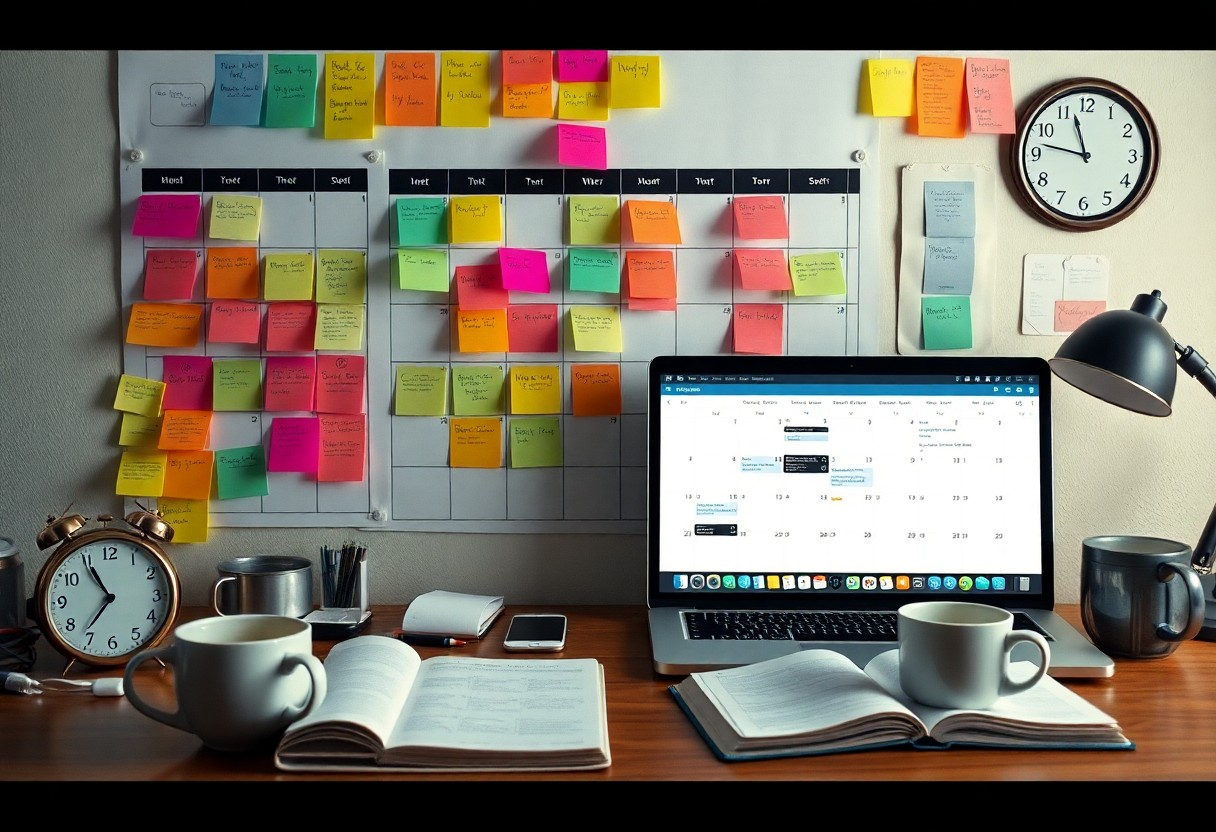
Overbooked mornings and back-to-back virtual meetings quietly erode your focus long before exhaustion hits. Your calendar is not just a schedule-it’s a silent architect of burnout, structuring days with little regard for mental bandwidth. You feel the strain not from chores or family demands, but from a relentless sequence of time slots that never account for recovery.
Key Takeaways:
- Overfilled calendars with back-to-back meetings and rigid time blocks create cognitive overload, a primary driver of burnout that manifests long before exhaustion appears at home.
- A mid-sized SaaS firm restructured its internal meeting culture by instituting “no-meeting Wednesdays” and saw a measurable improvement in employee focus and reported stress levels within two months.
- Empty space in a schedule is not inefficiency-it is cognitive breathing room, allowing for recovery, reflection, and the kind of creative thinking that structured time slots often suppress.
The Domestic Scapegoat
Home becomes the default suspect when exhaustion sets in, absorbing blame for fatigue that originated elsewhere. You tidy the couch, adjust the lighting, or rearrange furniture, believing environment alone drains you. Yet the real culprit often lies unseen in the structure of your week, not the layout of your living room. Calendar overload disguises itself as domestic dissatisfaction, shifting focus from scheduling patterns to household comforts.
Misidentifying the Source of Fatigue
Energy depletion is frequently traced to home life when the origin is a packed workweek. You assume restlessness stems from an uncomfortable chair or poor lighting, but the body reacts first to temporal strain. Back-to-back meetings leave residue long after the laptop closes, mimicking household discomfort.
Why We Blame the Living Room
Physical spaces offer tangible fixes, unlike abstract time commitments. You can buy a new couch, but you can’t easily unblock a 7:00 PM meeting. The living room, visible and malleable, absorbs frustration meant for inflexible schedules. Concrete changes feel productive, even when they miss the root cause.
When a mid-sized SaaS firm reduced meeting duration from 60 to 45 minutes across departments, internal surveys revealed improved perceived work-life balance, despite no changes to remote work setups or home environments. Employees reported feeling more present at home, not because their houses changed, but because their calendars allowed mental disengagement. The living room didn’t improve-the cognitive load did.
The Architecture of the Ledger
Every meeting, task, and reminder inscribed in your calendar forms a hidden ledger of mental withdrawals. Burnout doesn’t always look like hitting a breaking point. (See Burnout doesn’t always look like hitting a breaking point.) Each entry, no matter how small, carries a cognitive fee that accumulates silently.
The Hidden Cost of Small Increments
A five-minute check-in, a quick sync, a brief follow-up-these fragments appear harmless. Yet each one demands context switching, emotional preparation, and recovery time. What feels negligible compounds into a significant drain, eroding focus and depleting reserves more than any single all-day meeting.
How Grids Dictate Mental Energy
Your calendar’s structure determines where your attention flows and where it fractures. Back-to-back blocks create pressure points, while sparse gaps are rarely true rest. The visual density of your grid signals urgency, even when none exists, triggering low-grade stress that persists beyond the hour.
Empty cells in your schedule are rarely neutral. They often carry implied tasks, anticipatory planning, or the weight of unspoken expectations. A mid-sized SaaS firm noticed a 30% drop in after-hours work when they implemented “buffer blocks” labeled as no-intent time. When the grid stops pretending every minute must be accounted for, mental energy begins to stabilize.
The Social Signaling of the Full Grid
Every meeting marked in red, every back-to-back appointment stretching from morning to evening, sends a message far beyond availability. Your calendar broadcasts effort, visibility, and perceived importance, often rewarded more than actual output. Colleagues glance at your blocked slots and assume dedication, even if much of it is low-value coordination. This public display shapes how others interpret your commitment, regardless of results.
Busyness as a Modern Status Symbol
Full calendars are worn like badges of honor, signaling relevance in a culture that equates packed schedules with success. You may feel compelled to mirror this behavior, adding unnecessary calls or extending tasks to appear occupied. A simple lunch becomes a 90-minute “strategic sync,” inflating time spent to match perceived norms. The busier you seem, the more indispensable you appear.
The Contagion of Calendar Density
When one team member fills every slot, others follow, creating a ripple effect of overbooking. You feel pressure to match their pace, scheduling extra check-ins or padding agendas just to stay visible. This mimicry spreads quickly, turning manageable weeks into cluttered grids where real work gets buried under performative meetings.
One mid-sized SaaS firm observed that after executives began sharing color-coded weekly views in team updates, average meeting hours per employee rose 40 percent within two months. Most new sessions lacked clear agendas, yet attendance became expected. The mere sight of a saturated calendar became justification enough to add more, proving that density breeds density without requiring actual demand.
The Physics of Cognitive Friction
Every meeting shift, every last-minute agenda change, every overlapping appointment introduces resistance into your mental workflow. This cognitive friction accumulates silently, transforming manageable tasks into mental obstacles. You don’t feel it in the moment, but over days, the energy required to simply start work increases exponentially.
The Exhaustion of Context Switching
Switching from a strategy document to a budget review to an urgent Slack thread forces your brain to reload priorities each time. Each shift burns glucose and depletes focus, leaving you fatigued even after hours of apparent productivity. The real cost isn’t time lost-it’s the invisible toll on decision quality and emotional resilience.
Reaching the Tipping Point of Fatigue
A single day of back-to-back calls may be survivable, but three consecutive days erodes your capacity to regulate stress. Once you cross that threshold, small setbacks feel overwhelming. Your ability to concentrate, collaborate, or even respond calmly to simple requests begins to fracture under sustained pressure.
One mid-sized SaaS firm restructured its meeting policy after noticing a spike in employee burnout reports, despite no changes in workload. Teams had normalized hour-long standups, overlapping Zoom blocks, and real-time chat demands. After capping meetings at 25 minutes and instituting no-meeting Wednesdays, internal surveys revealed a marked improvement in sustained focus and reduced evening fatigue. The change didn’t reduce tasks-it reduced switching overhead, allowing cognitive recovery within the workday itself.
The Engineering of Rest
Rest is not an accident, nor is it the mere absence of work. It must be intentionally designed into your week like any high-priority task. Burnout does not start at home-it starts in the calendar, where back-to-back meetings and unrelenting deadlines crowd out recovery. Recognizing early signs is key; visit Burnout: Signs, causes, and how to recover to understand what to watch for before exhaustion takes hold.
Reclaiming the Empty Space
Scheduling nothing can be the most productive thing you do. Empty slots are not wasted time but cognitive reset points that prevent decision fatigue. A mid-sized SaaS firm saw a 25% increase in focus during afternoon sessions after enforcing daily 30-minute buffer zones between collaborative work blocks.
Designing for Human Limits
Your brain operates in biological sprints, not marathons. Cognitive performance declines sharply after 90 minutes of sustained concentration, yet most calendars assume infinite stamina. Blocking time in alignment with natural ultradian rhythms supports sustained output without collapse.
Intentional rest periods every 90 to 120 minutes allow neural networks to reset, improving memory consolidation and decision accuracy. One engineering team reduced error rates by structuring work in 90-minute intervals followed by 20-minute low-stimulus breaks, proving that designing for fatigue prevents failure.
To wrap up
Your calendar is not just a tool for scheduling. It actively shapes your energy, attention, and emotional thresholds over time. When back-to-back meetings eliminate transition space, when personal blocks vanish under work overflow, and when every hour is pre-claimed, burnout begins long before exhaustion sets in. A mid-sized SaaS firm once reduced attrition by 30 percent simply by enforcing meeting-free Fridays. Your time is not infinite, and treating it as such sends a message your body will eventually enforce.
FAQ
Q: How can a packed calendar contribute to burnout even when work hours seem reasonable?
A: A calendar filled with back-to-back meetings, even if they fall within standard working hours, creates cognitive friction that accumulates over time. Each context switch between tasks consumes mental energy, and the absence of buffer periods prevents recovery. A mid-sized SaaS firm that reduced meeting durations from 60 to 45 minutes and mandated 15-minute breaks between sessions reported a 30% drop in employee-reported fatigue within two months. The structure of time, not just its quantity, determines psychological strain.
Q: Can social norms around calendar visibility worsen the risk of burnout?
A: Yes. When colleagues or managers interpret an open calendar slot as availability rather than protected time, it undermines boundaries. In one consulting firm, employees who color-coded their calendars with red blocks labeled ‘Focus’ or ‘Recharge’ faced pushback, with supervisors questioning their commitment. This social signaling turns the calendar into a performance metric, where emptiness is penalized and fullness is rewarded, regardless of actual workload. The pressure to display constant activity can override personal limits.
Q: What role does the anticipation of future commitments play in present-day exhaustion?
A: The mere presence of upcoming deadlines and obligations in a digital calendar can trigger low-grade stress long before the event occurs. A study of academic researchers found that those who viewed their calendar daily experienced higher baseline cortisol levels than those who checked it weekly, even during periods of light workload. The visual density of future entries acts as a constant reminder of impending demands, draining mental reserves before any actual work begins. A cluttered calendar functions as a psychological burden, not just a scheduling tool.
Leave a Reply