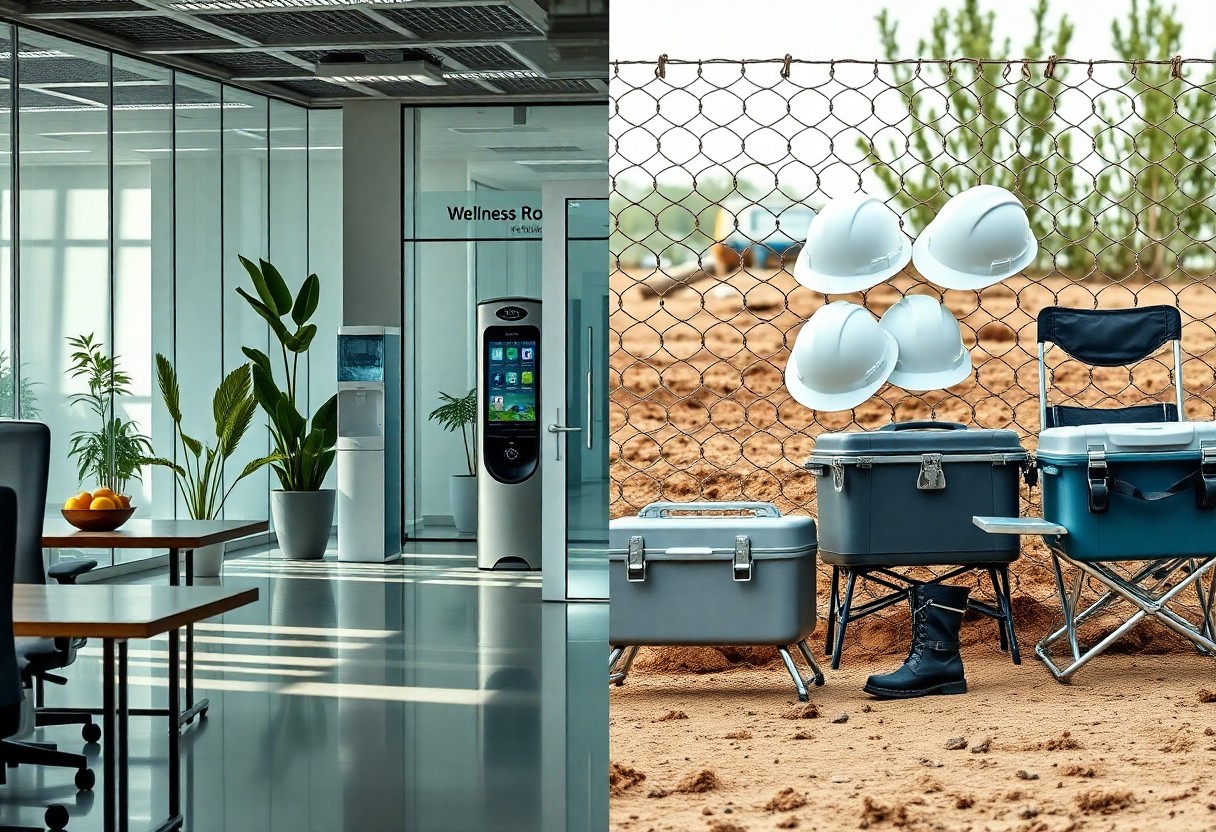
There’s a widening wellness gap between head office employees and those working in the field, and it’s undermining both morale and performance. You face longer hours, fewer resources, and less access to mental health support if you’re on the front lines. Field workers report higher burnout rates, yet receive less organizational investment in well-being programs. This disparity isn’t accidental-it’s built into how companies structure visibility, rewards, and care.
Key Takeaways:
- Field employees in industries like retail, logistics, and healthcare often report higher levels of physical strain and irregular scheduling compared to head office staff, contributing to a measurable divergence in self-reported well-being, with one national survey indicating that 62 percent of remote or mobile workers feel their mental health is overlooked by corporate policies.
- Head office roles typically offer structured work environments, predictable hours, and proximity to decision-makers, which translates into greater access to wellness initiatives such as on-site counseling, flexible leave, or mental health days, while field staff may not even be aware of these programs due to communication gaps.
- A mid-sized SaaS firm found that after integrating field teams into its quarterly well-being surveys and adjusting outreach methods to include text-based check-ins and mobile-friendly resources, participation from remote employees increased threefold and voluntary turnover in field divisions dropped by nearly 18 percent within a single fiscal year.
The Architecture of Disparity
Physical workspace design reflects deeper inequities in organizational wellness. Headquarters often feature natural lighting, ergonomic stations, and quiet zones, while field teams operate in improvised or transient settings. This structural divide reinforces unequal access to basic comfort and mental respite, with field employees spending up to 70% of their shifts in non-dedicated workspaces.
The Curated Habitat of the Center
Head office environments are intentionally designed to support focus and recovery. You encounter soundproof meeting pods, climate-controlled rooms, and wellness rooms stocked with refreshments. These spaces signal institutional care, offering consistent access to amenities that stabilize circadian rhythms and reduce stress markers.
The Raw Environment of the Periphery
Field personnel adapt to unpredictable conditions, often working in vehicles, client sites, or outdoor locations without climate control. You may lack privacy, face irregular meal times, and endure constant context switching. Noise levels exceed recommended thresholds in over half of field assignments, impairing concentration and long-term auditory health.
Working in unregulated environments means exposure to extreme temperatures, poor air quality, and limited sanitation. You might complete safety inspections in subzero cold or conduct customer visits during heat advisories, with few recovery breaks. A mid-sized logistics firm found its field staff reported twice as many fatigue-related incidents compared to office counterparts, highlighting the cumulative toll of environmental exposure.
The Visibility Heuristic
Leadership often equates visibility with value, and those seen most frequently in meetings or office spaces receive disproportionate access to wellness resources. You may notice that remote or field-based employees, despite identical roles, are less likely to be invited to mental health check-ins or ergonomic assessments simply because they are not physically present on campus.
Proximity and the Allocation of Care
Managers tend to extend informal support more readily to employees within walking distance, creating an invisible hierarchy where desk proximity dictates access to empathy and flexibility. You might overlook a field technician’s stress signals simply because they are not visible during lunch breaks or hallway conversations.
The Cultural Chasm of Support
Office staff often normalize breaks and mental health days, while field teams view such actions as signs of weakness, reinforcing a divide in how wellness is perceived and practiced across locations. You may unknowingly reward stoicism in remote roles while encouraging self-care in headquarters.
Consider a mid-sized SaaS firm where customer engineers working onsite with clients were expected to respond to after-hours emergencies without compensation, while their urban counterparts in the office logged out at 6 p.m. sharp. The field team reported higher burnout but received fewer interventions because leadership interpreted their silence as resilience rather than distress. This pattern repeats where cultural norms in dispersed locations suppress help-seeking behavior, making the absence of complaints a misleading indicator of well-being.
The Asymmetric Burden
Remote employees at a mid-sized SaaS firm often manage complex scheduling across time zones while headquarters staff enjoy structured 9-to-5 routines, a disparity highlighted in Bridging the gap between the field and the office. This imbalance reflects deeper operational inequities that favor centralized teams despite outward commitments to equity.
Cognitive Load versus Physical Erosion
Field technicians face relentless physical strain from daily site visits under harsh conditions, while office planners accumulate stress through back-to-back virtual meetings and constant context switching. The toll differs in form but not in impact, with both undermining long-term health when unaddressed.
The Myth of Universal Policy
A one-size-fits-all wellness program assumes equal starting points, yet field workers rarely access the same break facilities or mental health resources as their office counterparts. Standardized initiatives often overlook environmental constraints unique to mobile roles.
Consider a national logistics provider that rolled out a mindfulness app to all employees, only to find adoption lowest among delivery drivers who lacked downtime or private space to use it. Wellness tools requiring dedicated time or quiet settings fail in practice when deployed without role-specific adjustments, revealing the limits of blanket policies.
The Systemic Correction
Real change begins when leadership stops treating field employees as logistical afterthoughts. You recognize wellness as a structural obligation, not a perk reserved for those within headquarters’ walls. A mid-sized SaaS firm redesigned its mobile support units with ergonomic layouts and mental health resources, inspired by insights from 10 Office Design Elements for Employee Health & Happiness, proving scalable standards are possible.
Decentralizing the Wellness Model
Field teams operate in dynamic, often isolated conditions where traditional office wellness programs cannot reach. You implement portable mental health stipends and localized fitness reimbursements, allowing regional managers to adapt offerings to terrain and culture. A telecommunications provider rolled out satellite-based counseling access, reducing burnout spikes during deployment cycles by addressing needs where they occur.
Reconnecting the Corporate Nervous System
Information asymmetry distorts leadership’s perception of field realities. You establish bidirectional feedback loops that elevate frontline voices into design discussions. Monthly wellness pulse surveys, routed directly to HR and facility planners, expose gaps in rest access, equipment strain, or environmental stressors that desk-based assessments routinely miss.
These feedback channels become early warning systems, revealing patterns like increased musculoskeletal complaints among technicians working in unventilated spaces or rising anxiety in regions with unstable transport networks. You act on these signals by revising gear specifications, adjusting shift rotations, and allocating mobile recovery pods-transforming raw input into preventive infrastructure that reflects actual working conditions.
Conclusion
You observe a persistent disconnect between head office and field teams when it comes to wellness support, where remote and desk-based employees receive structured mental health resources while field staff in warehouses, retail, or service roles often operate without equivalent access. A mid-sized SaaS firm may offer mindfulness apps to its corporate staff while field technicians lack basic rest breaks. Your awareness of this gap is the first step toward designing inclusive policies that extend beyond headquarters and reach every part of the organization.
FAQ
Q: Why do field employees often report lower wellness scores than head office staff?
A: Field employees typically operate in decentralized environments with limited access to centralized wellness programs, mental health resources, or consistent managerial support. Unlike head office workers who may benefit from on-site counseling, ergonomic workspaces, or structured break schedules, field staff such as technicians, delivery drivers, or retail supervisors often work in isolation or high-pressure conditions without immediate access to support. A mid-sized SaaS firm conducting internal wellness audits found that employees in remote or mobile roles were 40% less likely to participate in mental health initiatives, not due to disinterest but because scheduling and accessibility barriers made engagement difficult. This structural gap in program delivery amplifies disparities in reported well-being.
Q: How does workplace visibility influence wellness outcomes for different employee groups?
A: Employees who work outside the physical or managerial line of sight, such as field service teams or regional sales representatives, are less likely to receive proactive wellness interventions. Managers in head office settings often observe colleagues daily, enabling informal check-ins or early detection of stress indicators. In contrast, a field engineer working across multiple sites may go weeks without direct managerial contact, reducing opportunities for intervention. One national logistics company reported that 68% of mental health accommodations were initiated by head office staff, despite field teams comprising only 32% of the workforce, highlighting a clear imbalance in support distribution tied directly to proximity and visibility.
Q: What specific policy changes have proven effective in closing the wellness gap?
A: Organizations that integrate wellness metrics into field-specific performance dashboards see improved equity in outcomes. For example, a telecommunications provider introduced monthly wellness touchpoints as a required component of field managers’ KPIs, leading to a measurable increase in reported psychological safety among remote technicians. Another effective measure involves equipping mobile supervisors with digital check-in tools that prompt structured conversations about workload and stress. These tools, when paired with decentralized access to employee assistance programs, create a support infrastructure that mirrors the flexibility of field roles rather than imposing head office models onto fundamentally different work patterns.
Leave a Reply