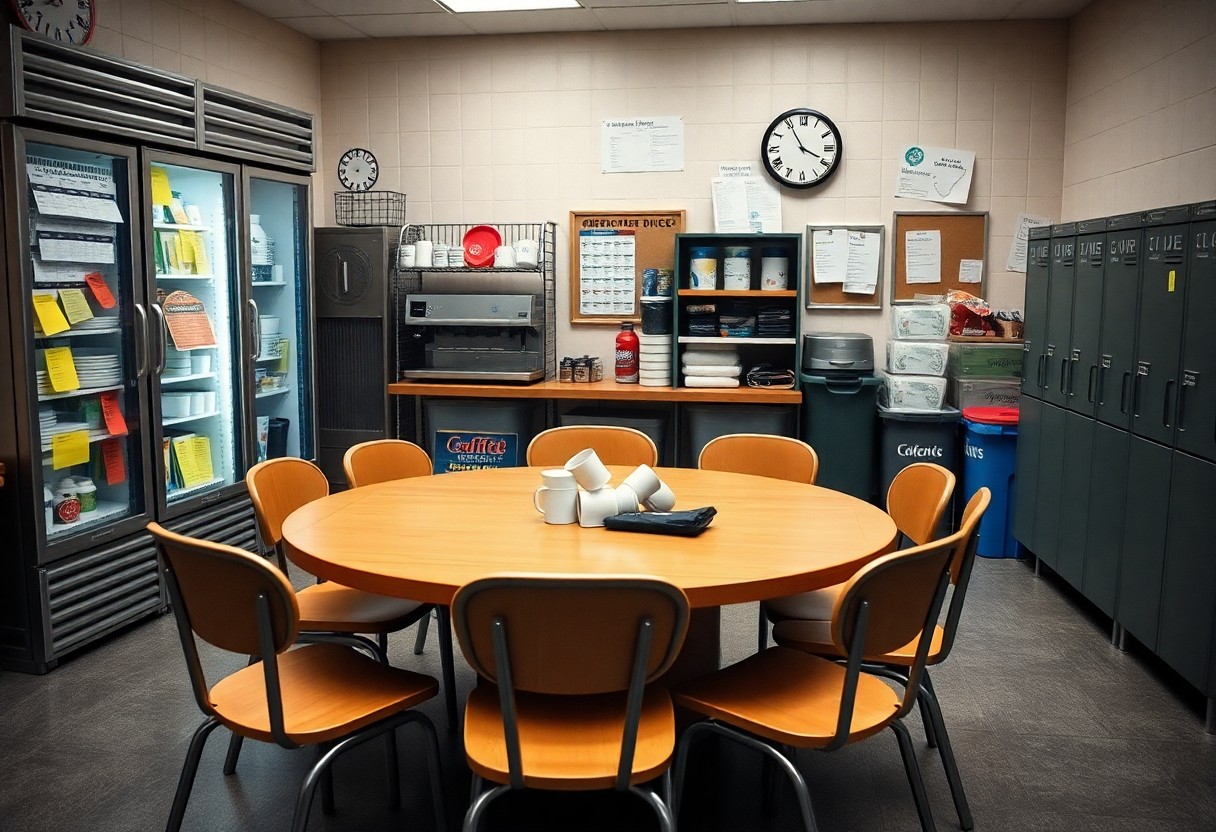
Most employees spend at least an hour a day in or near the break room, making it one of the most observed spaces in your office. What you keep there-whether it’s a fully stocked fridge, a single coffee pot, or stacks of mismatched mugs-sends a clear message about priorities. The condition and contents of this shared space often reveal more about your company’s true culture than any mission statement. You may not realize it, but your team reads these cues daily.
Key Takeaways:
- A well-maintained break room with functional appliances and fresh supplies often reflects a company’s genuine investment in employee well-being, such as a mid-sized SaaS firm where daily catered lunches led to measurable increases in cross-departmental collaboration.
- The spatial design of a break area, whether it encourages mingling with shared tables or reinforces silos with individual seating, can reveal underlying power structures, as seen in a design agency where executives occupied a separate lounge with espresso machines while junior staff used a basement kitchenette.
- Unwritten rules around break room use, from cleaning duties to acceptable music volume, often mirror broader cultural norms, such as a nonprofit where handwritten thank-you notes on the fridge became an informal recognition system adopted company-wide.
The Coffee Pot as a Social Barometer
Your coffee pot often reveals more about team dynamics than any organizational chart. A perpetually empty carafe signals disengagement or resentment over unpaid labor, while a well-maintained brew suggests shared responsibility. Someone always cleans the counter in high-trust environments, whereas spilled grounds and cryptic notes hint at underlying friction. In one observed case, a team at a mid-sized SaaS firm replaced their broken machine only after three weeks of collective silence, each person waiting for someone else to act.
The Architecture of Rest and Hierarchy
Seating Arrangements Reveal Power Structures
Your break room’s layout silently broadcasts who matters most. Executives often claim corner seats with natural light, while interns hover near the door. A single plush sofa facing three wobbly chairs reinforces status without a word. Even the coffee machine’s placement-centered or tucked away-shapes access and interaction. In one observed tech startup, the C-suite reserved a private lounge, making the main break area feel like an afterthought. Space is never neutral.
Communal Tables and Social Glue
Communal tables turn your break room into a hub of spontaneous connection, where departments mix and hierarchies blur over shared meals. When employees from different teams sit together, collaboration often follows naturally, sparking ideas that rarely emerge in formal meetings. A mid-sized SaaS firm noticed cross-departmental project requests increased after replacing cubicle lunches with long tables. Learn how these spaces influence workplace dynamics through How Break Rooms Make or Break Organizational Culture.
Snacks as a Proxy for Value
Your break room’s snack selection signals how much leadership values employee well-being. A mid-sized SaaS firm that stocks fresh fruit, nuts, and non-sugary options demonstrates sustained investment in daily comfort, while stale granola bars refilled once a month suggest minimal effort. The frequency, quality, and inclusivity of options-such as vegan, gluten-free, or culturally specific treats-reflect whether care is performative or consistent. One tech startup gained internal praise simply by rotating snacks weekly based on employee surveys, proving that small, thoughtful updates carry disproportionate weight.
The Passive-Aggressive Note Phenomenon
That sticky note on the microwave, scrawled with “Please clean up after yourself!”, speaks louder than any mission statement. You’ve seen it-typed memos taped to fridge doors, all-caps warnings about “last person to use the Keurig.” These notes reflect a culture where direct conversation is avoided, and resentment is outsourced to paper. When policies replace dialogue, trust erodes. A single unchecked dish can spiral into a ritual of silent reprimands, signaling deeper communication breakdowns across teams.
Summing up
Your break room reflects more than just where employees grab a snack, it reveals unspoken truths about respect, equity, and inclusion. A cluttered fridge with passive-aggressive notes signals eroded trust, while a well-stocked, clean space with diverse snack options suggests thoughtful leadership. The way you maintain this shared space tells your team whether their well-being is genuinely prioritized or merely performative. A mid-sized SaaS firm redesigned its break area with input from staff, resulting in measurable increases in informal collaboration. Your choices here shape daily experience more than any mission statement.
FAQ
Q: How can the condition of a break room reflect employee morale?
A: A consistently cluttered, poorly maintained break room often signals low employee engagement or a lack of organizational pride. For instance, a tech startup with perpetually broken appliances and expired condiments in the fridge may indicate leadership inattention to daily employee experience. Conversely, a clean, well-stocked space in a mid-sized SaaS firm suggests that staff feel ownership and are encouraged to care for shared environments, reflecting higher morale and a sense of mutual respect.
Q: Does the presence of communal seating actually influence team dynamics?
A: Communal seating, such as long tables or shared couches, tends to encourage spontaneous interactions that can strengthen team cohesion. In one professional services firm, the introduction of a large, central table led to a noticeable increase in cross-departmental conversations during lunch hours. Without assigned spots or partitions, employees were more likely to sit with colleagues outside their usual circles, fostering informal knowledge exchange and reducing siloed communication patterns.
Q: Can something as minor as snack selection reveal deeper cultural values?
A: The types of snacks offered often mirror a company’s approach to inclusivity and employee well-being. A break room with only sugary drinks and processed chips may prioritize convenience over health, while one offering plant-based options, gluten-free items, and fair-trade coffee suggests a deliberate effort to accommodate diverse needs. A design agency in Portland, for example, replaced generic vending fare with locally sourced, dietary-restricted treats, aligning with its stated values of sustainability and individual care.
Leave a Reply