
Key Takeaways:
- Leadership commitment to psychological safety, transparent decision-making, and visible support reduces burnout and sustains engagement.
- Flexible work policies, accessible wellbeing services, and targeted resilience training speed recovery after stressors and preserve productivity.
- Regular measurement of wellbeing, rapid feedback loops, and prompt action on concerns build trust and enable continuous improvement.
The Foundations of Organizational Resilience
You strengthen organizational resilience by aligning governance, adaptive processes, and psychological safety so you reduce systemic risk and recover faster from disruptions.
Defining the WorkWell Framework
WorkWell defines five pillars-leadership clarity, flexible operations, continuous learning, wellbeing, and measurable metrics-so you can align daily decisions with strategic resilience goals.
The Economic Impact of a Resilient Culture
Data links resilient cultures to lower turnover, fewer lost workdays, and faster incident recovery, giving you measurable ROI through sustained productivity.
Analyzing past crises shows companies with resilient cultures cut recovery time by up to 40% and reduce turnover costs by 20-30%, directly protecting your margins. You also lower hidden costs like redeployment, overtime, and customer churn, so targeted culture investments often deliver multi-year payback while strengthening long-term competitiveness.
Leadership’s Role in Cultural Stability
Leaders set the tone you follow by modeling steady decisions, sharing honest expectations, and protecting psychological safety. When you consistently show calm and clarity, teams resist churn; when you waver, uncertainty spreads. Prioritize visible consistency to keep culture anchored during change.
Modeling Adaptability and Emotional Intelligence
Modeling emotional awareness helps you read team stress and adjust actions quickly; expressing vulnerability teaches others to admit mistakes. When you practice calm responses and active listening, you create psychological safety and reduce reactive behaviors that harm performance.
Establishing Trust Through Transparent Communication
Building direct, frequent updates allows you to align expectations and prevent rumors; admitting unknowns strengthens credibility. Clear channels reduce the risk of misinformation and help teams stay focused under pressure.
Honest disclosure of risks and plans helps you keep teams aligned; set predictable updates, invite questions, and correct errors publicly so you protect trust. Failing to communicate creates rumor-driven anxiety that erodes productivity and morale faster than many operational issues.
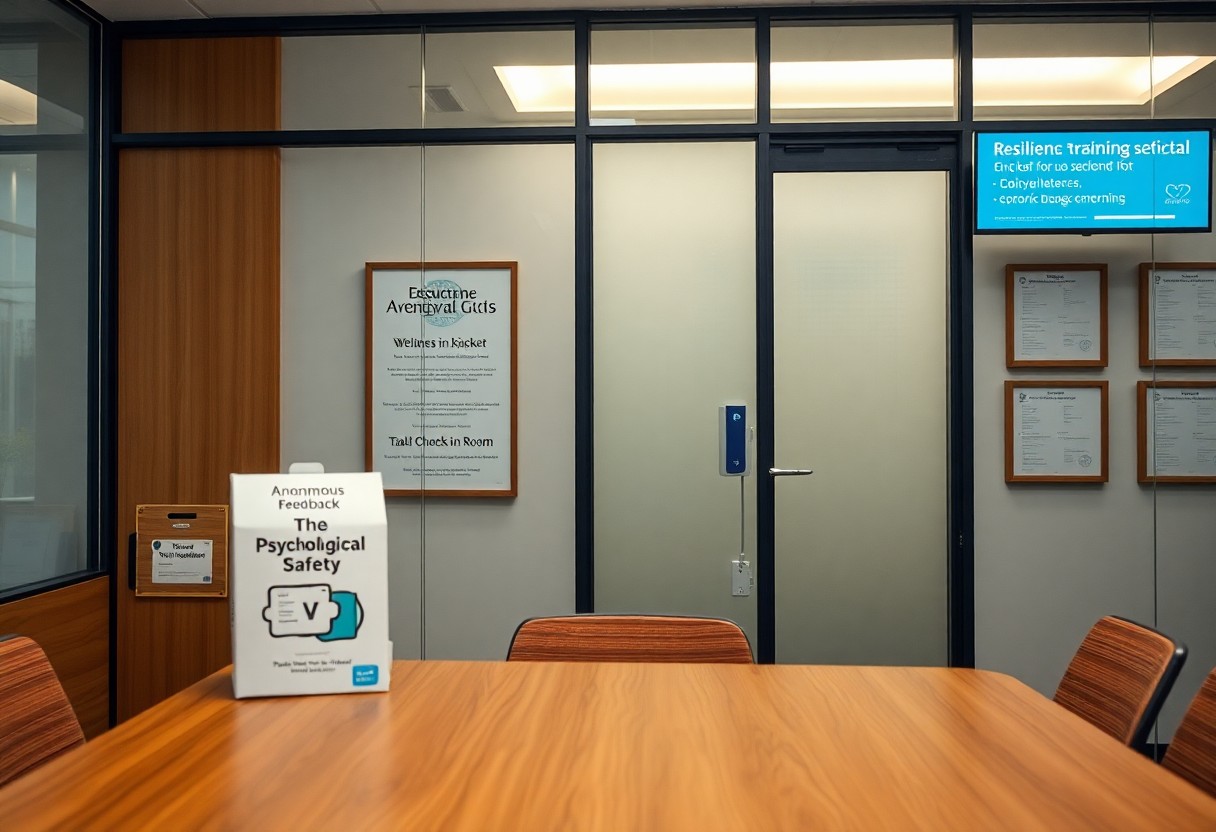
Fostering Psychological Safety
Psychological safety means you can raise concerns without fear; leaders model vulnerability, encourage questions, and address missteps swiftly so teams experiment. Protect against retaliation and reward open communication to sustain psychological safety.
Creating Environments for Innovation and Risk-Taking
Encourage experiments where you accept calculated risks, normalize failure reviews, and limit punitive reactions so teams test ideas quickly and learn from mistakes.
Implementing Effective Employee Feedback Loops
Structure feedback cycles so you collect honest feedback, act within clear timeframes, and close the loop publicly to prevent silence from becoming accepted.
Regularly you collect feedback through mixed channels-surveys, focus groups, and anonymous reporting-so you capture honest signals. You must prioritize timely action, report outcomes back, and monitor for retaliation to keep trust high; without follow-through, feedback erodes quickly.
Designing Systems for Sustainable Wellbeing
Systems you design set predictable rhythms, mandating recovery windows, clear workload limits, and continuous feedback so teams sustain performance. Embed mandatory rest and measurable metrics to spot rising burnout risk before it harms productivity.
Integrating Work-Life Harmony into Operations
Scheduling that respects personal time reduces stress and turnover; you should enforce predictable hours, flexible options, and clear boundaries so employees can recharge and maintain focus.
Proactive Strategies for Burnout Prevention
Policies must include early-warning metrics, routine check-ins, and accessible mental-health support so you detect strain early; prioritize rapid intervention when risk spikes.
Training for managers teaches you to spot chronic lateness, performance drops, and growing cynicism as early red flags. You should set dashboard thresholds, mandate weekly check-ins, offer targeted coaching and medical referrals, and run anonymous surveys plus workload audits. Protect staff with mandatory recovery periods, swift duty adjustments, and clear escalation paths when burnout signs appear.
Empowering Workforce Agility
Teams that adapt quickly reduce downtime; you should prioritize cross-training, flexible roles, and rapid feedback loops. See how WorkWell – Building a Culture of Care outlines care-driven practices that boost retention. Emphasize continuous readiness to prevent disruption and maintain performance.
Promoting Continuous Learning and Skill Development
You should create short learning sprints, micro-mentoring, and on-the-job practice, making skill refreshes habitual; track progress and reward application. Prioritize job-critical skills to keep teams effective.
Cultivating a Growth Mindset Across Departments
Leaders model curiosity, invite experimentation, and normalize constructive failure, so you encourage cross-team problem solving and shared learning. Highlight small wins and learning loops to sustain momentum.
Practice regular cross-team retrospectives so you spot patterns, remove blockers, and scale successful experiments; pair metrics with mentorship and guard psychological safety to keep risk-taking productive.
Summing up
Presently you develop WorkWell – Resilient Workplace Cultures by applying consistent wellbeing practices, clear communication, adaptive policies, and ongoing training so you sustain morale, lower turnover, and preserve productivity during change.
FAQ
Q: What is WorkWell – Resilient Workplace Cultures and what does it include?
A: WorkWell is a comprehensive program that helps organizations strengthen employee well-being, adaptability, and sustained performance. The program includes baseline assessments, leadership coaching, team training on psychological safety and communication, workload and role design, and recovery practices such as predictable time off and return-to-work supports. Implementation combines data-driven interventions, policy updates, and skills-building to reduce burnout, improve retention, and support consistent team functioning under change.
Q: How do organizations implement WorkWell in a practical, step-by-step way?
A: Start with a diagnostic survey and qualitative interviews to map stressors, strengths, and priority teams. Create a prioritized action plan that specifies leader coaching, manager training, adjustments to job design or staffing, and team rituals for debriefs and workload coordination. Pilot interventions in one or two units, measure short-term indicators, then scale successful practices across the organization. Maintain ongoing measurement and monthly governance to keep interventions aligned with changing needs.
Q: How does WorkWell measure effectiveness and demonstrate return on investment?
A: Evaluation uses a mix of quantitative KPIs and qualitative evidence. Common metrics include employee engagement and well-being scores, voluntary turnover, absenteeism and presenteeism, incident reports, and objective productivity measures. Qualitative inputs come from focus groups and manager reports about team functioning. Financial ROI is estimated by calculating cost reductions from lower turnover and absenteeism and by tracking productivity or performance improvements tied to the program over time.
Leave a Reply