
Many of your workdays are shaped by unknowns, and you can feel their weight; by focusing on what you can control you reduce anxiety, limit the dangerous effects of chronic stress and burnout, and build steadiness. Use clear routines, decision frameworks and team communication to convert ambiguity into action; these practical strategies help you regain momentum, protect health and make uncertainty manageable.
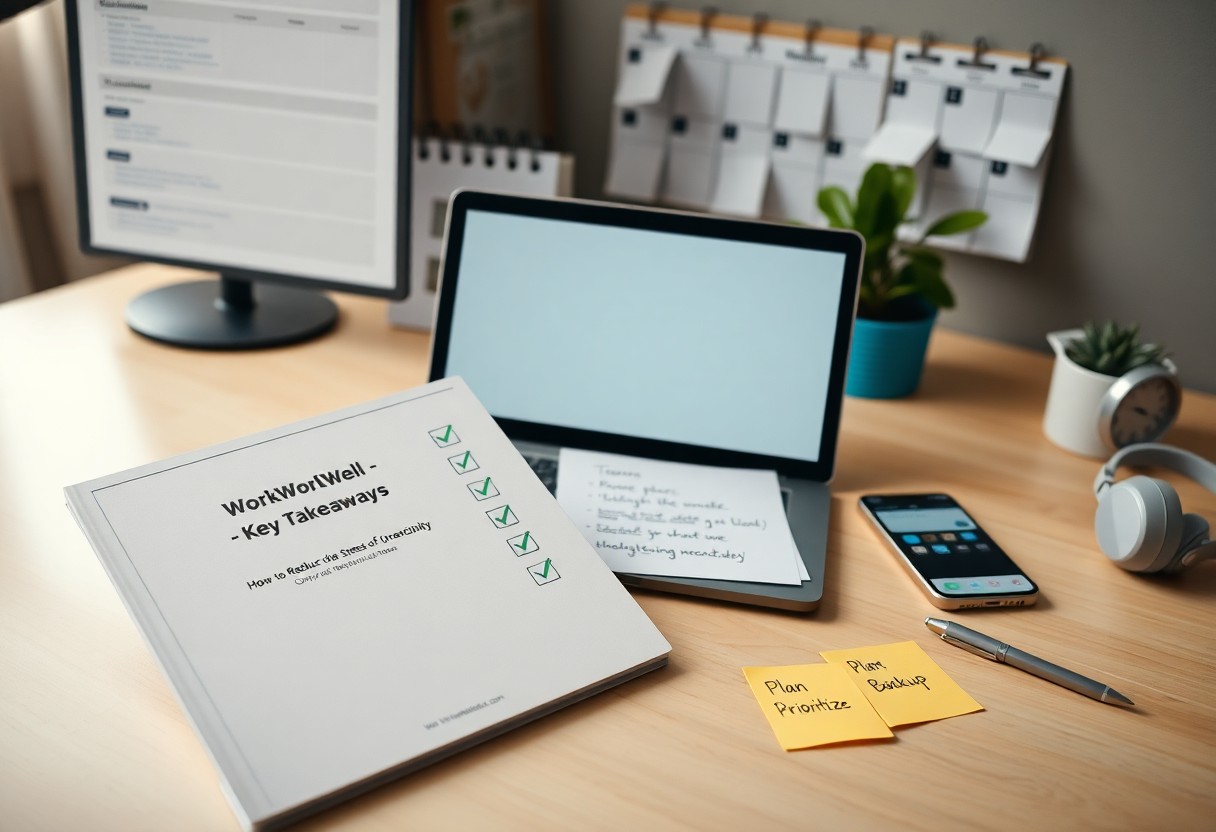
Key Takeaways:
- Focus on controllables: break work into short-term goals, establish routines, and prioritize tasks to reduce overwhelm.
- Improve communication and planning: share uncertainties with your team, set clear expectations, and create simple contingency plans.
- Build resilience and support: use stress-management techniques (breathing, breaks, realistic reframing), seek social support, and rehearse likely scenarios.
Understanding Uncertainty
As you navigate ambiguous situations at work, you feel competing impulses to gather more data and to act quickly; both drain mental energy and slow decision cycles. Neuroscience shows uncertainty ramps up vigilance and engages the amygdala and insula, so your attention becomes biased toward threat and negative outcomes. In practice, that means missed opportunities and longer timelines unless you reduce unknowns, reframe probabilities, or set small experiments to test assumptions.
The Nature of Uncertainty
Uncertainty comes in two practical forms: gaps in knowledge (you don’t know key facts) and inherent randomness (outcomes are probabilistic). When you treat ambiguous forecasts as binary, you either freeze or overcommit; instead, quantify possibilities with ranges, scenarios, or simple probabilities. For example, framing a project as a 60-80% chance of success helps you allocate resources more rationally than labeling it “risky.” Distinguishing these types lets you choose information-gathering or resilience strategies appropriately.
Psychological Impact of Uncertainty
Facing ongoing unknowns raises anticipatory stress, increases rumination, and can trigger avoidance behaviors that harm productivity; chronic uncertainty elevates stress hormones like cortisol and biases decision-making toward short-term safety. You may notice sleep disruption, reduced concentration, and a tendency to overcontrol small tasks-symptoms that compound over weeks if not addressed.
More specifically, uncertainty fuels a feedback loop: you worry about outcomes, which saps working memory and impairs planning, so you make more conservative choices that limit learning. In team settings this shows up as fewer experiments, lower innovation, and slower responses to market shifts. Practical examples include employees declining stretch assignments when performance metrics are vague or leaders delaying hires until perfect data appears-both costing time and growth. Breaking this loop requires targeted clarity, bounded experiments, and explicit decision rules.
Strategies to Manage Stress
You can cut uncertainty’s grip by using concrete habits: set a daily information limit (for example, 30 minutes of research on a decision), apply a three-outcome scenario plan (best/likely/worst) for major choices, and implement decision rules (e.g., if options tie, choose the one with the fastest feedback loop). Combining time-boxing with simple metrics reduces rumination and lets you iterate-teams that adopt these patterns report faster cycles and fewer stalled projects.
Building Resilience
You build resilience by practicing planned exposure to small unknowns and strengthening cognitive flexibility: try a weekly “stretch” task that has a 50/50 unknown outcome, write three lessons from setbacks within 48 hours, and use reframing prompts to turn obstacles into experiments. Evidence shows resilience training produces moderate gains (effect sizes ~0.3-0.5), and regular, small exposures make you less reactive when bigger uncertainties hit.
Mindfulness and Meditation Techniques
You’ll get quick returns from short, structured practices: box breathing (4-4-4-4) for two minutes before meetings, a 10-minute body scan after work, and weekly 20-minute guided sessions such as MBSR-style practice. Meta-analyses show mindfulness yields moderate reductions in perceived stress (effect sizes ~0.3-0.6), and consistent daily practice amplifies those benefits over 6-8 weeks.
For practical implementation, set a simple routine: use a 5-10 minute breathing or grounding exercise at the start of your day and a 10-20 minute guided session midday or evening. When thoughts intrude, label them (“planning,” “worry”) and return to the breath; this labeling reduces reactivity and improves task focus. Over 6-8 weeks, these small habits produce measurable gains in attention and lower self-reported stress, helping you respond rather than react to uncertainty.
Effective Communication
When uncertainty spikes, your communication choices shape outcomes. Establish a cadence: use daily 10-15 minute standups for fast-moving issues and weekly summaries for longer shifts. Provide regular, transparent updates about decisions, timelines, and unknowns, and flag what you don’t know. Avoid withholding key facts, which fuels anxiety and rumors. Track feedback with quick polls or a single-source-of-truth doc to keep everyone aligned.
Open Dialogue in Times of Uncertainty
Create two-way channels so your team can ask questions without penalty. Use weekly town halls plus anonymous 3-question surveys to surface concerns; one mid-size tech firm cut rumor-related tickets by 40% after weekly Q&A sessions. Train leaders to answer honestly, admit unknowns, and translate answers into clear action items. Publish an FAQ and update it within 48 hours after each session to reduce repeated queries.
Seeking Support from Others
Encourage you to tap peers, mentors, HR, and external coaches when decisions feel ambiguous. Set up a 1:1 buddy system or mentor program-pairings for 3 months can cut onboarding stress-and promote confidential Employee Assistance Programs (EAPs) or 24/7 hotlines. Note that social isolation magnifies anxiety; keeping regular check-ins prevents escalation and connects you to practical resources.
You should start by listing two trusted colleagues and schedule 20-minute weekly check-ins to discuss uncertainties and actionable next steps; use a shared note with decisions and owners. If you contact HR or an EAP, ask about confidentiality policies and response times-EAPs often provide counseling within 3-5 business days. Track outcomes by measuring whether issues are resolved within two weeks and adjust your support mix accordingly.
Establishing Routine
Settling into a predictable rhythm anchors your day: set a fixed wake time (most adults need 7-9 hours of sleep), block focused work into 90-minute sessions, schedule a 30-minute midday break, and finish with a consistent wind-down. When you assign types of tasks to time windows-deep work in the morning, admin in the afternoon-you reduce uncertainty and preserve mental bandwidth for high-impact decisions.
Creating Predictable Patterns
Put recurring events on your calendar, color-code task categories, and build a 3-step pre-meeting ritual (objective, one metric, next action). Automate bills and use templates for frequent emails; set device Do Not Disturb during focus blocks. These visible anchors and automations reduce decision fatigue, turning potential stressors into reliable cues that prompt intentional behavior.
Importance of Daily Habits
Choose small, repeatable anchor habits morning, midday, and evening-examples: 10-minute planning, a 20-minute walk, and 15-minute reflection-to stabilize mood and performance. Over weeks these actions compound, improving focus and lowering physiological stress responses; make consistency the priority and track progress to keep momentum.
Form habits with implementation intentions and micro-steps: start with a 2-minute version (e.g., if alarm rings, then five deep breaths), then scale up. Research on habit formation reports a median of 66 days to reach automaticity, so plan for months, not days. Use habit stacking (attach a new habit to an existing one), simple trackers, and an accountability partner; avoid overloading your schedule because over-scheduling raises burnout risk and undermines the routine you’re building.
Healthy Lifestyle Choices
Integrate daily habits that reduce physiological stress: prioritize 7-9 hours of sleep, eat nutrient-dense meals, and move regularly to blunt cortisol spikes and improve clarity under uncertainty. Combine these with practical tactics from Navigating Uncertainty: How We Can Thrive in Difficult Times and test small changes-consistent, measurable adjustments produce reliable reductions in anxiety and better decision outcomes.
Nutrition and Exercise
Structure meals and activity so they support steady energy: aim for 150 minutes of moderate aerobic exercise per week plus two strength sessions, prioritize vegetables, whole grains and oily fish for omega-3s, and distribute protein across meals. Practical swaps-like replacing a sugary snack with nuts and fruit-cut afternoon crashes and improve focus; also limit caffeine after 2 p.m. to protect sleep and stress resilience.
Sleep Hygiene
Anchor your day with a fixed wake time and a 30-60 minute pre-sleep routine that eliminates screens and bright lights; morning daylight exposure helps reset your circadian clock. Keep the room cool (about 60-67°F / 15-19°C), avoid heavy meals within two hours of bed, and make the bedroom a sleep-only environment to reduce nighttime awakenings and daytime anxiety.
Poor sleep directly worsens stress physiology-sleep loss elevates cortisol and impairs prefrontal decision-making; even a single night of 4-5 hours can reduce working memory and increase reactive choices. Track sleep for 1-2 weeks to identify patterns, use stimulus control (if you’re awake >20 minutes, get up and return when sleepy), and seek cognitive behavioral therapy for insomnia (CBT-I) if problems persist beyond three months.
Tools and Resources
Tap into targeted supports that make uncertainty manageable: use short protocols (25/5 Pomodoro cycles, 2-5 minute breathing breaks), track recovery with HRV wearables, and lean on structured programs that last 6-8 weeks. You should balance self-help tech with human guidance; unregulated apps can mislead and privacy matters when sharing health data. Deploy a mix of tools so your stress reduction is measurable, repeatable, and integrated with your work rhythm.
Apps and Technology for Stress Management
Try proven apps: Headspace or Calm for guided meditations, Breathwrk for paced breathing, and Woebot or Wysa for brief CBT-style coaching; Insight Timer offers thousands of free practices. Combine with wearables (Oura, Whoop, Garmin) to monitor sleep and HRV trends-short, daily sessions of 2-10 minutes often yield immediate calming effects. Protect your data and prefer apps with transparent privacy policies and clinical validation where available.
Professional Help and Therapies
Consider evidence-based therapies: CBT (commonly 8-20 sessions) shows ~50-60% response rates for anxiety-related issues, while ACT and EMDR serve specific presentations. Access can include in-person therapists, teletherapy platforms, and Employee Assistance Programs that often provide 3-10 free sessions. If uncertainty causes severe impairment, prioritize licensed clinicians and, when needed, psychiatric evaluation for medication or combined care.
For practical use, you can start with a short teletherapy intake (many platforms book within 3-10 days) and follow a structured 6-8 week CBT or resilience course; employers who ran such pilots reported measurable drops in anxiety and absenteeism. Seek urgent care if you face persistent panic, inability to function, or thoughts of self-harm-contact emergency services or a crisis line immediately. Strong clinical support speeds recovery and reduces the long-term toll of sustained uncertainty.
Summing up
As a reminder you can reduce uncertainty stress by focusing on what you can control: establish predictable routines, set flexible goals, communicate expectations, and practice brief mindfulness to steady your focus. Use small experiments to test options, maintain boundaries to protect energy, and build support networks so you can adapt more confidently and keep performance steady during change.
FAQ
Q: How can I reduce daily uncertainty at work so it doesn’t derail my focus?
A: Create predictable routines and short feedback loops: set a morning planning ritual, block focused work periods, and schedule brief end-of-day check-ins to update priorities. Break uncertain projects into small experiments with measurable outcomes so you get faster evidence and can adjust quickly. Keep a single source of truth for tasks and deadlines (a shared project board or personal list) to avoid chasing scattered information. Focus on controllable inputs-what you can do today-rather than outcomes, and limit time spent endlessly weighing hypothetical scenarios.
Q: What can managers do to lower team stress when decisions are unclear?
A: Increase communication frequency and clarity: provide regular status updates, explain the decision criteria being used, and be explicit about what is still unknown. Share decision timelines and contingency plans so people know when and how changes will occur. Define roles and decision rights to reduce duplicated effort, and invite team input through short experiments or pilots to gather data. Foster psychological safety by acknowledging uncertainty aloud and encouraging questions, which helps teams focus on problem-solving instead of speculating.
Q: How do I cope with the anxiety that comes from prolonged uncertainty outside my direct control?
A: Use grounding strategies to reduce immediate anxiety-short breathing exercises, 5-minute movement breaks, or a quick sensory checklist (name five things you see/hear). Create an action plan that splits concerns into things you can act on, things you can influence, and things you must accept; then schedule time only for items you can act on. Limit exposure to speculative sources and set a single daily slot for news or updates to avoid constant rumination. Build social support by sharing specific asks with colleagues or friends, and consider professional coaching or therapy if anxiety persists or impairs functioning.
Leave a Reply