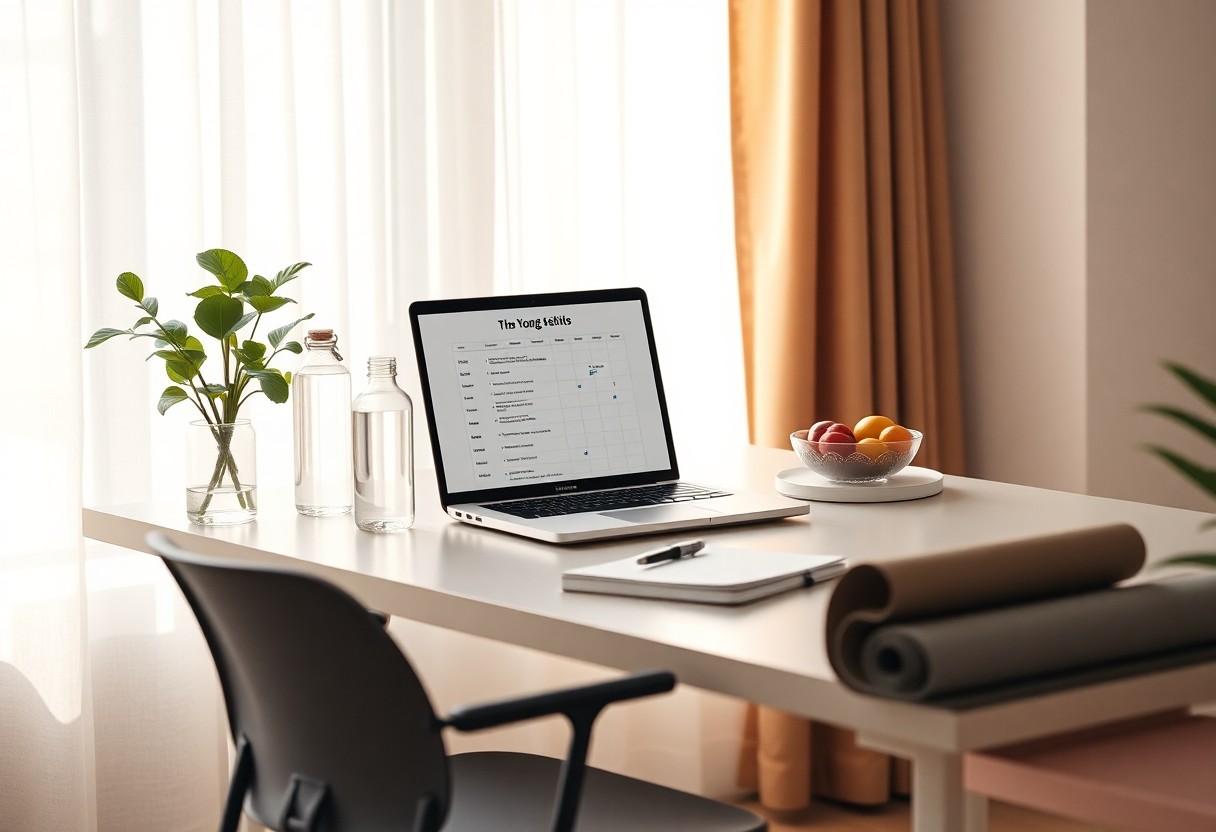
Many organizations chase output metrics while overlooking how your well-being shapes sustainable performance; by reframing productivity through wellness you reduce the risk of burnout and chronic stress and unlock greater focus, creativity and retention. This approach shows you how to design routines, environments and policies that boost long-term results rather than short-term spikes, giving you practical strategies to measure impact and protect people as the engine of productivity.
Key Takeaways:
- Prioritize rest, recovery, and boundaries to make productivity sustainable rather than forced bursts of output.
- Build workflows and environments that reduce friction and support mental and physical health (flexible schedules, microbreaks, ergonomic setups).
- Measure success by long-term outcomes and well-being indicators-engagement, creativity, and burnout risk-alongside traditional output metrics.
The Concept of Wellness in the Workplace
Shifting to a wellness lens reframes how you measure productivity: not by hours logged but by sustainable performance, reduced burnout, and cognitive capacity over time. Practical moves-regular recovery breaks, ergonomic setups, and clear boundaries-translate into fewer errors and steadier output. The World Health Organization estimates mental health conditions cost the global economy US$1 trillion per year in lost productivity, showing why you must align systems to support long-term resilience.
Defining Workplace Wellness
Workplace wellness for you includes physical safety, mental health support, social connection, and financial stability-delivered through policies like flexible schedules, ergonomic workstations, on-site or virtual counseling, and paid recovery time. Programs that combine preventive measures, accessible care, and environmental changes-lighting, air quality, noise control-produce the strongest outcomes. When you integrate these, wellness becomes an operational lever, not a perk.
The Importance of Employee Well-being
Employee well-being directly affects your bottom line: increased stress lowers focus and engagement, while better-supported staff show higher retention and output. Gallup reports roughly 46% of workers experience daily stress, and that persistent strain correlates with absenteeism and presenteeism. Investing in well-being reduces those hidden costs and preserves institutional knowledge by keeping experienced people on your team.
Concrete examples show impact: Microsoft Japan’s 2019 four-day workweek trial produced a 39.9% rise in productivity, fewer meetings, and lower energy use, proving policy redesign can boost output while improving employee experience. You can replicate gains with targeted pilots-test flexible hours, mandatory focus blocks, or mental-health days-and measure changes in error rates, turnover, and engagement to scale what works.
The Connection Between Wellness and Productivity
When you factor in sleep, stress, and boundaries, productivity shifts from hours logged to cognitive capacity: chronic mental health conditions like depression and anxiety cost the global economy $1 trillion in lost productivity annually, while sleep deprivation after 17 hours awake impairs performance similar to a blood alcohol content of 0.05%. Microsoft’s 2019 trial cutting the workweek raised productivity by 40%, showing that structural wellness changes can quickly change output.
Understanding Productivity Metrics
You should track both quantity and quality: output per hour, error rates, cycle time, plus engagement indicators such as pulse surveys and eNPS. Gallup links high engagement to 21% greater profitability, so align business KPIs with wellbeing signals. Also watch absenteeism and presenteeism, since being present but unfocused often costs more than days off; calendar analytics and weekly focus-time metrics give objective signals leaders can act on.
How Wellness Initiatives Improve Output
You gain sustained output when interventions restore cognitive resources: flexible schedules, protected focus blocks, sleep education, and access to therapy show measurable returns-many programs report 20-40% reductions in sick leave and lower turnover, while meeting caps and asynchronous workflows increase deep-work hours and reduce error rates.
You can operationalize this with short pilots: run a 6-8 week test of one change (meeting caps, protected focus time, or a 4-day experiment) and measure output per hour, error rates, and engagement. Evidence also points to team-level factors-Google’s Project Aristotle found psychological safety predicted team effectiveness-and clinical supports like CBT for insomnia or employer-sponsored teletherapy restore cognitive control, improving decision-making and attendance.
Strategies for Implementing Wellness Programs
Start with a focused, measurable pilot-90 days with 20-50 volunteers-so you can test interventions, gather baseline absenteeism and engagement data, and iterate. Use mixed metrics: pulse surveys, productivity KPIs, and healthcare claims. The WHO estimates a $4 return per $1 invested in scaled mental health treatment, so build a business case that ties wellness to reduced sick leave and improved output before scaling.
Creating a Supportive Environment
Equip managers with a 2-hour training on psychological support and workload calibration, then require weekly 1:1s to adjust priorities; this fosters psychological safety and reduces burnout signals. Adjust physical spaces with quiet rooms and standing desks, offer hybrid options, and run anonymous pulse surveys every 30 days to catch issues early.
Integrating Wellness into Company Culture
Embed wellness into core processes by including it in onboarding, performance reviews, and OKRs-consider allocating 5-10% of performance weight to wellbeing goals. Tie benefits like flexible hours, mental-health days, and stipends directly to retention targets so your programs align with business outcomes.
Operationalize this by documenting policies, communicating benefits in the first 30 days of employment, and benchmarking quarterly: track NPS, turnover, absenteeism, and utilization rates over 6 months. Companies such as Patagonia (on-site childcare) and Salesforce (wellness reimbursements) show that pairing policy with visible leadership support increases participation; aim for a 10-15% improvement in engagement metrics in the first year.
Case Studies: Successful Wellness Initiatives
These examples show how targeted workplace wellness pilots produce measurable shifts in productivity and retention; one program documented below is profiled in Workplace Wellness That Feels Human, and you can adapt its metrics-driven approach to your team.
- 1) Company A – 90-day pilot with 40 volunteers: 28% reduction in sick days, 15% increase in employee engagement scores, and a reported 3:1 ROI from reduced overtime and hiring costs.
- 2) Company B – 6-month program across two departments: 30% drop in self-reported stress, 22% increase in deep-work hours, and a measured 11% rise in output per employee using task-based KPIs.
- 3) Company C – schedule redesign for shift teams: overtime hours fell by 40%, voluntary turnover declined 18%.
- 4) Public Sector D – remote-first policy plus mental-health access: average sick days per employee dropped from 8.4 to 6.6 annually and service SLA compliance rose 9%.
Company A: A Transformative Approach
You can replicate Company A’s method: run a focused 90-day pilot with 20-50 volunteers, combine mandatory no-meeting blocks and coaching, then measure engagement and sick-day trends – they saw a 28% decline in sick days and a 15% lift in engagement within three months.
Company B: Measurable Impacts
You’ll notice Company B carefully tied interventions to KPIs: after introducing protected deep-work hours, sleep education, and flexible start times, their task-based productivity rose 11% while reported stress fell 30%.
Digging deeper into Company B shows how they measured change: baseline surveys, passive calendar analytics to quantify deep-work hours, and output-per-task as the primary KPI. They invested in a 12-week behavioral coaching series and a sleep-hygiene campaign, which together produced sustained gains at month six. If you scale this, watch for participation decay – low ongoing engagement is the most dangerous risk to sustained impact – and mitigate it by refreshing content quarterly and reporting ROI to leadership; doing so preserved a net-positive cost-to-benefit ratio for them.

Challenges in Promoting Workplace Wellness
Even with a well-designed pilot, you’ll face practical barriers: limited budgets, fractured schedules, legal concerns about health data, and persistent cultural norms that prize presenteeism. WHO estimates depression and anxiety cost the global economy $1 trillion annually in lost productivity, which underscores why you must navigate these constraints deliberately. Use targeted pilots and clear KPIs to avoid wasted effort and to surface the most damaging bottlenecks quickly.
Resistance to Change
You’ll see pushback from managers who view wellness as optional and from employees skeptical of new routines; in pilots of 20-50 volunteers, participation often drops by 20-40% when leaders don’t model behaviors. Counter this by incentivizing managers, showcasing early wins (reduced sick days or improved engagement scores), and embedding small, non-disruptive rituals that make adoption easier across tenure levels.
Measuring Effectiveness
You should track a mix of clinical and performance metrics: absenteeism, presenteeism (use WHO-HPQ), engagement scores, HRA risk stratification, utilization rates, and turnover. Compare baseline, 3-, 6-, and 12-month data and use a control cohort where possible. Protect employee trust by anonymizing health data-violating privacy is the most dangerous mistake and will collapse participation faster than any other failure.
For more depth, build an evaluation plan: collect baseline measures, then reassess at 90 days and one year; target your pilot at 20-50 participants for feasibility, then scale to maintain statistical power. Calculate ROI by combining direct savings (reduced claims, lower replacement costs) with indirect gains (productivity, engagement). Employ a difference-in-differences approach and present confidence intervals so leadership sees both the positive impact and the margin of error in your results.
The Future of Work and Wellness
Expect hybrid-first policies and benefit redesigns that treat well-being as productivity infrastructure. Firms piloting alternative schedules, like Microsoft’s 2019 Japan trial that reported a 40% productivity increase, show outcomes when you redesign workflows for recovery. WHO’s recognition of burnout as an occupational phenomenon shifts liability and response, and meta-analyses report up to a 3:1 ROI on evidence-based employer wellness programs.
Emerging Trends in Workplace Wellness
Personalized mental-health benefits, financial-wellness tools, and neurodiversity accommodations are moving from perks to standards. Governments and companies are piloting shorter workweeks-the Iceland trials (2015-2019) demonstrated maintained or improved productivity alongside better well-being. You’ll see broader use of wearables, asynchronous schedules, and integrated on-site or virtual clinics aimed at reducing turnover and lowering sick-day rates.
The Role of Technology in Promoting Well-being
Apps, teletherapy, and wearables let you monitor stress, schedule interventions, and scale support rapidly. The CDC reported a 154% increase in telehealth visits in March 2020 versus 2019, and employers now partner with platforms like Headspace to deliver resilience training at scale. Technology only helps when integrated into workflows and evaluated for clinical outcomes rather than vanity metrics.
When you adopt tech, demand evidence: FDA-cleared tools like the reSET digital therapeutic for substance use show regulatory pathways exist. Wearables can estimate stress via heart-rate variability (HRV), but you must guard data privacy and watch for algorithmic bias that can worsen disparities. Require interoperability with HR/EHR, track outcomes (absenteeism, PHQ-9), and run controlled pilots to validate real impact on your workforce.
Final Words
So you can shift how productivity is measured by prioritizing wellbeing at work; WorkWell shows how aligning schedules, recovery, and meaningful goals increases sustainable output while reducing burnout. Apply these principles to design systems that support your focus, energy, and engagement, and you’ll cultivate long-term performance and healthier teams.
FAQ
Q: What is WorkWell – Reframing Productivity Through a Wellness Lens?
A: WorkWell is a framework that shifts productivity metrics away from hours and output-only measures toward indicators that include physical, mental, and social well-being. It emphasizes designing work systems-schedules, expectations, environments, and leadership practices-that support sustained performance by reducing burnout, improving focus, and enabling recovery. The approach integrates policies such as flexible schedules, psychologically safe feedback loops, on-site or virtual health supports, and job redesign to align role demands with employee capacities. Case examples include teams that replaced long synchronous meeting blocks with focused work windows and saw improvements in quality and employee engagement.
Q: How can organizations implement WorkWell without disrupting operations?
A: Implementation begins with a phased, data-informed plan: 1) assess current stressors and productivity patterns using surveys, time-use audits, and performance baselines; 2) pilot targeted changes-compressed meetings, protected deep-work time, micro-break policies, ergonomic adjustments, and manager training-in one team or unit; 3) collect mixed metrics (qualitative feedback, error rates, output, absenteeism, engagement) and refine interventions; 4) scale what works with clear change management, communication, and leadership modeling. Maintain operational continuity by setting measurable short-term goals for pilots, assigning transition owners, and providing temporary support (e.g., backfill or prioritized deliverables) while teams adapt.
Q: What metrics demonstrate the impact of a wellness-based productivity model and how do you present ROI?
A: Use a balanced scorecard of leading and lagging indicators: leading-employee engagement scores, frequency of focused work blocks, meeting load, work interruption rates; lagging-quality metrics, output per full-time equivalent, turnover, sick days, and healthcare claims. Calculate ROI by estimating cost savings from reduced turnover and absenteeism, gains from higher output or error reduction, and qualitative gains like faster time-to-market attributed to better focus. Present results using before-and-after comparisons, pilot vs. control team contrasts, and cost-benefit projections over 6-24 months; include confidence ranges and nonfinancial benefits such as improved retention and employer brand to give stakeholders a full picture.
Leave a Reply