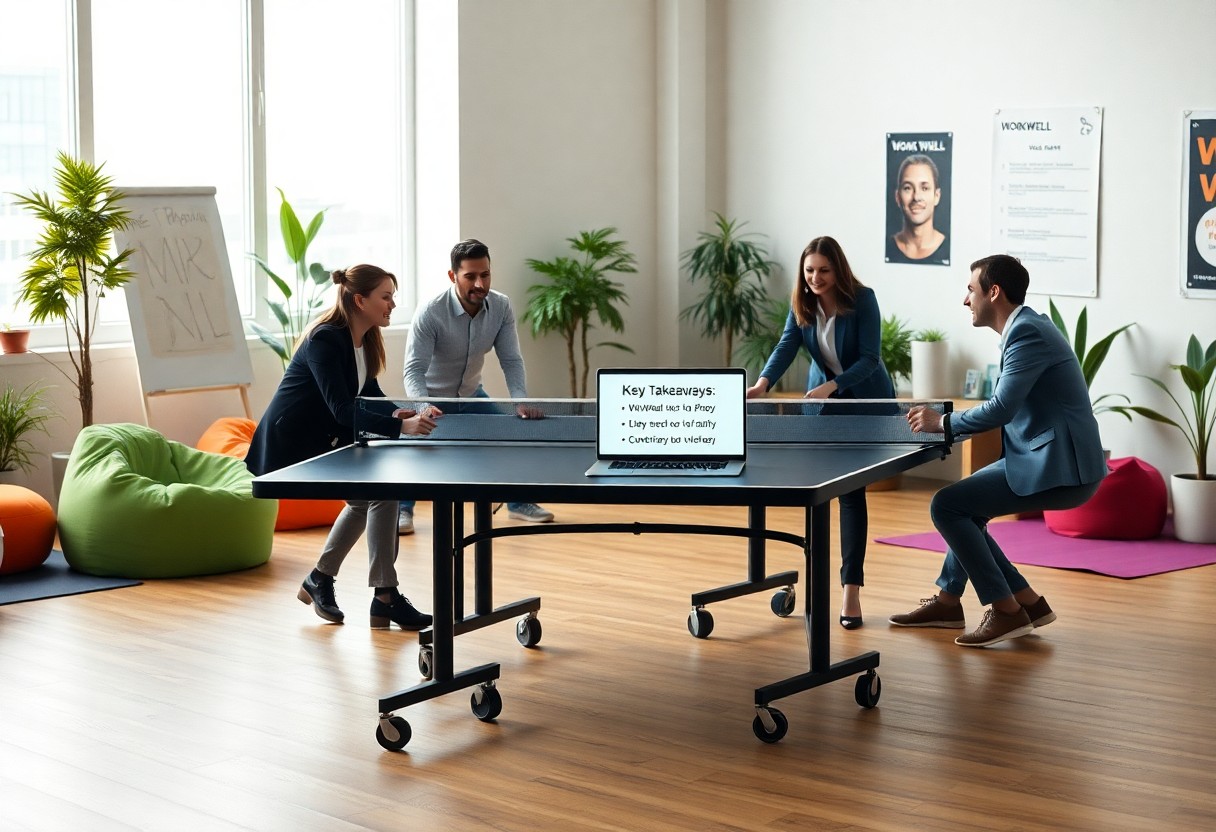
Over time, integrating playful breaks into your workday can reduce burnout and lower stress while boosting productivity and team cohesion; you learn to reset focus, foster creativity, and protect your wellbeing through short, intentional activities that are safe and measurable.
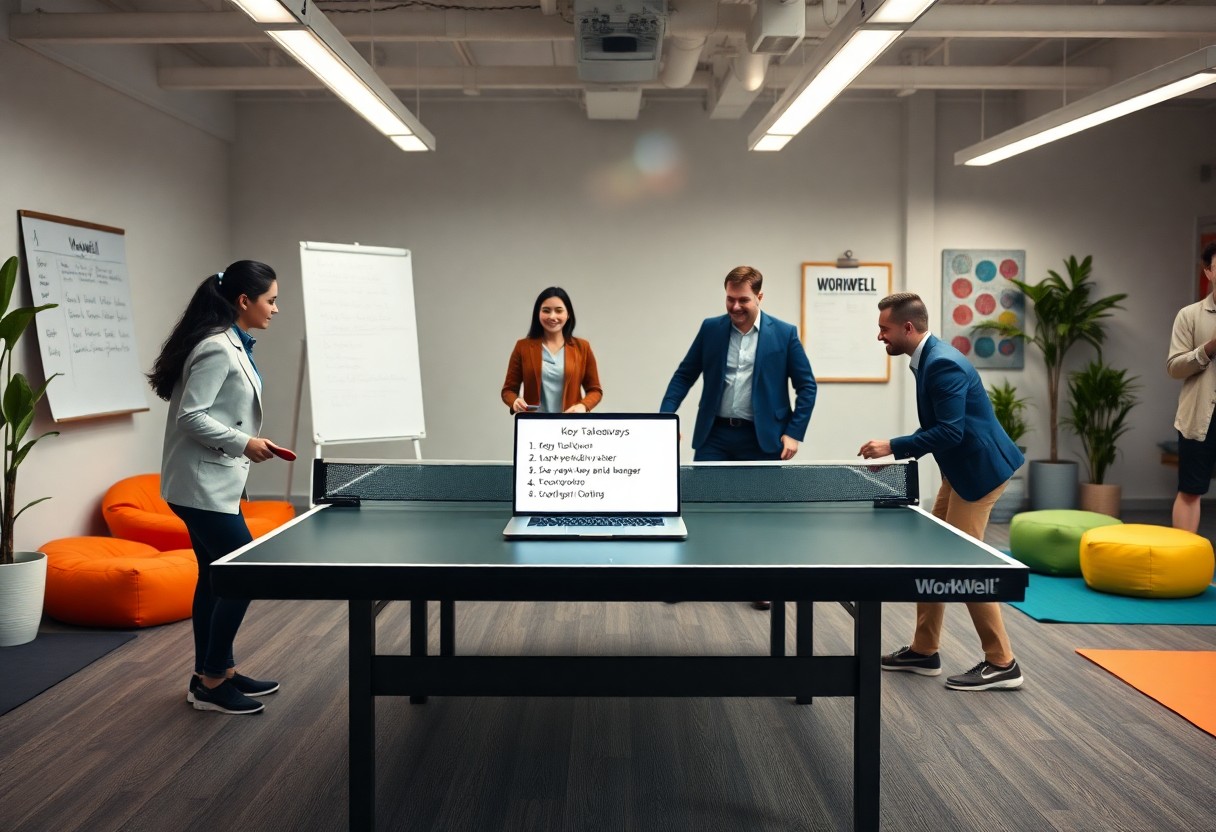
Key Takeaways:
- Integrating short, playful activities reduces stress and boosts employee mental and physical well-being.
- Playful challenges and group games strengthen teamwork, creativity, and communication.
- Low-cost, inclusive play practices (microbreaks, gamified tasks, playful workspaces) increase engagement and productivity.
The Importance of Play in the Workplace
Integrating playful rituals into your workflow removes friction from meetings and unlocks creativity; companies that foster engagement see tangible returns, with Gallup noting highly engaged teams deliver 21% greater profitability. Practical examples-Google’s informal spaces, Pixar’s creative rituals, and LEGO® Serious Play workshops-show how moments of play translate into faster idea generation and stronger problem framing, so you get clearer decisions with less friction.
Benefits of Play for Mental Health
When you adopt play as part of the workday, stress markers drop and mood improves: research links play to reduced cortisol and increased positive affect. Short, regular activities-5-10 minute desk games, laughter breaks, or playful warm-ups before intense tasks-help lower burnout risk and sharpen focus, yielding measurable improvements in resilience and emotional recovery during busy quarters.
Enhancing Team Collaboration through Play
Play-based methods-improv drills, LEGO® Serious Play, and short hackathons-help you reveal assumptions and build a shared language, accelerating alignment across functions. In practice, teams using these techniques report clearer role understanding and faster conflict resolution; facilitators often see improved participation from quieter members, producing richer idea exchange and quicker consensus during project kickoff and sprint planning.
To scale collaboration, you can run 45-90 minute facilitated sessions that combine a quick icebreaker, a structured challenge, and a focused debrief with three action items. Rotate facilitators across departments, use tangible tools (cards, blocks, timers), and track outcomes with pulse surveys or a simple NPS-style question. Case practice: run a two-week pilot, compare meeting length and decision speed, and iterate-this keeps play purposeful and tied to performance.
Types of Play Activities for Employees
- Team-building games: short cooperative challenges that build trust and communication.
- Active breaks: 10-15 minute movement sessions to restore energy and focus.
- Creative workshops: monthly improv, design sprints or art sessions to spark innovation.
- Gamified tasks: point systems and leaderboards for sales, wellness or skills goals.
- Assume that Social clubs: weekly interest groups (books, board games, running) increase belonging.
| Team-building games | 30-60 minute exercises for groups of 4-8, ideal quarterly. |
| Active breaks | 10-15 minutes of stretching or walking, scheduled mid-morning or mid-afternoon. |
| Creative workshops | 2-3 hour monthly sessions (improv, sketching) that stimulate divergent thinking. |
| Gamified tasks | Short sprints with points and badges; use apps to track progress and reward wins. |
| Social clubs | Weekly meetups for hobbies; low-cost, high-impact for retention and morale. |
Structured Play Programs
You can run a 10-12 week structured program with weekly 60-minute sessions-mixing skill-based games, goal-oriented challenges and reflection. Design cohorts of 6-10 people, measure engagement with short surveys and participation rates, and tie outcomes to performance metrics like collaboration scores. Use a pilot of one department first, then scale if participation exceeds 50%.
Informal Play Opportunities
You should enable drop-in, low-commitment options such as desk ping-pong, five-minute puzzles, or walking chats; these 10-15 minute bursts fit into busy schedules and lower barriers to participation. Make spaces accessible, post schedules, and encourage managers to model attendance so your culture normalizes short playful breaks.
You can augment informal play with digital channels: a Slack #micro-challenges feed, lunchtime leaderboard for step counts, or rotating desk toys. Start with no-budget options, pilot a few ideas for four weeks, track voluntary uptake, and enforce clear safety rules for physical activities to avoid injuries while boosting morale and micro-connection across teams.
Implementing Play Initiatives in the Workplace
You can pilot small, measurable play programs-one company introduced 15-minute daily play breaks and saw a 12% rise in engagement within two months; pair that with clear metrics and you’ll iterate faster. Use mixed tactics like pop-up game zones, weekly team challenges, and leader-led micro-sessions, and track outcomes in surveys and productivity dashboards. For program blueprints and a live case study, see Transforming Employee Wellness with WorkWell Live Series.
Assessing Workplace Culture and Readiness
You should run short pulse surveys and 1:1 interviews to gauge psychological safety, manager support, and interest levels; aim for at least a 60-70% positive readiness score before scaling. Observe informal interactions, review meeting cadence, and identify blockers like rigid schedules or remote tools. Use a readiness rubric with five criteria-leadership buy-in, schedule flexibility, space, budget, and measurement plan-to score teams and prioritize pilots with the highest adoption likelihood.
Strategies for Integrating Play into Daily Routines
You can embed play through predictable rituals: 5-15 minute microbreaks every 90-120 minutes, gamified goals with small rewards ($5-$10 perks), and weekly cross-team “play labs.” Rotate activities-quick brainteasers, movement sessions, or collaborative design sprints-to avoid novelty decay. Assign a play champion per team, set clear time budgets, and track short-term KPIs like mood scores and meeting efficiency to assess impact.
You’ll want concrete schedules and measurement: a typical pilot might set three daily microbreaks, one weekly team game, and a monthly all-hands play day, then measure changes in engagement, absenteeism, and task completion over 8-12 weeks. Use a simple dashboard showing % participation, average break length, and correlations with output; a small pilot with 10-30 participants gives statistically useful directional data before you expand.
Measuring the Impact of Play on Employee Wellness
Key Performance Indicators
You should track a mix of behavioral and outcome KPIs: engagement rates (pre/post surveys and platform logins), absenteeism and turnover percentages, changes in health‑claim costs, productivity per FTE, and psychological‑safety scores from 5‑point Likert surveys. Use control groups or staggered rollouts to isolate effects; pilots often report engagement lifts of 10-20% and absenteeism drops of 5-15%. Also monitor session usage and time‑on‑activity so you see whether play is driving results or merely entertainment. Watch for policy or safety risks that could reverse benefits.
Analyzing Employee Feedback
When you analyze feedback, combine quantitative pulse survey items (NPS, 1-5 usefulness, energy restored) with open‑ended responses; aim for a response rate above 40% to get actionable signals. Tag comments by theme-time, inclusivity, relevance-and cross‑reference with usage data to spot patterns. Ensure anonymity to improve honesty, and treat recurring negative themes as early warning signs that require immediate changes to design or scheduling.
For deeper analysis, run simple text analytics (keyword frequency, sentiment) and manual coding on a rotating sample of 100-200 comments to validate algorithmic themes. Ask targeted follow‑ups such as “Did this session reduce your stress today? (1-5)” and set thresholds (e.g., average ≥4 to scale). In one pilot example, addressing “timing” and “role relevance” from feedback increased perceived value by 18% within six weeks, showing how rapid iteration on qualitative input drives measurable wellness gains.
Overcoming Barriers to Play at Work
Barriers like time constraints, perceptions that play is unprofessional, and lack of space often stall pilots, but you can counter them with quick wins: introduce 10-15 minute microbreaks, convert a single room into a flexible play nook, and run a 2-4 week voluntary pilot that tracks focus and morale. Use resources such as 62 Proven Workplace Wellness Program Ideas to Motivate … to adapt proven tactics and show measurable improvements.
Addressing Skepticism and Resistance
When you meet skepticism, present a low-risk experiment: propose a 2-week, opt-in pilot with clear metrics (engagement, self-reported stress, short productivity indicators), brief leaders on expected outcomes, and share case examples where brief play sessions improved team cohesion; if you report even a 5-10% uptick in focus or morale, leadership often shifts from doubt to support.
Creating an Inclusive Play Environment
You can design play to fit everyone by offering multiple modalities-quiet activities (puzzles, coloring), collaborative games (design sprints), and movement breaks-labeling sensory intensity and physical requirements so people choose what fits their needs; prioritize accessibility and accommodate neurodiversity to avoid excluding staff.
Start by surveying your team to map preferences, then pilot at least three formats (quiet, social, physical) over a month, rotate facilitators, set clear opt-in rules, and budget small stipends for supplies; this stepwise, data-driven approach helps you scale inclusive options while minimizing discomfort or unintended exclusion.
Case Studies: Successful Play Initiatives
You can see measurable returns when play is treated as a strategic element of workplace wellness, with pilots producing quantifiable shifts in morale, retention, and cross-team collaboration within months rather than years.
- 1. Global tech firm (internal pilot): a 3‑month program across 4 offices with 1,200 employees produced a 22% rise in spontaneous cross‑team meetings, a 14% drop in sick days, and an estimated ROI 2.5:1 from reduced hiring costs and improved output; play zones were used 4-6 hours/week per participant.
- 2. Mid‑sized creative agency: after adding weekly gamified design sprints for 60 staff, you’ll see a 35% faster project turnaround and a 18% increase in client satisfaction scores within 6 months; employee engagement surveys climbed from 68% to 82%.
- 3. Manufacturing plant (safety & wellbeing drive): introducing short, structured physical breaks with playful team challenges across 450 workers cut minor incident rates by 27% and reduced overtime by 9%, improving mental health self-reports in anonymous surveys.
- 4. Financial services branch rollout: a 12‑week pilot for 240 advisors using table games to encourage knowledge sharing saw a 12% lift in cross-selling and a 7% decline in voluntary turnover year-over-year.
- 5. Remote-first startup: asynchronous micro‑games and virtual coffee challenges for 80 distributed employees increased participation in company forums by 48%, while 90‑day retention improved by 11 percentage points; warns that unmoderated play can create distractions if not scheduled.
Companies Leading the Way
You can look to organizations that embed play into culture rather than treat it as a perk: several tech and design firms have institutionalized short, playful rituals and dedicated spaces, reporting sustained lifts in collaboration and creative output, while boutique consultancies combine gamified learning with performance metrics to maintain alignment with business goals.
Lessons Learned from Implementation
You should pilot with clear metrics, start small (one team or location), and expect early engagement spikes followed by normalization; teams that tied play to measurable outcomes tended to sustain programs, while those that didn’t saw participation drop after novelty wore off.
In practice you’ll want a phased approach: run a 8-12 week pilot with 50-200 participants, track specific KPIs (engagement %, sick days, time‑to‑complete tasks), and set formal checkpoints at weeks 4 and 12. Allocate a small dedicated budget, assign a program owner, and create simple rules to prevent misuse-because while play drives positive energy and innovation, unchecked activities can reduce focus and productivity. Use mixed methods (usage data + pulse surveys) to iterate and scale only when you see consistent lifts in the target metrics.
Summing up
Considering all points, you can integrate play through short activities, flexible spaces, and supportive leadership to boost morale, creativity, and resilience; WorkWell’s evidence-based strategies help you measure outcomes, align play with company goals, and sustain wellness programs that reduce burnout and improve performance.
FAQ
Q: What is WorkWell and how does encouraging play at work support employee wellness?
A: WorkWell is a workplace wellness approach that intentionally incorporates playful activities and gameful design into daily routines to boost mental, social, and physical health. Play can be brief (two- to ten-minute microbreaks for movement or laughter), structured (team-building games, creativity sprints, gamified project milestones), or ambient (playful office rituals, themed weeks). Benefits include reduced stress and cognitive fatigue, increased creativity and problem-solving, improved social connection and morale, and higher engagement and retention. Implementations that align play with work rhythms-short scheduled breaks, opt-in social events, and task-based gamification-produce measurable outcomes such as faster recovery from decision fatigue, higher pulse-survey wellbeing scores, and lower unplanned absenteeism.
Q: How can managers implement play initiatives without harming productivity or professionalism?
A: Start small, timebox activities, and tie them to business goals. Pilot a low-cost activity for one team (for example a 10-minute morning warm-up or a weekly 30‑minute creative sprint) and gather feedback. Set clear boundaries: scheduled times, opt-in participation, and guidelines on tone and inclusivity. Choose activities that reinforce work objectives-problem-solving games that mirror project challenges, quick retrospectives with playful prompts, or gamified milestones that reward collaboration. Track both output and wellbeing metrics (task completion rates, cycle time, engagement survey scores, NPS for team climate) to ensure play increases productivity or at least recovers performance lost to burnout. Model professional behavior during play, debrief outcomes, and iterate policies so play complements rather than replaces focused work.
Q: How can WorkWell be adapted for hybrid and remote teams while ensuring inclusion and accessibility?
A: Use a mix of synchronous and asynchronous options so employees across time zones and with different needs can participate. Synchronous ideas: short virtual icebreakers, breakout-room challenges, collaborative whiteboard games. Asynchronous ideas: photo prompts, micro-challenges, gamified progress boards, and recognition threads in chat. Ensure accessibility by offering alternative ways to join (text, audio, low-bandwidth options), providing captions and clear instructions, avoiding sensory-heavy activities, and allowing opt-outs without penalty. Design activities with neurodiversity and mobility differences in mind-simple rules, multiple participation modes, predictable schedules. Measure inclusivity through participation breakdowns, feedback forms, and pulse surveys to detect gaps and adjust offerings so play is welcoming and beneficial to everyone.
Leave a Reply