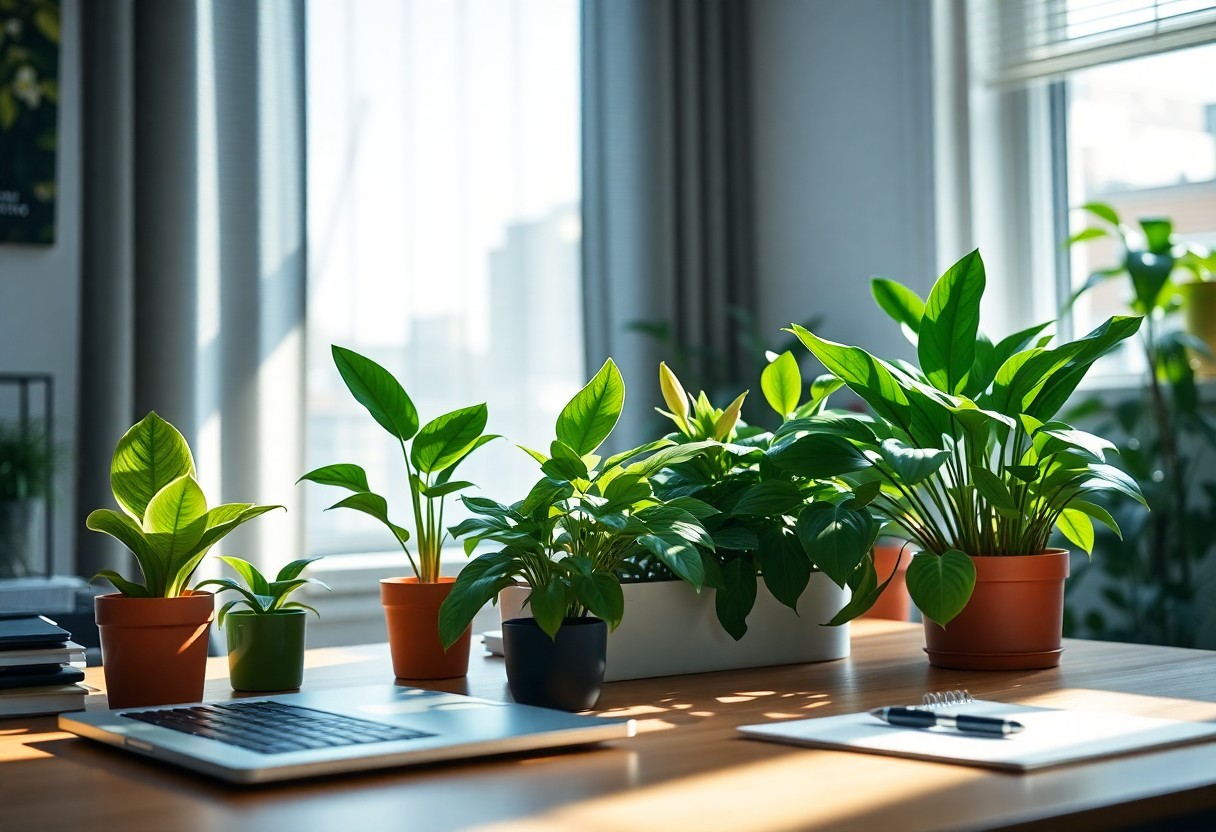
Just as your workspace influences your productivity, incorporating office plants can significantly enhance your psychological wellbeing. Research shows that greenery not only improves air quality but also reduces stress and boosts your mood. By engaging with plants in your environment, you can foster a sense of calm and focus, ultimately leading to increased job satisfaction and creativity. Understanding the profound impact of nature on mental health can empower you to cultivate a more positive work atmosphere.
Key Takeaways:
- Office plants contribute to improved air quality and reduce stress levels.
- Incorporating greenery in workspaces boosts creativity and productivity.
- Exposure to nature can enhance overall psychological wellbeing and job satisfaction.
The Role of Office Plants in Psychological Wellbeing
Office plants play an important role in boosting psychological wellbeing by fostering a healthier work environment. Integrating greenery aids in creating a more vibrant atmosphere that can lead to improved emotional health, increased satisfaction at work, and overall enhancement in team dynamics. By bridging the gap between nature and the indoor workspace, plants help to ease mental fatigue and promote a sense of tranquility, making them a vital addition to your office.
Enhancing Mood and Reducing Stress
Surrounding yourself with plants can significantly enhance your mood and reduce stress levels. Studies have shown that being around greenery can lower feelings of anxiety and depression, thanks to the calming effects of natural elements. The presence of plants triggers positive emotions, helping you feel more relaxed and balanced throughout the day.
Improving Focus and Productivity
Incorporating plants into your workspace can also lead to improved focus and productivity. Research indicates that having plants nearby can increase concentration and creativity by up to 15%. This reduction in stress and the boost in mood contribute to a sharper mindset, enabling you to tackle tasks more efficiently.
For instance, a study at the University of Exeter found that employees in environments enriched with plants demonstrated a 70% increase in productivity. The mere sight of greenery not only reduces mental fatigue but also stimulates your cognitive function. Furthermore, plants can improve air quality, which is vital for maintaining energy levels and focus. By strategically placing plants in your workspace, you’ll likely create an atmosphere that supports sustained attention and enhances overall performance.

Types of Office Plants Beneficial for Mental Health
Integrating plants into your workspace can significantly enhance your mental health. Certain species are particularly beneficial, providing aesthetic appeal while also supporting your well-being. Some of the best options include aromatherapy plants like lavender, low-maintenance varieties, and those known for their air-purifying properties. These plants not only improve indoor air quality but also create a calming atmosphere conducive to productivity. Perceiving the positive impact of greenery can lead you to make informed choices for your office environment.
- Aloe Vera
- Peace Lily
- Pothos
- Spider Plant
- Boston Fern
| Plant | Benefits |
| Aloe Vera | Soothes skin and improves air quality |
| Peace Lily | Reduces indoor pollutants, increases humidity |
| Pothos | Easy care, effective air purifier |
| Spider Plant | Enhances oxygen levels, aesthetic appeal |
| Boston Fern | Removes toxins, boosts humidity |
Low-Maintenance Options
If you’re looking for low-maintenance plants, a few standout choices can thrive with minimal care. The ZZ plant and snake plant tolerate low light and infrequent watering, making them perfect for busy work environments. These resilient species not only offer visual appeal but also contribute positively to your psychological wellbeing by reducing stress. Effective and easy selections like these allow you to enjoy greenery without the added pressure of extensive upkeep.
Plants Known for Air Purification
Certain plants are renowned for their air-purifying abilities, making them ideal for office settings. These include the spider plant, peace lily, and snake plant, which can filter harmful toxins such as formaldehyde and benzene. Incorporating these plants into your workspace can enhance the air quality, leading to better concentration and overall health. Studies indicate that improving air quality can significantly reduce symptoms of anxiety and depression, making these plants a beneficial addition to your office environment. Perceiving the advantages of cleaner air can motivate you to enhance your workspace with these vital plants.
Creating a Green Workspace
Transforming your office into a green workspace can directly enhance your productivity and mental clarity. By strategically placing plants around your environment, you can create a more inviting and calming atmosphere that contributes to overall psychological wellbeing. Incorporating greenery not only beautifies the space but also improves air quality, reducing stress and promoting better focus.
Tips for Incorporating Plants in Office Design
Integrating plants into your office design requires thoughtful consideration. Choose low-maintenance plants to suit your workspace, and opt for various sizes and types to create visual interest. Position larger plants in empty corners and smaller ones on desks or shelves for accessibility. Regularly rotating plant placement can also keep the environment dynamic and engaging. Thou shall create a lush atmosphere that invigorates your work life.
Maintenance and Care for Office Plants
Successful maintenance of office plants ensures they thrive and continue bringing benefits to your workspace. Watering schedules, appropriate light exposure, and occasional pruning are crucial aspects of care. Familiarize yourself with each plant’s unique needs, as some may require more frequent attention than others. Regular monitoring helps address issues like pests or overwatering before they escalate.
To effectively maintain your office plants, create a routine tailored to their specific needs. For instance, inspect them weekly for signs of pests and dust leaves to enhance photosynthesis. Establish a watering schedule based on the species and environmental conditions—some plants prefer soil that dries out between watering, while others thrive in consistently moist soil. Ensure proper light conditions by placing your plants near natural light sources. By prioritizing these simple practices, you enhance both the life of the plants and the overall ambiance of your workspace.
The Science Behind Plants and Wellbeing
Numerous studies reveal a strong correlation between office plants and employee wellbeing. Research indicates that having greenery in your workspace can improve mood, reduce stress, and enhance productivity. Findings suggest that exposure to plants in your environment increases feelings of calmness and creativity. For more details, check out this insightful article on 6 Ways Office Plants Improve Wellbeing and Workplace ….
Research Studies and Findings
Various studies substantiate the mental health benefits derived from office plants. For example, research published in the *Journal of Environmental Psychology* showed that integrating greenery in workspaces lowering stress levels by as much as 37%. Another study found that productivity could increase by 15% in environments enriched with plants.
Psychological Theories Supporting the Benefits
Several psychological theories explain how plants contribute to wellbeing. For instance, Attention Restoration Theory posits that natural elements help restore your attention, allowing for improved focus. Additionally, the Biophilia Hypothesis suggests that humans have an innate tendency to connect with nature, leading to improved psychological states when you are surrounded by greenery.
This connection to nature is particularly necessary in today’s technology-driven environments. Engaging with office plants can fulfill your psychological need for sensory input that contrasts with artificial stimuli, thus fostering an improved sense of balance in your mental state. Furthermore, maintaining plants can provide a sense of responsibility and achievement, further enhancing your overall psychological wellbeing.
Employee Engagement and Satisfaction
Integrating office plants into your workspace directly enhances employee engagement and satisfaction. You’ll find that a greener environment not only boosts productivity but also encourages a sense of ownership and commitment among staff. When employees feel more connected to their surroundings, their loyalty and job satisfaction increase, leading to lower turnover rates and better collaboration.
The Impact of Green Spaces on Employee Morale
The presence of green spaces significantly uplifts employee morale. Employees exposed to plants report feeling more relaxed and focused, which allows for a more vibrant office atmosphere. Studies show that access to greenery during work hours can lead to decreased stress levels and increased creativity, making your workspace a more welcoming and inspiring place to be.
Case Studies of Successful Plant Initiatives
Various organizations have successfully implemented plant initiatives, showcasing the beneficial impacts of greenery on their workforce. These case studies illustrate tangible results highlighting the positive correlation between plants and employee welfare.
- BBC – Implemented biophilic design with over 30% increase in employee wellbeing scores.
- Google – Introduced office plants leading to a 15% boost in productivity rates.
- Amazon – Installed indoor gardens, resulting in 20% reduction in employee sick days.
- Addison Lee – Increased staff engagement by 25% through the introduction of a plant-sharing program.
Engaging with these successful plant initiatives reveals that workplaces can thrive through simple yet impactful changes. Each case highlights significant percentages in improved wellbeing, productivity, and overall satisfaction, illustrating how imperative it is for you to prioritize greenery in your environment. Emphasizing plants can create a more holistic workplace that appeals to modern employees.
Challenges and Considerations
While the benefits of plants in the office are clear, several challenges can hinder their successful integration. You must consider factors such as allergies, space limitations, and maintenance requirements, as these elements significantly impact plant selection and overall employee satisfaction. Addressing these challenges is imperative to ensure that incorporating greenery positively contributes to your workplace atmosphere.
Allergy Concerns and Plant Selection
If you or your colleagues have allergies, plant selection is critical. Opt for low-pollen or hypoallergenic varieties such as spider plants or peace lilies. It’s imperative to conduct a quick survey within your team to mitigate allergic reactions, ensuring a comfortable environment for everyone.
Office Space Limitations and Solutions
Small office spaces can create limitations for integrating greenery. However, you can use strategies such as vertical planting, hanging planters, or wall-mounted shelves to maximize space effectively. Consider utilizing succulents or smaller potted plants that require less footprint while still enhancing the work environment.
Utilizing vertical gardens is an innovative solution when office space is limited. These installations can be mounted on walls, providing greenery without taking up valuable floor space. Additionally, using modular planters allows you to rearrange your plants as your space evolves. For instance, small succulents and air plants can thrive on desks without overwhelming work areas, ensuring that your plants contribute positively to the aesthetics without compromising function. Research demonstrates that even minimal greenery can boost mood and productivity, making it worthwhile to find solutions that work for your specific environment.
Conclusion
Now you understand how integrating WorkWell office plants into your workspace can significantly enhance your psychological wellbeing. By bringing greenery into your environment, you are not only improving air quality but also fostering a sense of calm and focus. This connection with nature can reduce stress, boost creativity, and enhance overall productivity. Embracing this simple yet effective strategy can lead to a healthier, more balanced work life, ultimately benefiting both you and your organization.
FAQ
Q: How do office plants contribute to psychological wellbeing?
A: Office plants improve air quality, reduce stress, and enhance mood. Their presence can create a calming environment, leading to increased focus and productivity among employees.
Q: What types of plants are best suited for office environments?
A: Some of the best plants for offices include snake plants, pothos, and peace lilies. These plants are low-maintenance, thrive in indoor conditions, and can tolerate low light levels.
Q: How can I integrate plants into my workspace effectively?
A: Integrate plants by placing them on desks, shelves, or communal areas. Choose a variety of sizes and types to create visual interest and positions them where they can be easily seen and appreciated.
Leave a Reply