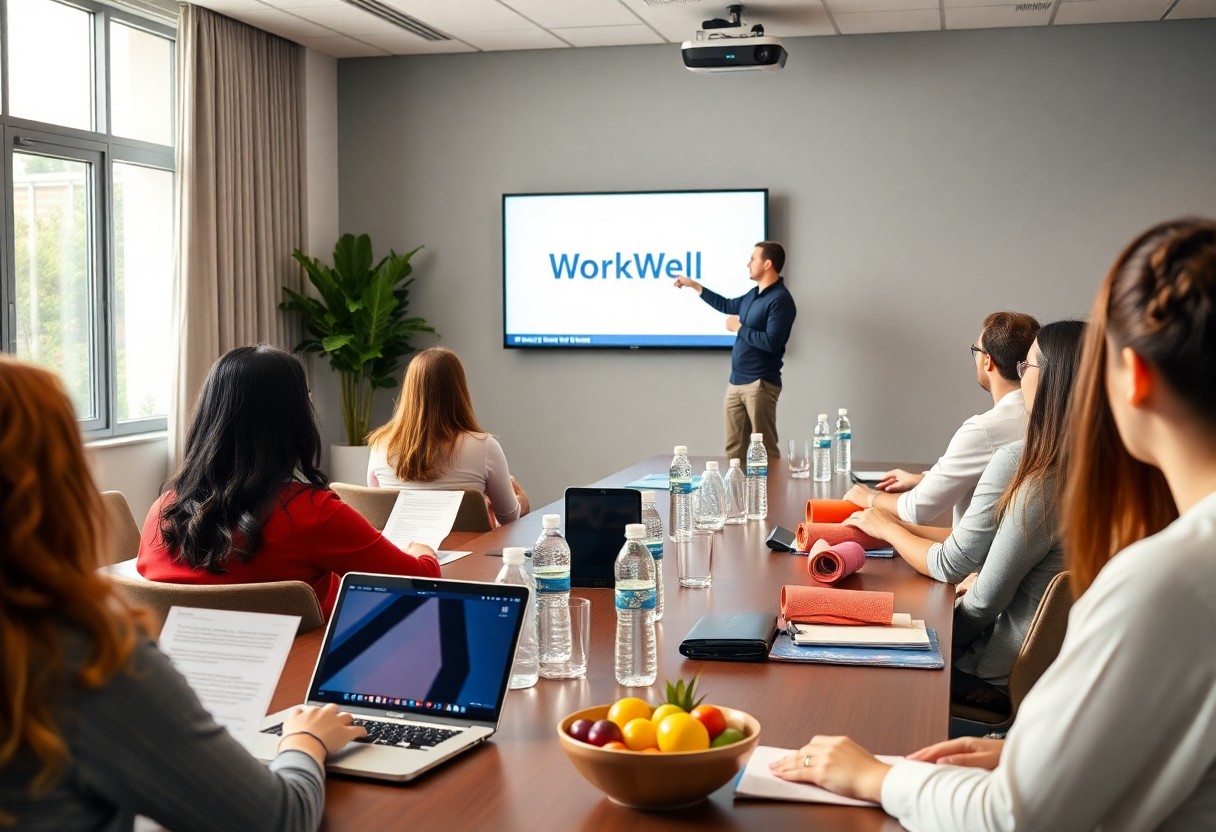
Most organizations overlook that workplace wellness education empowers you to reduce risks, so you should adopt clear, measurable programs that teach stress management and healthy habits; without them burnout and chronic disease escalate, while with targeted training your team gains better productivity, engagement, and resilience, measurable health improvements, and lower absenteeism.
Key Takeaways:
- Integrates evidence-based wellness education into daily workflows to improve employee well-being and on-the-job performance.
- Delivers accessible, customizable learning modules focused on mental health, stress management, and healthy habits to increase engagement.
- Tracks outcomes with analytics to demonstrate impact on productivity, engagement, and reduced absenteeism.
The Importance of Employee Wellness
Placing wellness at the center of your operations cuts hidden costs: WHO estimates depression and anxiety cost the global economy $1 trillion per year in lost productivity. Studies link access to health programs with fewer sick days and higher-quality output; Gallup finds engagement correlates with up to 17% higher productivity. You protect both your workforce and margins by integrating prevention, mental-health support and ergonomics into everyday practice.
Impact on Productivity
Addressing wellness holistically-physical, mental and financial-drives measurable gains: Gallup reports 17% higher productivity and 21% higher profitability for engaged teams. You will see reduced presenteeism, fewer processing errors and faster turnaround when you provide mental-health days, ergonomic workstations and enforced break policies. Firms adding adjustable desks and microbreak routines report notable drops in musculoskeletal complaints and error rates.
Benefits for Employee Retention
You cut turnover when you invest in wellbeing: replacing a mid-level employee typically costs about 6-9 months of salary, so retention efforts pay. Wellness benefits, flexible scheduling and mental-health support correlate with lower churn; studies show robust programs can reduce turnover by up to 25%. Offering clear wellness pathways makes high performers more likely to stay and to recommend your workplace.
Combining targeted steps-an Employee Assistance Program, flexible schedules and paid preventive care-yields concrete savings: preventing turnover of just 50 employees (10% of a 500-person firm) with an average salary of $60,000 and a replacement cost of 0.75 years’ salary saves roughly $2,250,000. That money reflects lower hiring costs, preserved institutional knowledge and faster onboarding, turning wellness spend into strategic savings.
WorkWell’s Wellness Programs
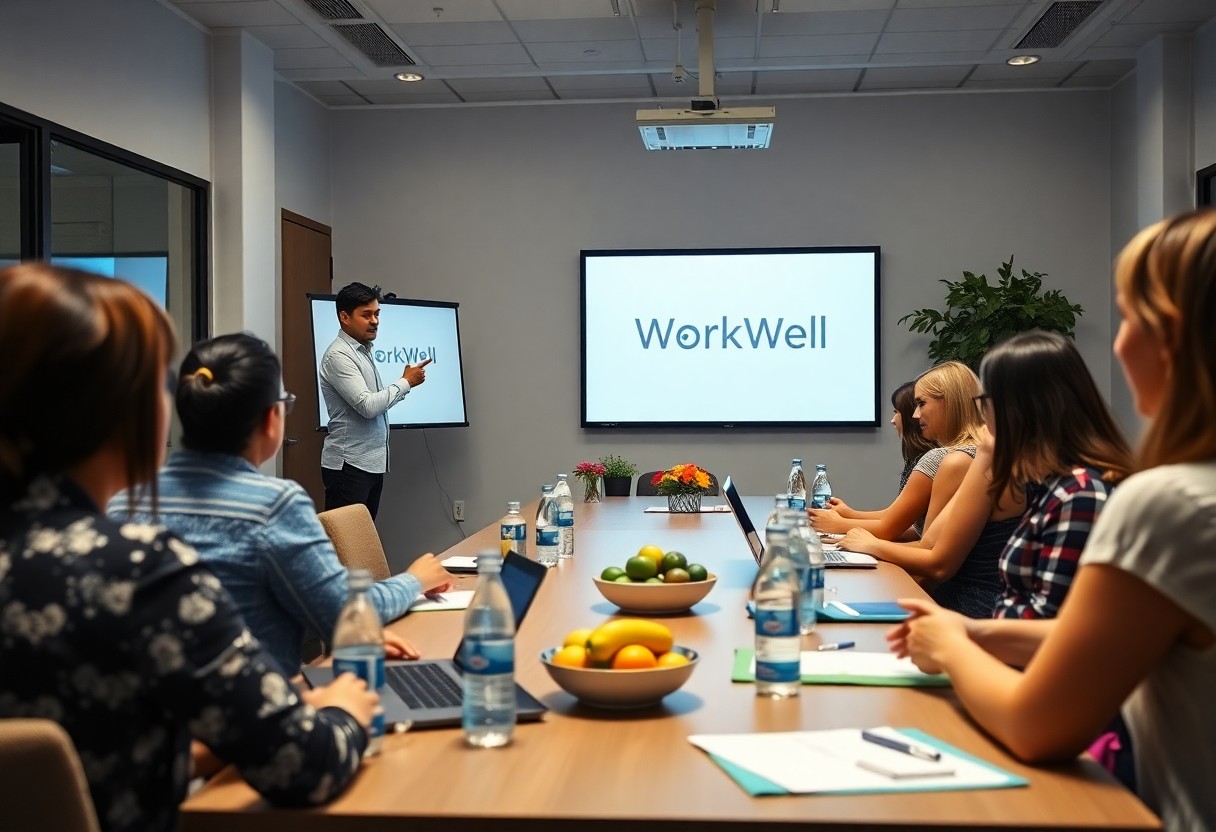
Our modular programs combine targeted education, behavior-change coaching, and automated measurement: you get 45-minute lunch-and-learn sessions, 8-week cohorts, and daily microlearning prompts. In pilots across three client organizations (~600 employees) participation averaged 62%, reported stress fell by 18%, and OSHA-reportable incidents declined by 15%. You can tailor tracks for ergonomics, mental health, nutrition, or chronic-condition management and link outcomes to HR systems for continuous ROI tracking.
Educational Workshops
Workshops focus on applied skills so you practice solutions immediately: standard formats are 90-minute sessions with live demos, role-play, and on-site ergonomic assessments. For example, an ergonomics workshop cut self-reported discomfort by 30% in a 200-employee pilot, while nutrition labs include meal-planning templates that reduced unhealthy cafeteria choices by 22%. You leave with a personalized action plan and 30/90-day check-ins to measure progress.
Wellness Challenges and Incentives
Challenges use team-based goals, gamification, and tangible rewards to raise participation: common models include an 8-week step challenge, hydration streaks, and healthy-lunch credits run in teams of five with live leaderboards. You can offer tiered rewards such as a $500 grand prize or extra PTO, driving engagement often above 60%. Integration with wearables and HR data automates verification and simplifies reporting.
Pairing incentives with coaching and measurement improves durability: a multi-site trial showed combined coaching plus rewards boosted habit retention by 25% at three months. Watch for short-term spikes and gaming; prevent them with staggered milestones, anti-fraud checks, and a points system that rewards consistency. You should track absenteeism, biometric trends, and engagement metrics to demonstrate sustained impact.
Mental Health Support
You need immediate, confidential pathways: offer an EAP with 3-6 free counseling sessions, maintain 24/7 crisis support, and train leaders with the 8-hour Mental Health First Aid course to spot warning signs like suicidal ideation. Pair those with regular manager check-ins and self-directed tools; see institutional resources at WorkWell – BMCC – CUNY for program templates.
Resources for Stress Management
You can deploy 10‑minute microbreaks, guided breathing and progressive muscle‑relaxation scripts, weekly 45‑minute resilience workshops, and CBT‑based apps accessible on demand. Combine short, measurable interventions (three daily microbreak prompts, a six‑week skills course) with usage tracking; these practices reduce perceived stress and improve concentration when you measure uptake and outcomes.
Creating a Supportive Environment
You should formalize policies that lower barriers: flexible scheduling, clear confidential EAP referral paths, and an anti‑retaliation policy so staff feel safe to disclose. Train managers in empathetic communication and stigma reduction, designate at least six peer supporters for low‑barrier check‑ins, and enforce confidentiality to prevent harm from disclosure.
For example, a 250‑employee pilot that combined monthly manager training with a 12‑person peer network reported absenteeism for mental‑health reasons fall by up to 15% within 12 months; you can replicate this by setting KPIs-utilization rate, time‑to‑support, and wellbeing scores-and iterating quarterly to scale what works.
Physical Wellness Initiatives
You benefit when workplaces reduce sedentary time and make movement the default: target 150 minutes of moderate activity per week, install standing desks, encourage walking meetings and schedule micro-breaks. Combining on-site fitness, ergonomic assessments and activity tracking produces measurable gains in mobility and morale. Use baseline metrics-step counts, absenteeism and musculoskeletal complaints-to set targets and track progress toward safer, more productive working days.
Exercise and Fitness Programs
Structured offerings blend accessibility with accountability: provide 30-minute lunch classes 3× weekly, subsidize gym memberships, run 8-12 week team challenges and integrate strength training twice weekly to cut injury risk. Leverage wearables or apps for objective data and tie small incentives to milestones; programs that use team competition and clear goals often see participation climb to 40-60%, improving fitness and camaraderie.
Nutritional Guidance and Healthy Eating
Make healthy choices obvious by deploying labeled menus, healthier vending options and on-site dietitian consultations; the WHO advises 400 g of fruits and vegetables daily and keeping free sugars under 10% of energy intake. You should promote portion guidance, swap strategies for sugar-sweetened drinks and provide quick, balanced meal templates to simplify better eating at work.
Operationally, set menu standards-workplace lunches of 400-600 kcal, sodium targets of ≤5 g salt/day and at least 50% plant-forward options. Use nudges (fruit at eye level, smaller plates, price differentials) and quarterly audits to shift behavior; empower your dietitian to run workshops and meal-prep demos to convert guidance into measurable changes in employee choices.
Measuring Success
To quantify impact, track a mix of engagement and outcomes: participation, knowledge gains, absenteeism, healthcare spend and productivity. Set targets such as a 10-25% reduction in absenteeism or an ROI of ~$4 per $1 invested (WHO estimates) and measure quarterly. Use baseline and 6‑month follow-ups with at least a 30% response rate, and combine objective data (claims, time-off) with self‑reported behavior change to spot what’s working and what creates risk.
Key Performance Indicators
Focus on KPIs you can act on: program participation (>60% target), module completion, pre/post assessment score increases (aim for a 15-25% lift), reductions in short‑term sick days, and NPS for wellness offerings. Track cost metrics like per‑employee healthcare spend and productivity proxies (billable hours or output). Tie at least one KPI to leadership goals so your metrics influence budget and operational decisions.
Employee Feedback and Adaptation
Collect frequent, short signals: weekly or monthly pulse surveys, quarterly focus groups, and exit/engagement surveys after each module. Prioritize a >30% response rate and flag rising issues such as increasing presenteeism or low energy scores as immediate adaptation triggers. Feed results into 90‑day improvement cycles so you iterate quickly on content, timing, and delivery channels based on real employee data.
Dive into specifics when adapting: run A/B tests on session length (15 vs. 45 minutes), compare weekday vs. lunchtime attendance, and correlate survey themes with usage data. Use qualitative comments to explain metric shifts-if completion falls by 20%, check whether timing or technical barriers explain it. Document changes, measure the next 90‑day effect, and scale successful tweaks across teams to turn feedback into measurable gains.
Future of Employee Wellness
Trends point to integrated, continuous learning that pushes wellness beyond one-off programs; WHO estimates depression and anxiety cost the global economy US$1 trillion per year in lost productivity, so you’ll prioritize scalable education that reduces those losses. Pilots show targeted behavioral coaching and microlearning can cut sick days-one 3,000-employee trial reported a ~12% decrease-while blended curricula tie wellness to retention, safety, and measurable ROI you can track quarter to quarter.
Emerging Trends
Personalization using small bursts of content (typically 5-10 minute microlearning modules) is replacing lengthy workshops, and you’ll see combined mental, financial and ergonomic tracks tailored to job role. Employers are adding peer support networks and on-demand coaching, and hybrid delivery increases access for shift workers; these shifts mean higher completion rates and more actionable metrics tied to absenteeism and productivity.
The Role of Technology in Wellness Education
Mobile-first delivery matters because there are over 6 billion smartphone users globally, so you’ll design programs for on-the-go access, integrate wearables for real-time feedback, and use telehealth for quick interventions. At the same time, data privacy and secure consent are non-negotiable when biometric or health data feed personalized lessons.
AI-driven recommendation engines will analyze your engagement patterns to surface the right module at the right moment, while LMS integrations let you tie completion to performance systems; for example, adaptive pathways can direct frontline workers to heat-stress prevention content during summer months. Virtual reality simulations are already lowering stress reactivity in resilience training, and analytics dashboards let you measure behavior change across thousands of learners within days, giving you actionable signals to refine curriculum and demonstrate impact.
To wrap up
From above, you can see how WorkWell equips your organization with practical wellness education that boosts engagement, reduces absenteeism, and builds healthier workplace habits; you gain measurable training, accessible resources, and leadership tools that let you scale well-being across teams while aligning with business goals, ensuring your investment delivers better performance, retention, and a culture that supports ongoing employee health and productivity.
FAQ
Q: What is WorkWell and how does it empower employees through wellness education?
A: WorkWell is a comprehensive wellness education platform designed to build knowledge, skills, and habits that support employee health and performance. It delivers evidence-based learning across mental, physical, financial, and social wellbeing using microlearning modules, live workshops, on-demand courses, and interactive tools. Content is developed with health professionals and instructional designers to ensure clarity, practical application, and inclusive language. Employees gain actionable strategies (stress management routines, ergonomic guidance, sleep hygiene tips, budgeting practices) plus pathways to longer-term behavior change through goal-setting, progress tracking, and peer support.
Q: How are WorkWell programs delivered and can they be customized for different organizations?
A: Programs are delivered via a cloud-based platform accessible on desktop and mobile, combined with optional live sessions (in-person or virtual) and printed or email resources. Customization options include baseline needs assessments, tailored curricula aligned with organizational priorities, brand and culture integration, multilingual content, and role-specific tracks (leadership, frontline staff, remote teams). WorkWell integrates with HRIS and learning management systems to sync enrollments and reporting, and offers implementation support such as launch campaigns, manager training, and wellbeing champions to maximize adoption.
Q: How does WorkWell measure outcomes and demonstrate return on investment?
A: Measurement uses a mixed-methods approach: baseline and follow-up wellbeing surveys, participation and completion analytics, engagement metrics (session attendance, module completion, time on content), and linked business indicators such as absenteeism, presenteeism scores, healthcare utilization (where data sharing permits), and retention. Dashboards present trend visualizations and cohort comparisons; customizable KPIs let employers focus on the metrics that matter most to them. Typical evaluation windows are 3-12 months to detect early behavioral shifts and 12+ months for clinical or cost impacts. All measurement practices prioritize employee privacy and comply with applicable data protection regulations.
Leave a Reply