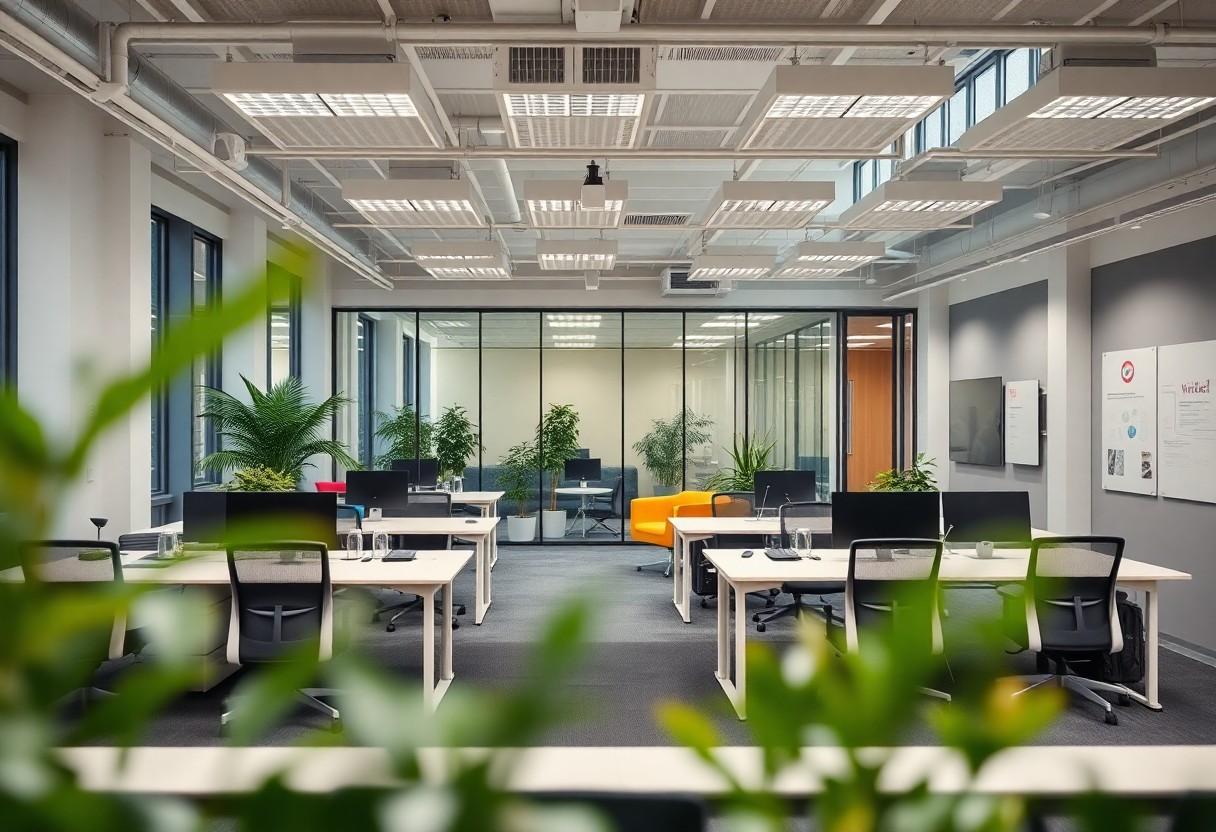
Most office layouts ignore how design shapes emotions, and you should assess whether your space supports wellbeing or harms it: prioritize emotional intelligence in design by giving employees privacy and acoustic control to avoid the dangerous stress of constant noise, while incorporating natural light, biophilic elements, and flexible zones to boost creativity and belonging. Use data, observation, and employee feedback to align your physical environment with how people actually feel and perform.
Emotions guide how you perform and interact, so your office design should intentionally support employee well-being and social connection while reducing signals that drive burnout. Evaluate lighting, acoustics, privacy and circulation to amplify focus, safety and collaboration that boost productivity. Use measured data and user feedback to align spaces with real needs so your workplace becomes an asset to mental health and performance.
Key Takeaways:
- Emotionally intelligent offices prioritize choice and control-privacy, dedicated social and quiet zones, and flexible layouts-to boost wellbeing and sustained productivity.
- Sensory design (lighting, acoustics, materials, biophilic elements) and clear transitions support mood regulation, focus, and comfort throughout the workday.
- Human-centered, iterative design using user feedback and measurable outcomes creates inclusive, adaptable spaces that evolve with employee needs.
Key Takeaways:
- Office design that prioritizes employees’ emotional needs-privacy, control, comfort-boosts wellbeing and sustained productivity.
- Flexible, human-centered elements (zoning, adjustable lighting, acoustic solutions, biophilic features) let people adapt space to tasks and moods.
- Design that communicates organizational values and supports social connection, autonomy, and intuitive navigation strengthens engagement and trust.
Understanding Emotionally Intelligent Design
It manifests when spatial choices, sensory cues and organizational policies work together so you feel supported rather than stressed; for example, firms that boost engagement often see measurable gains-Gallup reports engaged teams can deliver up to 21% greater profitability. At the same time, design missteps matter: a 2018 study found some open-plan redesigns reduced face-to-face interaction by roughly 70%, a dangerous unintended consequence you must mitigate.
What is Emotionally Intelligent Design?
It’s an evidence-based approach that anticipates how your emotions respond to light, sound, color and choice: adjustable lighting (typically 2700-5000K), acoustic zoning, desk-height flexibility, and biophilic elements. You get direct control over privacy and comfort, designers use behavioral data and quick A/B tests, and interventions are scalable-small pilot changes often reveal the biggest lifts in focus and mood.
Benefits of Emotionally Intelligent Offices
You gain higher productivity, lower churn, better wellbeing and clearer collaboration paths when space aligns with tasks; organizations that prioritize experience report stronger engagement and financial results, with Gallup’s 21% profitability figure often cited. At the same time, watch for trade-offs-loss of privacy can reduce collaboration unless you add focused zones and policies to protect concentrated work.
Practical payoffs show up fast: pilot programs that add quiet rooms, touchdown spaces and adjustable lighting typically produce measurable improvements in engagement and task completion within 3-6 months, and many teams see ROI in 12-24 months through reduced absenteeism, lower recruitment costs and higher output. You should track engagement scores, objective productivity metrics and space utilization to validate which design changes deliver the most value.
The Concept of Emotionally Intelligent Design
Emotionally intelligent design aligns spatial layout, light, acoustics, and materials to how you feel and perform; a 2014 Journal of Environmental Psychology study found plants in offices reduced physiological stress responses. You benefit when designers pair natural light and biophilia with clear circulation and privacy gradients, and you suffer when poor acoustics or confusing layouts create chronic distraction. Practical trade-offs-like clustered collaboration zones next to quiet suites-let you move between states without friction.
Understanding Emotional Intelligence in Workspaces
You respond to subtle environmental cues-color, lighting temperature, and spatial density-that alter mood and productivity. Neuroscience shows cooler, higher-correlated light boosts alertness while warmer tones support winding down; circadian lighting strategies can improve daytime performance and night sleep. Designers use zoning and signage so you intuitively choose a space for focused work, quick team huddles, or restorative breaks, reducing decision friction and stress.
Key Elements of Emotionally Intelligent Office Design
Focus on five elements: light, acoustics, privacy, flexibility, and biophilia. You should provide 300-500 lux for general tasks and offer personal lighting control; acoustic treatments and visual buffers protect concentration; adaptable furniture supports different postures; and greenery improves perceived well-being. Activity-based layouts let you self-select settings for tasks, increasing both collaboration and deep-work capacity.
For specification, target measurable metrics: maintain thermal comfort around 20-24°C, provide 300-500 lux with tunable 2700-6500K lighting, and aim for NRC 0.6-0.8 in open areas and >0.9 in focus rooms. Equip spaces with individual controls-height-adjustable desks, task lighting, operable windows-and deploy sound masking where speech privacy matters; these interventions let you modulate your environment and yield measurable gains in satisfaction and retention.
Key Elements of Emotionally Intelligent Office Design
Start with zoning-focus, collaboration, social and quiet recovery areas-and layer acoustics, ergonomics, materials, lighting and biophilia to support emotion and function. For example, plan around 8-12 m² per person to balance density and privacy, target background noise below 45 dB in open areas, and integrate biophilic elements like plants or daylight to lower stress and boost attention.
Layout and Space Planning
Organize your floorplate by activity: mix focused desks, small enclosed rooms, and flexible huddle zones so teams can shift modes quickly; aim for about 1 focus room per 8-12 people and reserve dedicated touchdown areas for visitors. Prioritize adjacencies-placing quiet work near windows and collaboration near amenities-so circulation supports, not disrupts, tasks and informal encounters.
Color and Lighting Considerations
Use daylight first: position workstations to access natural light and specify task lighting at 300-500 lux with ambient levels around 200-300 lux. Choose color temperatures between 3500-5000K for alertness in task zones and apply warmer tones in lounges to aid recovery; contrast warm accent hues with neutral backgrounds to guide mood and focus.
Deploy tunable LED systems so you can shift spectra throughout the day-cooler white for morning focus, warmer late-afternoon settings to signal wind-down. Control glare with blinds and diffusers, maintain CRI >90 for accurate color rendering when visual detail matters, and test palettes with users: swapping a single accent wall often changes perceived privacy and collaboration levels dramatically.
The Impact of Office Design on Employee Well-being
When you design with emotional intelligence, you turn aesthetics into measurable outcomes: improved focus, lower turnover, and fewer sick days. Prioritizing natural light, acoustic zoning and ergonomic furniture raises morale, while poor ventilation and glare create health and performance risks. Use frameworks like WELL (10 concepts) and resources on the Importance of Emotional Intelligence in Design Business to align choices with well-being metrics.
Psychological Effects of Workspace Environment
Spatial layout directly shapes how you feel: open plans boost collaboration but increase interruptions and perceived stress, whereas mixed-mode zoning with quiet rooms and touchdown spaces reduces distractions and improves concentration. Companies that add varied settings report engagement increases of around 20-30%, and WELL’s Mind concept specifically addresses cognitive load and mental health to help you quantify interventions.
Emotional Responses to Design Elements
Colors, materials and greenery trigger immediate emotions-blue and green tones calm, warm hues energize, and natural materials lower perceived stress-so you should match palettes to task types and brand identity. Controlled daylight, biophilic features and tactile finishes also shape trust and belonging, with targeted changes often improving mood and collaboration within weeks.
For more detail, prioritize daylight access, biophilia and tactile materials: daylight availability is rated a top priority by over half of employees in workplace surveys, while adding plants and wood finishes in pilot projects has reduced reported stress and absenteeism and increased creative task performance; implement tunable lighting, acoustic baffles and greenery in high-traffic zones to get measurable gains quickly.
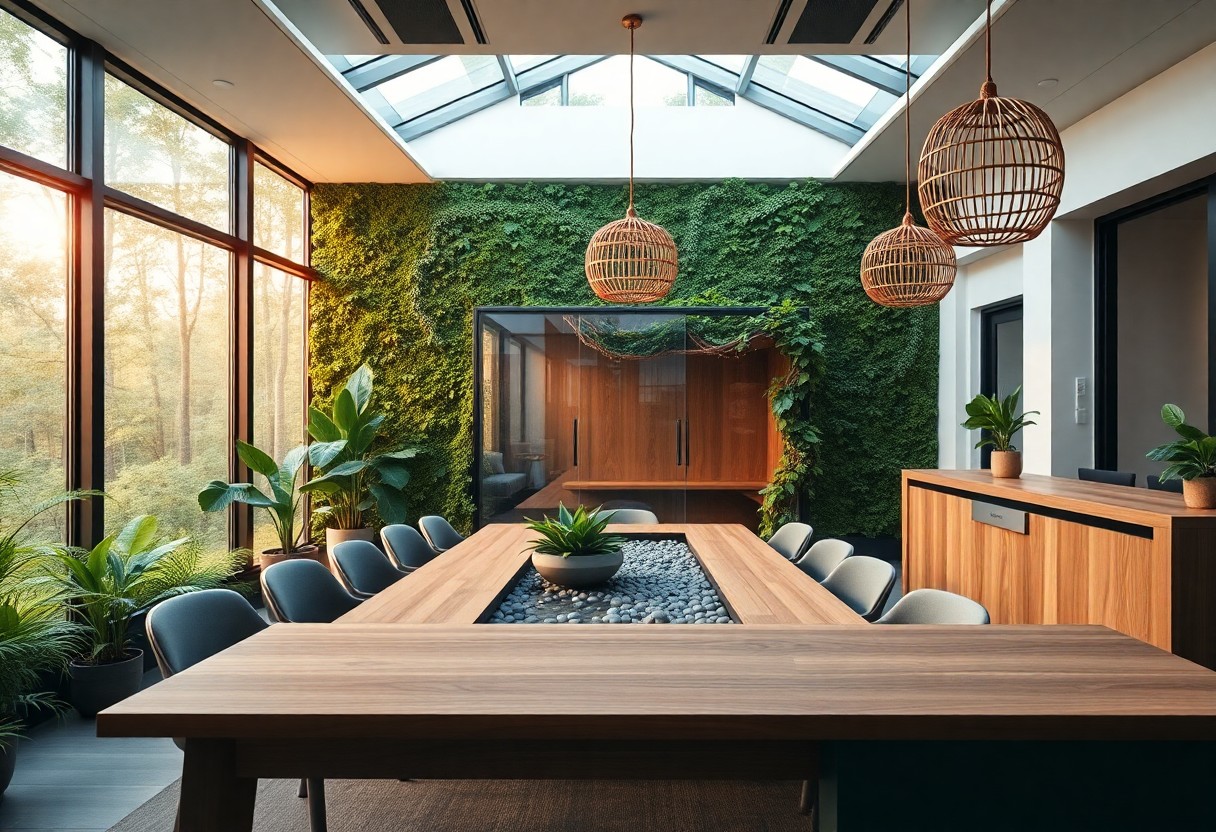
Impact of Nature on Office Well-being
Integrating nature into the workplace delivers measurable returns: a Human Spaces study found offices with natural elements reported 15% higher well‑being and 6% higher productivity, and views to greenery lower physiological stress markers. When you design with emotional intelligence in mind, as discussed in this Importance of Emotional Intelligence in Design Business piece, your choices shift from aesthetic to performance-driven interventions.
Biophilic Design Principles
You should apply proven patterns-Terrapin Bright Green’s 14 patterns-such as direct experience of nature (daylight, views), prospect and refuge (open sightlines with cozy nooks), and natural materials; for example, using timber finishes and curved forms improved wayfinding and reduced perceived stress in several corporate retrofit case studies.
Incorporating Green Spaces
Start with tactical moves: living walls, desk plants, interior courtyards, and rooftop terraces boost air quality, connection to nature, and visual comfort; place greenery near workstations and main circulation routes to maximize exposure while avoiding glare and obstruction.
For implementation, choose hardy, low‑allergen species (pothos, sansevieria, ficus) and automated drip irrigation to limit maintenance; expect installation costs to vary by system, and plan routine care weekly to monthly. Coordinate with facilities for HVAC, pest control, and soil selection, and set a maintenance contract-without it plants can become a liability rather than a benefit, so make ongoing care part of your budget and design brief.
Incorporating Collaboration and Connectivity
You should allocate dedicated collaboration points so teams can meet without hunting for space – a practical benchmark is 1 huddle or small meeting zone per 8-12 employees. Pair those zones with fast, reliable Wi‑Fi, abundant power/USB access and quiet acoustic treatments; without them spontaneous collaboration collapses into frustrated phone calls and distracted open-plan noise. Aim for visible wayfinding and plug‑and‑play AV in every shared area to keep interactions frictionless.
Designing for Interaction and Teamwork
Cluster teams into neighborhoods of 6-12 seats to encourage daily face-to-face exchange, and include a mix of 4-6 person huddle rooms, writable-wall zones and casual lounges to support different interaction types. Place cross-functional teams adjacently to boost serendipitous problem-solving, and equip at least one video-enabled space per neighborhood for hybrid collaboration – many organizations target 25-35% of workspace dedicated to collaborative activities.
The Role of Flexibility in Office Layout
Use modular furniture, movable partitions and soft seating on casters so you can reconfigure for workshops, all‑hands or quiet focus within hours; hybrid teams often adopt 0.6-0.8 desks per employee ratios to lower real estate costs while maintaining capacity. Integrate smart booking systems and visible occupancy data so you can adapt the floorplan based on actual usage rather than assumptions.
When you pilot flexibility, run a controlled test for about 12 weeks, provide a 1:1 locker solution and deploy simple sensors or booking analytics to track seat utilization, booking rates and neighborhood dwell time. Expect utilization to climb and peak-demand patterns to emerge within that window; use the data to shift resources (add more huddle rooms, convert underused private offices into project suites) and communicate changes with a clear change-management plan to keep adoption high.
Employee Well-being and Mental Health
Design choices directly shape your mental health: biophilic elements and daylight have been linked to about 15% higher reported well‑being in workplace studies, while excessive open‑plan noise raises stress and distraction. You should balance privacy, social spaces and restorative zones; see research and design arguments in It’s perfectly logical why we should apply emotion in … for practical examples.
Creating Supportive Environments
Provide dedicated quiet rooms, on‑site counselling and peer‑support pods so you can access help without stigma; organisations that introduced wellbeing spaces report reduced short‑term absence and faster return‑to‑work. Equip rooms with dimmable light, acoustic panels and comfortable seating, and enforce simple booking rules (e.g. same‑day slots) so you can use restorative spaces when stress spikes.
Flexibility and Personalization
Let employees control light, temperature and workstation setup: adjustable desks typically reduce sitting by 60-90 minutes daily, easing back pain and boosting focus. Offer a range of settings-huddle rooms, phone booths, soft lounges-so you can match space to task and mood, which correlates with higher engagement and lower turnover.
Pilot a “choose‑your‑space” program with a 6-8 week trial and measure productivity and well‑being via pulse surveys you run. When you iterate based on weekly feedback, utilisation and satisfaction often improve within three months, letting you scale the personalization features that actually work for your teams.
Personalization and Employee Autonomy
You should design for choice by giving people control over their micro-environment-lighting, desk height, storage and acoustics-so they can tailor space to tasks and mood; research links autonomy to higher engagement and outcomes (Gallup notes highly engaged teams deliver 21% greater profitability), so simple elements like adjustable sit‑stand desks, movable screens and personal plants translate directly into measurable value.
Encouraging Individual Expression through Design
You can promote identity and belonging by allowing visible personal touches-photos, plants, modular shelving, and writable walls-that signal ownership; design firms like IDEO let teams curate studio walls and storage, boosting collaboration and a sense of team history, so permit personal artifacts and flexible display zones to increase morale and retention.
The Importance of Choice in Workspace Arrangement
You should provide a menu of settings-quiet focus booths, collaborative tables, formal meeting rooms and casual lounges-so employees pick locations suited to tasks; aim to offer at least three distinct settings per floor and clear signage so people quickly find the right environment for concentration or collaboration.
Implement choice pragmatically: run an 8-12 week pilot with sensors and pulse surveys, target space utilization of 70-80%, and iterate layouts based on feedback; this data-driven approach prevents wasted real estate while letting you scale the most preferred settings across teams.
Collaboration and Social Spaces
You should balance quiet focus areas with visible social hubs so spontaneous exchange happens without disrupting heads-down work; a practical planning ratio many designers use is roughly 60% individual/40% collaborative. Place a mix of 4-12 person lounges, 2-4 person huddle rooms, and circulation seating near transit routes to boost cross-team contact. For example, companies that add micro-kitchens and touchdown benches often report noticeably faster decision cycles and more ad-hoc problem solving.
Encouraging Interaction
You can trigger interaction by clustering amenities-cafés, printers, and whiteboards-within a 2-minute walk from most desks so serendipity increases. Use varied seating (banquettes, high tables, soft chairs) and reservable huddle rooms sized for 3-6 people to suit quick stand-ups and longer brainstorms. Case studies from campus-style offices show that visible, comfortable hubs lift cross-departmental meetings and informal mentorship opportunities.
Designing for Inclusivity
You should design social spaces that let everyone participate: provide adjustable-height tables, clear sightlines, zoned acoustics, and signage in relevant languages so employees with mobility, sensory, or language needs can join. Make at least one accessible seating cluster in each hub and include quiet refuges near social areas to support neurodiverse staff. Inclusivity increases engagement and broadens idea flow.
More detail: you can quantify inclusivity by auditing spaces-measure noise levels (aim for <60 dB in adjacent focus zones), ensure doorways and pathways meet accessibility standards, and track usage by diverse groups over 90 days to spot gaps. Implementing gender-neutral restrooms, quiet pods with visual privacy, and captioning-capable screens in 1-2 hubs per floor shows measurable returns: higher meeting attendance and a broader range of contributors in workshops and retrospectives.
Technology and Emotionally Intelligent Spaces
Sensors and adaptive systems let you tune light, sound and air to emotional needs: integrate occupancy sensors (which can cut lighting energy by up to 40%), monitor CO2 to keep levels under 1000 ppm, and deploy sound masking to lower distractions. You must anonymize and aggregate behavioral data to protect privacy while using real-time dashboards for space optimization. For implementation frameworks and design patterns see (PDF) Creating Emotionally Intelligent Workspaces.
Smart Design Innovations for Enhancing Mood
Tunable lighting that shifts between 2700-6500K aligns circadian cues and improves morning alertness, while integrated sound masking around 48-52 dB reduces perceived distraction. You can layer biophilic displays, short scent micro-dosing for focus bursts, and adaptive glazing that modulates glare; combining these stimuli in coordinated schedules has delivered measurable improvements in subjective well-being in pilot studies.
Integrating Technology in Employee-Centric Layouts
Link desk-booking apps to occupancy sensors and calendar APIs so spaces are auto-prepared 10-15 minutes before use, and poll sensors at 5-15 minute intervals to model utilization without exposing individuals. You should offer personal comfort controls (fan, heater, lighting presets) tied to profiles and enforce anonymized, aggregated reporting so analytics drive design choices without compromising employee privacy.
Implement mesh IoT with edge processing to anonymize data and lower latency; zoning HVAC and demand-controlled ventilation based on occupancy can deliver 20-30% energy savings while maintaining comfort. Pilot on one floor with 50-100 people, track utilization, comfort complaints, and energy use, then iterate on API-driven integrations before scaling across your portfolio.
Measuring the Success of Office Design
You evaluate design by combining quantitative outcomes and qualitative feedback so you can see real change. Track shifts in employee wellbeing, productivity, absenteeism and retention over 6-18 months, and compare against baseline metrics. Use surveys, sensor data and business KPIs together so you can link spatial changes to financial impact. Prioritize measures that align with your goals – for example, reducing distractions versus boosting collaboration – and report results in both percentages and absolute business terms.
Metrics for Emotional Impact
You should measure mood, stress and belonging through validated pulse surveys, sentiment analysis of internal communications, and wearable or environmental sensors for physiological indicators. Combine these with behavioral proxies like meeting frequency, focus-time logged and voluntary collaboration rates. Aim for relative changes (e.g., +12% engagement, -18% reported stress) and tie them to specific interventions such as biophilia or acoustic treatments to make findings actionable.
Case Studies and Examples
You can learn fastest from real implementations where metrics moved the needle. Below are concise examples showing how targeted changes affected core outcomes like engagement, turnover and sick days, giving you templates to model and measure in your own space.
- Tech firm (San Francisco): After adding 25% more quiet focus rooms and acoustic panels, reported distractions fell by 40% and quarterly productivity per team rose 14%; voluntary turnover dropped 22% in 12 months.
- Financial services (London): Introducing biophilia and daylight optimization improved self-reported wellbeing by 19% and reduced sick days by 18% year-over-year; internal survey engagement increased 11 points.
- Agency (Berlin): Flexible zoning plus booking analytics led to a 30% rise in cross-team collaborations and a 9% boost in billed hours over six months; meeting overruns decreased 25%.
- Manufacturer HQ (Chicago): Upgraded HVAC and low-VOC materials correlated with a 27% improvement in cognitive-task scores during on-site testing and a 16% reduction in error rates on quality checks.
You should treat these as templates rather than prescriptions: each outcome depended on clear baseline measurement and iterative adjustments. Successful projects reported results quarterly, used control groups where possible, and translated findings into budgeted roadmaps so you can replicate gains in engagement, wellbeing and operational KPIs.
- Retail chain pilot (NYC): Converted 10 stores with improved lighting and staff zones; sales per employee rose 6% and employee NPS improved from 18 to 34 within nine months.
- Healthcare admin office (Toronto): Introduced restorative spaces and flexible schedules; administrative errors dropped 12% and staff-reported burnout decreased 21% in one year.
- Software startup (Austin): Implemented desk hoteling and collaboration hubs; real estate costs fell 15% while monthly active project collaborations rose 42%.
- Public agency (Sydney): Acoustic upgrades and clear wayfinding led to a 35% reduction in noise complaints and a 7% improvement in task completion rates on time-sensitive workflows.
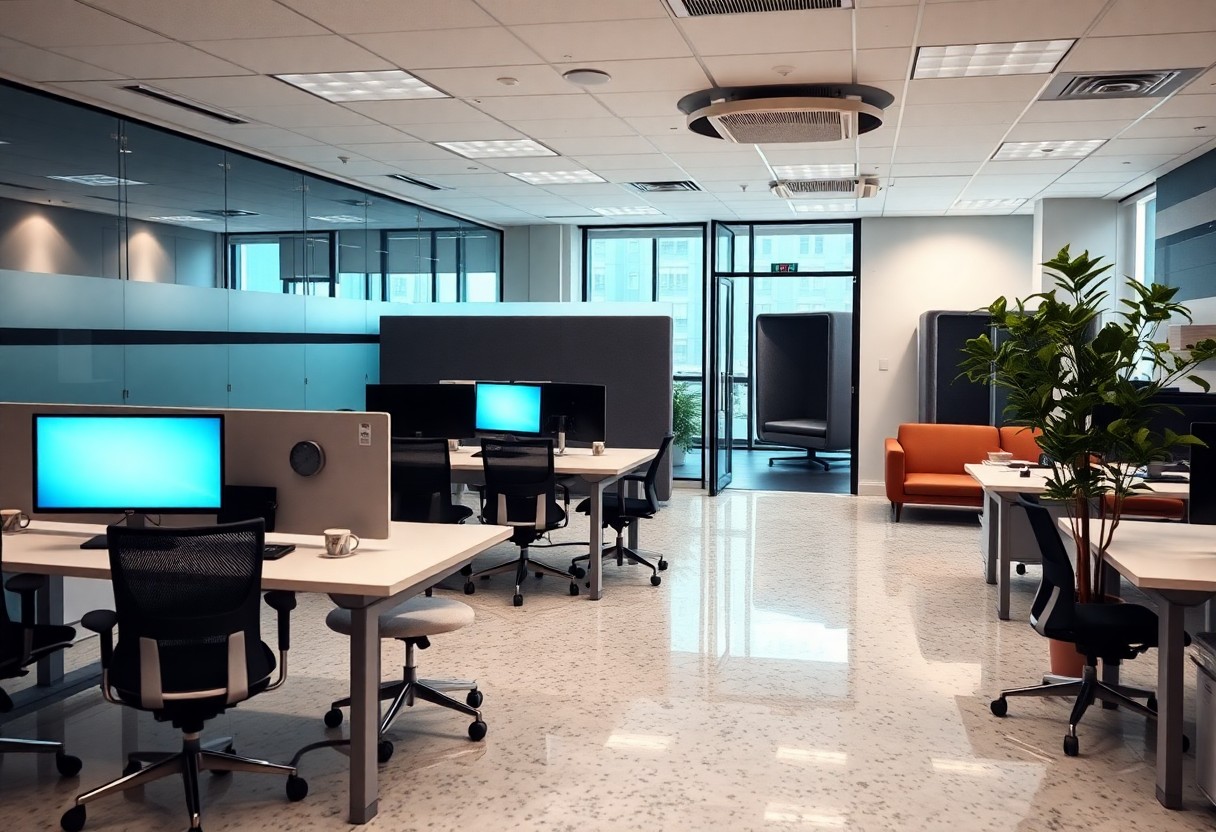
Case Studies of Successful Emotionally Intelligent Offices
You’ll find concrete examples where targeted office design choices changed behavior and metrics: a 120,000 sq ft fintech campus cut turnover by 18% after adding biophilic zones and flexible desks; a healthcare HQ reduced sick days by 22% through daylight optimization and soundproofed quiet rooms; a creative agency increased idea submissions by 25% after implementing activity-based zoning and adaptive lighting.
- 1. TechCo (120,000 sq ft): 6-month redesign focused on biophilic design and agile workstations; employee satisfaction +28 eNPS points, turnover -18%, productivity +14%; cost $4.2M, ROI in 20 months.
- 2. HealthPlus HQ (85,000 sq ft): daylighting, HEPA ventilation upgrades, and private focus suites; sick days -22%, reported stress -35% on internal surveys, patient-facing errors down 8% within 9 months.
- 3. FinServe (60,000 sq ft): introduced modular collaboration hubs and desk-booking tech; cross-team interactions +35%, project cycle time -12%, occupancy efficiency improved 18%.
- 4. RetailGroup R&D (30,000 sq ft): converted 20% of private offices to flexible labs and prototyping zones; idea throughput +40%, time-to-prototype -30%, capital spend $600k.
- 5. DesignLab (15,000 sq ft): acoustic pods, circadian lighting, and adjustable ergonomics; reported focus +48%, voluntary overtime down 12%, employee retention improved 15% over 12 months.
Examples of Innovative Workspace Designs
You can mimic approaches like modular walls, deep acoustic baffles, and activity-based zones to support varied work modes; one firm reclaimed 30% of static private space as flexible collaboration zones and saw cross-functional meetings rise by 35%, while adaptive circadian lighting reduced midday fatigue reports by 40% in a 6-month pilot.
Outcomes and Employee Feedback
Employees typically report improved wellbeing and focus after emotionally intelligent changes: in a pooled sample of 1,200 staff across three projects, 62% noted reduced stress, 48% greater focus, and absence rates fell 10-22%; you should pair qualitative feedback with metrics like eNPS and absence to validate impact.
For deeper insight, run quarterly surveys of 300-1,000 participants, combine open comments with usage data from sensors, and track action items: common positive themes include quieter focus time and better daylight access, while the most dangerous recurring issue is noise from open-plan areas-mitigate it with pods and zoning, then measure changes in focus scores and turnover to confirm effectiveness.
Summing up
So you can use WorkWell to evaluate whether your office design supports emotional intelligence; it guides you to adjust lighting, acoustics, layout, and social spaces to foster wellbeing, focus, and collaboration. By applying its insights you align physical environments with emotional needs, measure impact, and prioritize interventions that improve morale and productivity. Use the findings to iterate and make your workspace more responsive to people.
Summing up
Taking this into account, you should assess whether WorkWell’s principles make your office emotionally intelligent by testing how your layout, lighting, acoustics, biophilia and choice support wellbeing, focus and social connection; use staff feedback, behavioral metrics and flexible interventions to refine design, balance privacy with collaboration, and align spaces with emotional needs so your workspace consistently promotes engagement, resilience and productivity.
FAQ
Q: What does “emotionally intelligent office design” mean in the context of WorkWell – Is Your Office Design Emotionally Intelligent?
A: Emotionally intelligent office design intentionally shapes physical space and workplace practices to support employees’ emotional states, behavior, and wellbeing. It balances privacy and connection, reduces sensory stressors (noise, glare, temperature extremes), and uses color, biophilia, and daylight to influence mood and cognitive function. It also embeds flexibility so people can choose settings that match task and emotional needs, and aligns policies-scheduling, meeting norms, and management practices-with spatial design so environments consistently reinforce psychological safety, autonomy, belonging, and focus.
Q: How can I assess whether my current office is emotionally intelligent according to WorkWell principles?
A: Combine qualitative and quantitative methods: run short employee surveys on comfort, focus, stress, and belonging; conduct behavioral observations and space-use analytics (occupancy, dwell time, collaboration hotspots); hold focus groups that probe unmet emotional needs; audit environmental factors (lighting, acoustics, air quality, temperature variability); and review policy alignment (flexibility, norms for meetings and breaks). Translate findings into prioritized issues-e.g., too much open-plan noise, lack of quiet rooms, poor daylight access-then test targeted pilots and measure changes in engagement, absenteeism, and task performance to validate improvements.
Q: What practical design changes and organizational policies does WorkWell recommend to improve emotional intelligence in an office?
A: Implement a mix of spatial and policy interventions: create distinct zones for focused work, collaboration, and restoration; add small enclosed focus rooms and quiet booths; improve acoustic treatments and provide adjustable lighting and thermal controls at workstations; increase daylight, views, and plant integration; offer ergonomic, height-adjustable furniture and options for personalization. On the policy side, enable schedule flexibility, set clear norms for meetings and deep-work blocks, encourage use of restorative spaces, train leaders in empathetic environmental stewardship, and maintain a rapid feedback loop so employees can report issues and suggest changes. Pilot changes, measure outcomes, iterate, and scale solutions that demonstrably improve wellbeing and productivity.
Leave a Reply