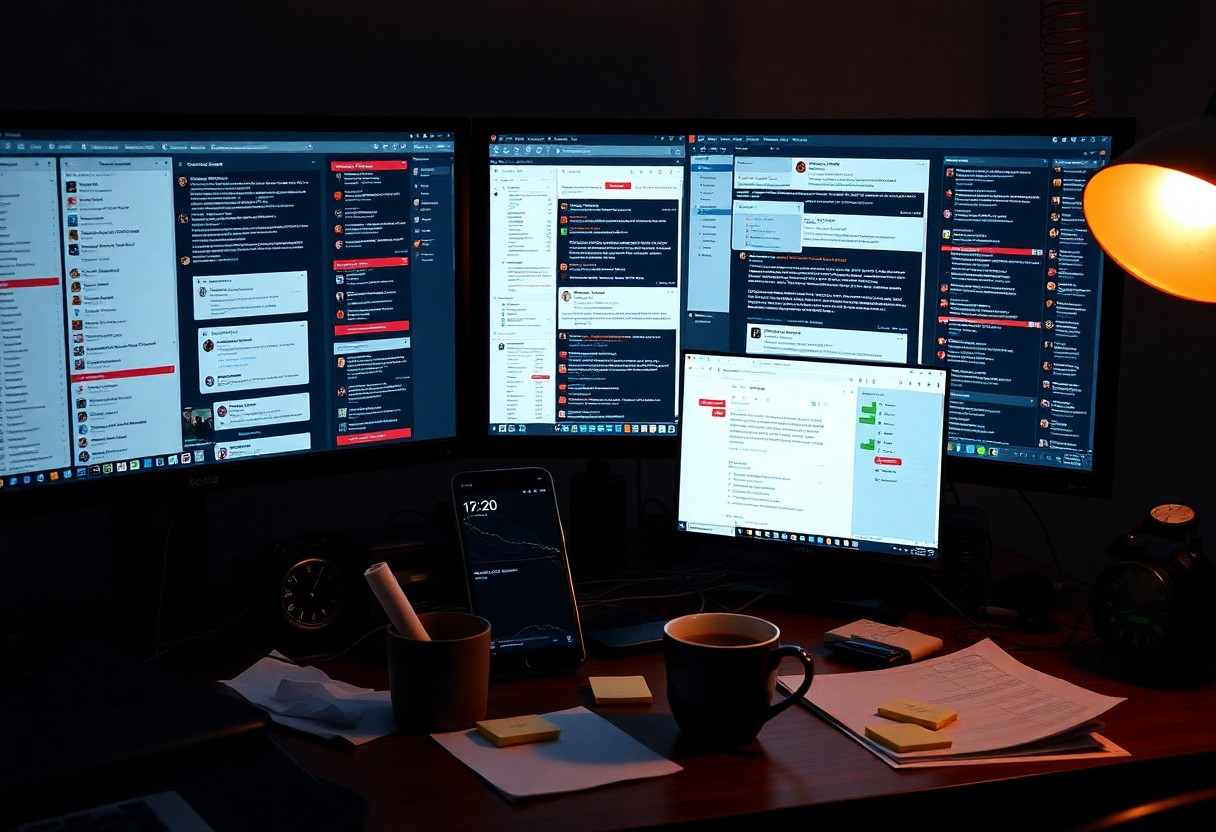
Overexposure to screens causes cognitive fatigue and sleep disruption, undermining your focus and productivity; adopting regular breaks and strict device limits restores mental energy.
Key Takeaways:
- High frequency of notifications and multitasking raises cognitive load, causing faster mental fatigue and reduced attention span.
- Prolonged screen time and constant connectivity disrupt sleep and emotional regulation, increasing stress and burnout risk.
- Structured digital boundaries-scheduled breaks, curated notifications, and single-tasking-help restore focus and sustain productivity.
The Mechanics of Digital Overload
Digital distraction forces you into frequent context-switching, increasing cortisol and fragmenting attention; constant interruptions erode focus, lengthen task time, and raise error risk.
The Science of Information Saturation
Neuroscience shows that rapid information intake exhausts your working memory and reduces decision speed, as the prefrontal cortex struggles with overload; information saturation shortens attention spans.
Identifying Symptoms of Cognitive Stress
You may experience persistent fatigue, scattered focus, irritability, and slowed thinking-these symptoms signal cognitive stress and rising performance risk.
Monitor daily patterns: if headaches, sleep disruption, palpitations, or emotional numbness appear alongside declining productivity, your mental health is at stake; apply regular screen breaks, prioritized tasks, and short restorative routines to reduce chronic cognitive strain.
The Neurological Toll of Mental Fatigue
Chronic mental fatigue reshapes your neural networks, slowing processing and shrinking working memory capacity; you face increased error rates and slower reactions after long digital stretches.
Impact on Decision-Making and Focus
Disrupted attention and depleted cognitive reserves make it harder for you to weigh options, driving more impulsive choices and scattered focus; routine tasks become error-prone.
Long-term Effects of Sustained High-Alert Status
Prolonged high-alert status elevates baseline stress responses, leaving you with persistent sleep disruption, anxiety, and gradual memory weakening that can lead to lasting cognitive decline.
Repeated exposure to sustained alertness can produce structural brain changes: you may see reduced hippocampal volume, lowered synaptic density in prefrontal areas, and chronic inflammatory signaling; clinically this appears as memory gaps, reduced executive control, and higher risk of mood disorders. Targeted recovery-better sleep, strict screen limits, and restorative breaks-can promote healing and reverse some harm.
The Erosion of Professional Boundaries
Boundaries between work and life blur as you answer messages off-hours, a shift linked to stress in studies like Info overload or drought leaves digital workers stressed out. This constant intrusion raises your risk of burnout and impairs sustained focus.
The Psychological Weight of Constant Connectivity
Pressure from nonstop alerts makes you mentally taxed, eroding attention and increasing anxiety. You may find recovery harder and errors more common when your mind never disengages, shortening focus and lowering job satisfaction.
Navigating the “Always-On” Workplace Culture
Emails, pings and expectations push you to respond instantly, making it hard to set limits; this always-on tempo erodes downtime and can accelerate fatigue and resentment.
Persistent expectations for immediate replies train you to prioritize availability over deep work, fragmenting attention and increasing mistakes. Setting clear norms-like agreed response windows and protected offline periods-reduces burnout risk and helps you regain sustained focus and better decision-making.
Strategic Mitigation and Digital Hygiene
You should establish predictable online routines: schedule email checks, set device-free periods, and define work hours so constant connectivity doesn’t erode focus. These simple habits preserve attention and reduce cumulative mental fatigue.
Implementing Intentional Disconnection Protocols
Schedule regular device-free windows each day and enforce them with alarms or colleague agreements; unplugging reduces cognitive load and creates reliable recovery time.
Tools for Managing Notification Density
Use notification batching, priority filters, and app quiet hours so you only receive high-value alerts; excess pings fragment attention and raise stress.
Configure filters to mute nonvital apps, set VIP contacts, and schedule summaries; pairing these with Do Not Disturb preserves your focus blocks, because missed alerts are preferable to continual distraction.
Reclaiming Cognitive Clarity
You can clear digital noise by pruning alerts, batching decisions, and protecting uninterrupted time, which reduces decision fatigue and restores sharper, more reliable attention for demanding tasks.
Techniques for Deep Work and Focused Attention
Block notifications, create timed work sprints, and set one clear objective so you sustain deep attention, cut costly task-switching, and produce higher-quality outcomes with less mental strain.
The Role of Restorative Breaks in Mental Recovery
Take short, regular pauses-movement, breathing, or brief nature exposure-to restore focus, shorten recovery time, and lower the chance of burnout during heavy digital demands.
Longer restorative sessions-like a 20-minute walk or a power nap-help you rebuild working-memory capacity, reduce decision fatigue, and reset cognitive control; avoid passive scrolling and favor movement, daylight, or simple breathing practices to accelerate recovery and sustain performance across the day.
Institutional Responsibility for Digital Wellness
As an employer, you must set clear policies addressing digital overload, guided by research such as Digitalization and employee well-being: A fuzzy-tism …. You should enforce right-to-disconnect rules, monitor platform use, and fund training to reduce burnout risks.
Establishing Healthy Communication Standards
Set firm meeting schedules and message hours so you avoid constant interruptions; require concise updates and limit after-hours pings to protect focused work.
Promoting Sustainable Productivity Models
Balance expectations by prioritizing outcomes over hours; you should stagger tasks, encourage breaks, and reward deep work to reduce digital multitasking and stress.
Monitor workloads and track asynchronous metrics so you can identify teams facing chronic overwork. Design schedules that allow deep focus blocks, limit meetings to clear agendas, and provide tools for time management. You should offer training on cognitive recovery and commit to periodic audits of digital demands to keep burnout at bay.
Summing up
As a reminder, you must manage notifications, schedule focused breaks, set device boundaries, and seek social support to reduce digital overload and protect your mental energy.
FAQ
Q: What is digital overload and how does WorkWell address it?
A: Digital overload occurs when constant notifications, multitasking, and extended screen time exceed an individual’s capacity to process information, causing attention loss, slower decision-making, and increased stress. WorkWell addresses overload by batching notifications, enforcing optional focus blocks, tracking screen and app usage, suggesting timed microbreaks, and offering guided routines for deep work and end-of-day shutdowns. The app also provides personalized alerts when usage patterns match common fatigue indicators and offers step-by-step changes to reduce cognitive load.
Q: What are common signs of mental fatigue from digital overload and how can I test whether I’m experiencing it?
A: Common signs include persistent mental tiredness, difficulty sustaining attention, frequent mistakes, slowed thinking, irritability, disrupted sleep, and eye strain. A simple self-test: record screen time and number of context switches for two workdays, run four 25-minute focused sessions (Pomodoro) while noting error rate and perceived effort, and compare mood and productivity at day start versus day end. If focus drops sharply, errors increase, or mood worsens, symptoms likely stem from digital overload; use WorkWell’s analytics and suggested experiments like notification limits and scheduled breaks to confirm and reduce symptoms.
Q: How can managers and teams use WorkWell to reduce team-wide mental fatigue while keeping productivity high?
A: Managers can set clear norms such as core focus hours, meeting-free blocks, and short meeting agendas to cut context switching. Teams can adopt asynchronous updates, limit real-time chat to urgent items, and schedule collective deep-work periods. WorkWell supports these actions with team dashboards that show meeting time, focus-block compliance, and workload spikes, plus automated alerts for chronic overtime or fragmented work. Short-term steps include reducing recurring meetings and enforcing single-task blocks; longer-term steps include workload redistribution based on dashboard signals and routine team check-ins to adjust practices.
Leave a Reply