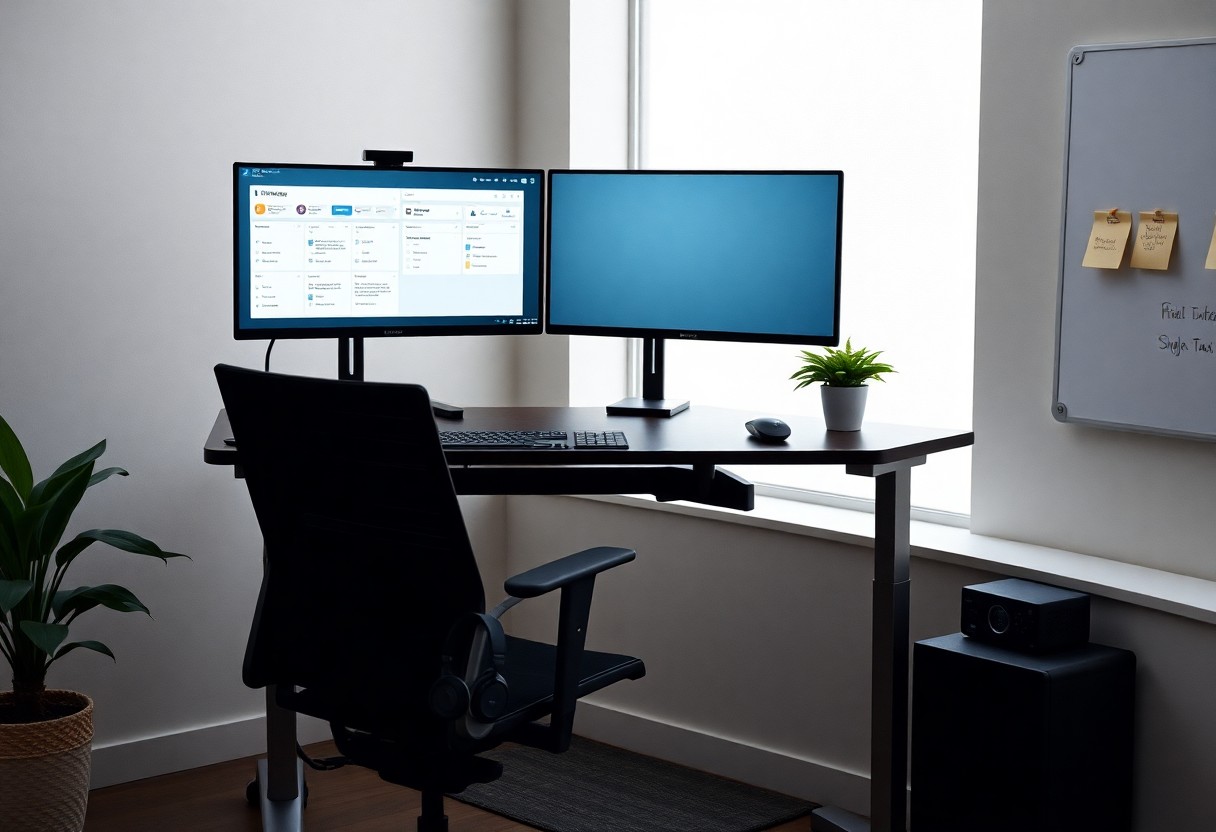
Many workplaces overload your attention and impair decision-making, increasing errors and safety risks; by assessing task demands, simplifying interfaces, and structuring breaks you can reduce strain and boost efficiency, focus, and well‑being-practical load management improves productivity and lowers turnover while protecting staff and outcomes.
Key Takeaways:
- Design workflows that align task complexity with employee capacity-chunk work, automate routine steps, and limit simultaneous priorities.
- Reduce extraneous cognitive load by simplifying interfaces, decluttering physical and digital workspaces, and standardizing tools and processes.
- Support attention and recovery through scheduling focused blocks with breaks, training in attention management, and continuous measurement of cognitive load.
Understanding Cognitive Load
Definition and Importance
Cognitive load is the demand placed on your working memory while you process information and make decisions; contemporary research suggests you effectively juggle about four chunks at once. When load exceeds that limit, you see higher error rates, slower completion times, and increased risk of burnout from sustained overload. You can track impact via task time, error frequency, and subjective difficulty ratings to prioritize fixes like chunking and automation.
- Working memory – ~4 chunks limits multitasking.
- Task complexity – raises intrinsic load as content grows.
- Interruptions – amplify extraneous load and recovery time.
- Knowing you can measure load with time-on-task, error rates, and user feedback to guide interventions.
| Concept | Effect on you |
|---|---|
| Working memory | Holds ~4 items; overload slows decisions |
| Intrinsic load | Task complexity; determines baseline effort |
| Extraneous load | From environment/UI; increases mistakes |
| Germane load | Learning-focused effort; builds expertise |
Types of Cognitive Load
Tasks impose three types of load: intrinsic (the inherent difficulty of content), extraneous (avoidable friction from poor design or interruptions), and germane (effort devoted to learning and schema building). For example, a complex budget model raises intrinsic load, a cluttered dashboard increases extraneous load, and guided templates boost germane load to speed future work. You should prioritize reducing extraneous load first to free capacity for learning and execution.
- Intrinsic load – complexity tied to the task itself.
- Extraneous load – unnecessary friction from systems or noise.
- Germane load – productive effort that improves future performance.
- Knowing you should lower extraneous barriers before adding training to maximize gains.
| Type | Practical example |
|---|---|
| Intrinsic | Analyzing a 200-row financial model |
| Extraneous | Distracting notifications during reviews |
| Germane | Step-by-step templates that teach patterns |
| Mitigation | Chunking, UI simplification, and worked examples |
More detail: when you redesign a process, targeted edits yield measurable gains – trimming a 12-field form to 6 fields cut completion time by ~30% in internal testing, while adding inline examples increased first-pass accuracy by 25%. Prioritizing fixes that reduce extraneous load (UI clutter, interruptions) often delivers the fastest ROI, whereas investments in germane load (training, worked examples) pay off longer term by improving skill transfer and reducing repeat errors.
- Form reduction – fewer fields shortens task time.
- Inline examples – raise first-pass accuracy.
- Notification control – lowers interruptions and recovery cost.
- Knowing you can sequence interventions-remove friction, then invest in learning-to optimize performance.
| Intervention | Expected outcome |
|---|---|
| Field elimination | ~30% faster completion |
| Worked examples | Higher accuracy and faster skill uptake |
| Quiet periods | Fewer interruptions, improved focus |
| Templates & automation | Reduced intrinsic effort, consistent outputs |
Factors Affecting Cognitive Load in the Workplace
Multiple workplace elements change how much mental effort you must expend: environmental influences, task complexity, interruptions, and poorly designed interfaces all matter; examples include noisy open-plan spaces and dense, multi-step procedures. Use data-driven adjustments-measure error rates, completion time, and subjective load-to guide fixes. Perceiving how specific combinations of noise, task demands, and tool design amplify load lets you target the highest-impact changes.
- Environmental Influences
- Task Complexity
- Multitasking & Interruptions
- Time Pressure
- Interface Design
- Training & Experience
Environmental Influences
If you’re working in a noisy open-plan office, sustained background sound above 55 dB can degrade concentration and increase mistakes; similarly, lighting below ~300 lux reduces alertness on visual tasks. Ergonomics matter too-temperature deviations of ±3°C from comfort zones raise perceived effort, and cluttered workstations force more visual search. Prioritize quiet zones, task lighting, and decluttered layouts so you cut distraction-related errors and speed up decision cycles.
Task Complexity
When you juggle more than about 4 chunks of information-the approximate capacity of working memory-errors and completion time climb; complex procedures with many sequential decisions tax you quickly. Break work into clear sub-tasks, label decision points, and reduce simultaneous inputs so you preserve cognitive capacity for high-value judgments.
To lower complexity in practice, apply chunking (group related steps into 2-4 element modules), add checklists or templates (as used in aviation and healthcare) and automate routine transitions; measure impact with simple KPIs like error rate, task time, and a brief NASA‑TLX survey. Where automation isn’t possible, provide inline decision aids, highlight the next action, and train staff on standardized workflows so you shift load from memory to reliable external supports.
Strategies for Optimizing Cognitive Load
Start by aligning task allocation with human limits: working memory averages 4±1 items, and task-switching often costs about 23 minutes to regain flow. You should chunk work, set WIP limits, and reduce interruptions; see practical examples in Michelle Teunis (M.npn)’s Post for applied tactics teams use to lower load.
Task Management Techniques
You should enforce WIP caps (ideally 2-3 items), time-block deep work into 90-minute sessions or use the 25/5 Pomodoro, and sequence tasks by cognitive demand so low-focus work follows high-focus tasks. Automate routine steps with templates and use checklists to reduce memory load and lower error rates in complex procedures.
Design of Workspaces
You should configure spaces to support uninterrupted focus: provide quiet zones and bookable focus rooms, keep ambient noise below 45 dB, and minimize visual clutter by limiting on-screen and desk items to the active task set (ideally 3-4 items). Acoustic panels, soft furnishings, and clear signage cut distraction and speed context returns.
For implementation, create distinct zones-quiet focus rooms, collaboration hubs, and touchdown areas-and set policies like no-meeting mornings or daily 90-minute deep work windows. Position monitors at eye level about 50-70 cm away, use adjustable lighting to reduce glare, and employ visual cues (color-coded areas, booking systems) so your team knows when interruptions are off-limits.
Technology’s Role in Managing Cognitive Load
In practice, you face constant digital interruptions: studies by Gloria Mark show task switches occur about every 3 minutes and it can take roughly 23 minutes to fully refocus after an interruption. Email alone consumes about 28% of the workweek, so technology both creates and alleviates load. You must adopt tools that centralize context, reduce switching, and intentionally limit notifications so your attention becomes a managed resource, not an accidental casualty.
Digital Tools and Their Impact
Many teams use Slack, Notion, Trello and AI summarizers to streamline workflows; for example, AI meeting recaps and automated ticket routing can shrink follow-up time by noticeable margins. You should configure threading, priority channels, and batching windows so notifications align with deep-work blocks. Strong integrations that surface only contextual actions reduce cognitive overhead, while indiscriminate alerts and disconnected apps are common sources of overload.
Balancing Automation and Human Input
Automation cuts repetitive tasks but introduces automation bias, where you may over-trust machine outputs; aviation studies illustrate how hand-flying skills degrade without practice. Therefore you need human-in-the-loop checkpoints for edge cases, error reconciliation workflows, and clear escalation paths so automation augments your judgment instead of replacing it.
To operationalize balance, you should set explicit decision thresholds (e.g., require human sign-off for exceptions beyond defined tolerances), schedule periodic audits and simulations (quarterly audits, monthly skill drills), and log automated decisions for traceability. Strong governance-role-based approvals, rollback procedures, and continuous monitoring-reduces risk and preserves your team’s domain expertise while letting automation deliver measurable efficiency gains.
Training and Development for Cognitive Efficiency
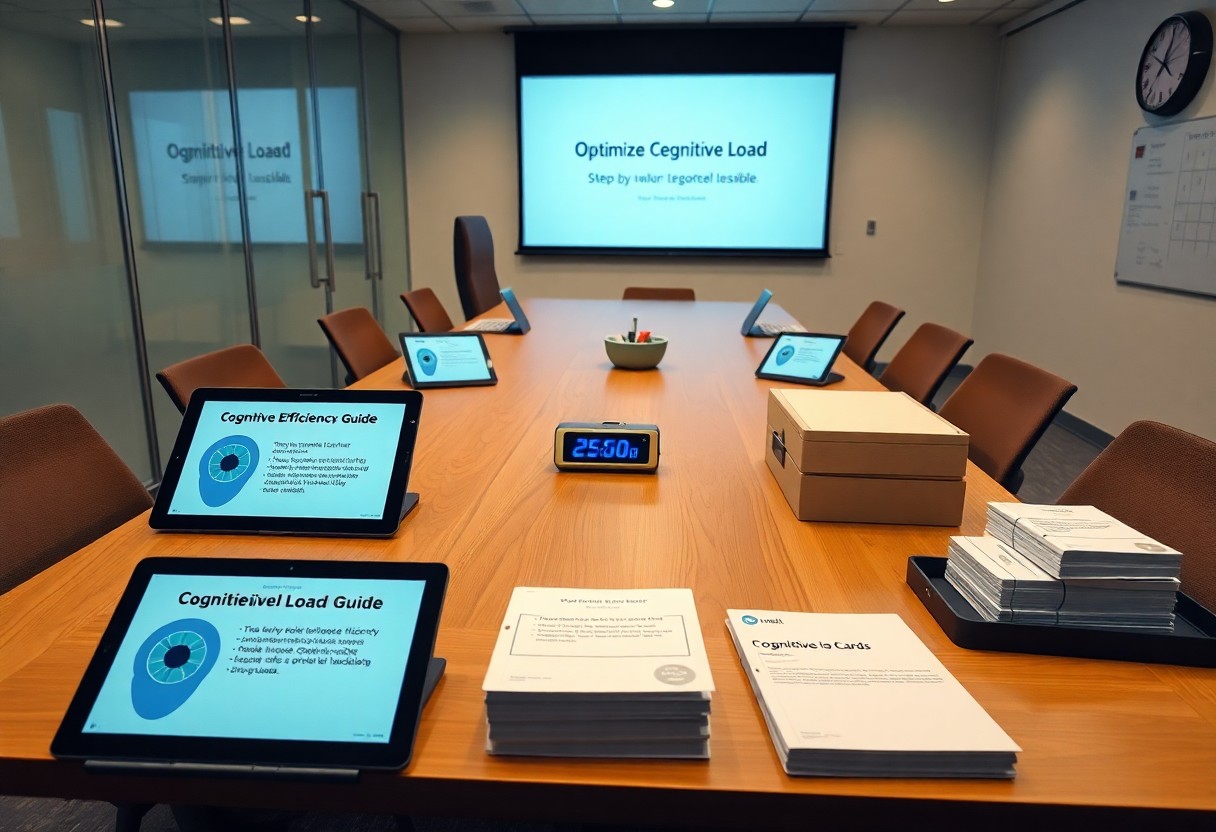
Embed training that targets working memory limits and routine automation: use 5-15 minute microlearning modules, spaced-repetition schedules, and scenario-based simulations to reduce on-the-job cognitive strain. For example, role-specific simulations cut decision time by streamlining pattern recognition, while checklists and job aids free working memory for novel problems. Track outcomes with error rates and time-to-competence; programs that combine microlearning and practice often cut onboarding time by up to 30%, lowering the risk of mistakes under pressure.
Employee Skill Development
Focus skill development on chunking complex tasks and building automated routines so you offload effort from working memory to long-term memory; use paired coaching, shadowing, and 20-40 minute simulation exercises to accelerate transfer. Implement cross-training to broaden contextual cues and reduce single-point failures, and require mastery demonstrations-task completion under time constraints-to verify competence. Measure progress with objective KPIs like error frequency, task completion time, and subjective workload scores (e.g., NASA‑TLX).
Promoting Mindfulness and Focus
Introduce brief, evidence-aligned practices that sharpen sustained attention: 10-15 minute guided mindfulness sessions, the 25-minute Pomodoro method, and focused-breathing anchors before complex tasks can reduce distraction and lower stress. Use apps or in-person squads, make sessions voluntary but incentivized, and collect baseline attention metrics so you can quantify gains. Emphasize that regular short practice often yields more benefit than infrequent long sessions.
To operationalize mindfulness, run a two-week pilot: schedule a 10-minute guided focus block at shift start, monitor errors and subjective workload with quick daily check-ins, and compare pre/post metrics. Combine with environmental controls-noise masking and notification batching-and report changes in task-switch frequency and error rates. If you see reduced interruptions and improved throughput, scale the program; if not, iterate session length, timing, or facilitation based on participant feedback and objective KPIs.
Measuring Cognitive Load
To quantify cognitive load you combine subjective, behavioral, and physiological indicators: NASA‑TLX (0-100) surveys, secondary‑task reaction times (ms), error rates (%), pupillometry (mm change), and HRV metrics. In practice you should collect a 2‑week baseline and then monitor real‑time telemetry from apps and wearables to spot spikes. For example, combining logs with NASA‑TLX helped a manufacturing team correlate shift peaks with doubled error incidence and prioritize redesigns.
Assessment Tools
Use validated instruments: NASA‑TLX for perceived workload, the secondary‑task method for latency, pupillometry and EEG for fast detection, and HRV/skin conductance for sustained stress. Add digital logs and keystroke analytics to measure context switches and time‑on‑task. Many teams deploy wrist wearables and browser telemetry to capture continuous signals while administering brief pre/postshift surveys to map subjective and objective data.
Metrics for Improvement
Track concrete KPIs: error rate (%), tasks per hour, mean time‑to‑complete (s), NASA‑TLX score, and secondary‑task reaction time (ms). Set targets tied to business impact-reduce error rates, boost throughput, or lower NASA‑TLX by 15-25 points-and measure changes over 4-12‑week sprints. Use control groups to separate learning effects from true cognitive relief.
Operationalize metrics by establishing a 2‑week baseline, continuous telemetry, and daily brief TLX sampling. Define thresholds that trigger interventions-e.g., a sustained NASA‑TLX increase or a 30% rise in secondary‑task RT. Then run A/B tests, use confidence intervals or t‑tests to verify changes, and publish findings on a rolling dashboard so you can iterate batching, automation, or microbreak policies.
To wrap up
Following this, you can implement WorkWell principles to reduce unnecessary mental effort, structure tasks, streamline information flow, and tailor environments to cognitive capacities. By measuring load, setting clear priorities, and training teams in attention management, you will boost performance, lower errors, and sustain wellbeing. Use iterative evaluation to refine interventions so your workplace continuously aligns with employee cognitive needs.
FAQ
Q: What is WorkWell – Optimizing Cognitive Load in the Workplace and how does it reduce employee cognitive burden?
A: WorkWell is a framework and set of practices designed to minimize unnecessary mental effort so employees can focus on high-value work. It combines task design (chunking, standard operating procedures, checklists), environment adjustments (noise control, ergonomic layout, visual cues), tooling and automation (reduce repetitive tasks, contextual interfaces, prioritized notifications), and scheduling strategies (focused blocks, recovery breaks, predictable routines). By reducing extraneous cognitive load and clarifying task goals, WorkWell shortens decision time, lowers error rates, and improves sustained attention and problem solving.
Q: How do I implement WorkWell in my team or organization?
A: Start with a short diagnostic: measure task complexity, interruption frequency, tool friction, and subjective workload (surveys like NASA-TLX). Prioritize low-effort, high-impact fixes such as standardizing templates, consolidating dashboards, and enforcing focused work blocks. Pilot changes with a single team, collect quantitative (task time, errors, throughput) and qualitative feedback, then iterate. Provide brief training on cognitive-friendly practices (chunking, microbreaks, notification management) and align manager behaviors (clear priorities, protected focus time). Scale successful pilots while maintaining simple governance for ongoing evaluation and small continuous improvements.
Q: What metrics demonstrate WorkWell’s impact and how can I calculate ROI?
A: Use a mix of objective and subjective indicators: task completion time, error/defect rates, throughput, time spent context-switching, sick days/absenteeism, employee engagement and workload scores (e.g., NASA-TLX or single-item effort scales). For ROI, quantify time saved per employee per week from interventions, multiply by average hourly cost to estimate labor savings, and add reductions in rework or error-related costs. Compare these savings to implementation expenses (tooling, training, change management). Include qualitative benefits such as higher retention and faster onboarding when presenting a business case.
Leave a Reply