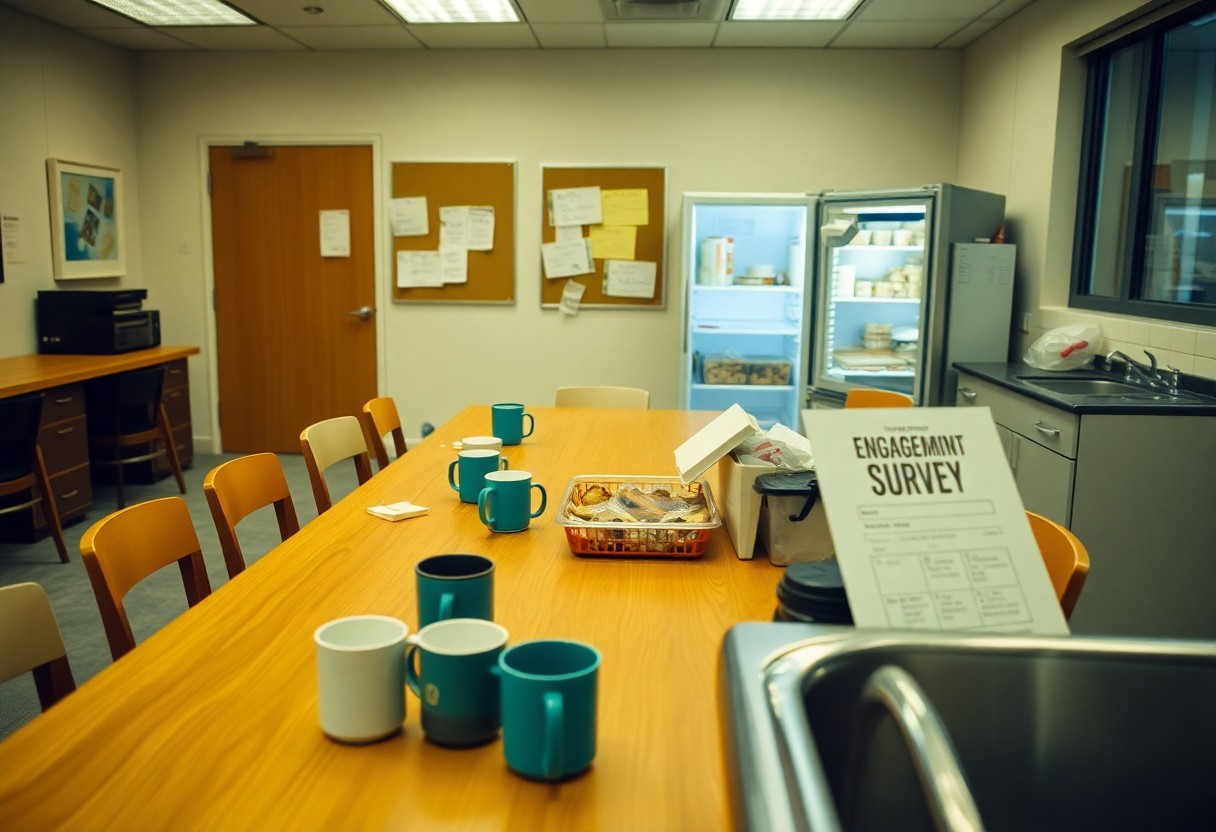
Insights into your team’s true engagement often emerge not in spreadsheets but in the hum of the lunchroom. While annual surveys capture feelings in decimal points, the cafeteria reveals unfiltered patterns of connection, isolation, and influence. You see who eats alone, who clusters in corners, and who moves freely between tables-each choice a data point no questionnaire can fully measure.
Key Takeaways:
- Employee sentiment often reveals itself more authentically in informal spaces like the lunchroom than in structured engagement surveys, where responses may be influenced by perceived expectations or fear of identification.
- A mid-sized SaaS firm noticed a 40% increase in unsolicited product ideas after relocating team lunches to shared tables, illustrating how physical proximity during meals can unlock collaborative energy that surveys fail to capture.
- Patterns of seating, conversation flow, and participation in cafeteria interactions serve as real-time indicators of inclusion, leadership dynamics, and departmental silos-offering leaders immediate, observable data on organizational health.
The Deception of the Decimal Point
Numbers on a survey suggest precision, but that illusion of accuracy masks deeper truths. A score of 3.8 out of 5 feels scientific, yet it averages out rage, apathy, and hope into a meaningless blur. You’re misled not by lies, but by the false comfort of decimal places that imply understanding where none exists.
Why surveys lie to leadership
Data from engagement surveys often reflects what employees are willing to report, not what they feel. When fear of repercussions lingers, even honest questions yield sanitized answers. Your leadership team sees a 78% satisfaction rate, but that number hides silent resignations and eroded trust no checkbox can capture.
The safety of anonymous checkboxes
Anonymous surveys offer a veneer of security, encouraging responses you’d never hear in person. Employees select “somewhat dissatisfied” not because they’re indifferent, but because anonymity is the only safe outlet for truth in a culture where speaking up carries risk.
While anonymity enables honesty, it also lets leadership off the hook. You receive aggregated feedback with no names attached, making it easy to treat issues as abstract trends rather than lived experiences. A mid-sized SaaS firm discovered that repeated “neutral” scores on inclusion masked a pattern of exclusion in team meetings-only visible when observed, not reported.
The Architecture of the Cafeteria
What your engagement survey misses, the lunchroom often reveals. While metrics suggest satisfaction, the cafeteria’s layout broadcasts unspoken truths about hierarchy and inclusion. Understanding Employee Engagement Beyond numerical scores means observing where people choose to sit, how tables fill, and who eats alone. Physical patterns expose psychological ones-often more accurately than any annual questionnaire.
Seating charts as power maps
Who sits where in the cafeteria maps directly to influence within the organization. Executives often cluster near windows or entrances, while junior staff occupy corners or isolated tables. Departments that self-segregate by table reinforce silos, signaling cultural fragmentation no survey can fully capture.
Sound levels and psychological safety
Noise levels in shared eating spaces reflect the emotional climate of a workplace. High decibel zones often indicate comfort and spontaneity, while hushed areas suggest restraint or fear of being overheard. Silence can be a symptom of suppressed dissent, especially when consistent across multiple teams.
Extended quiet in a large, underused cafeteria may point to deeper cultural issues-employees avoiding interaction due to unresolved conflict or management distrust. In one observed case, a mid-sized SaaS firm saw cafeteria use drop 70% after a controversial restructuring, even though engagement scores remained stable. The space became a barometer of unspoken anxiety, visible only through behavioral observation.
The Social Logic of the Watercooler
Observing informal interactions near the coffee machine reveals patterns no survey can capture. Who speaks with whom, who avoids whom, and how long people linger all signal underlying team dynamics. Exclusion or hesitation in these moments often precedes formal complaints by weeks. Your team’s unstructured time holds the blueprint of its true hierarchy.
Real talk versus corporate scripts
Overheard conversations in hallways lack the polished tone of engagement responses. People speak differently when they think no one is measuring. A joke about a missed deadline, a sigh before a meeting, or a spontaneous celebration-these unfiltered moments expose the gap between official narratives and lived experience.
Gossip as a leading indicator
Rumors about restructuring or leadership changes often surface in side conversations long before official announcements. What spreads quickly in whispers may reflect genuine anxiety rather than baseless speculation. Monitoring the content and direction of informal talk helps you anticipate reactions before they escalate.
Gossip travels fastest when trust in formal channels erodes. A mid-sized SaaS firm once discovered through exit interviews that employees had known about a pending departmental overhaul for two months through hallway talk-despite no written communication. Early awareness didn’t prevent turnover because leadership dismissed the chatter as noise. Recognizing gossip as diagnostic, not just disruptive, shifts your response from damage control to early intervention.
The Tipping Point of Disengagement
One withdrawn colleague rarely signals collapse, but when three or more stop joining lunchroom conversations, the pattern reveals a systemic shift. You begin noticing empty seats at usual tables, laughter that doesn’t include certain teams, and a subtle partition forming between departments. This quiet withdrawal often precedes formal complaints by months, surfacing first in the social fabric, not the survey results.
When silence becomes deafening
Silence at a once-lively table speaks louder than any survey score. You notice that the group near the windows, previously animated during meals, now eats in near-total quiet, phones in hand. This absence of spontaneous interaction marks a cultural fracture, one that spreads as others mimic the behavior, normalizing isolation over connection.
Identifying the social hubs
The cluster by the coffee station or the corner table where junior staff sit with seniors every Friday-these are your organization’s social hubs. You can spot them by sustained eye contact, overlapping speech, and frequent laughter. These nodes distribute morale as much as information, making them early indicators of engagement health.
Observing who gravitates to whom during unstructured time reveals informal leadership and trust networks invisible in org charts. You might notice that after a restructuring, the Friday lunch group dissolves, replaced by rigid team-only seating. The loss of cross-functional mingling often correlates with reduced collaboration, slower problem resolution, and a rise in siloed decision-making, all detectable long before performance metrics decline.
The Blink Moment of Management
When you walk into the lunchroom and feel a shift in energy-a sudden quiet, forced laughter, or isolated groups-it’s not noise, it’s signal. That split-second impression often reveals more about team health than any annual engagement survey. While data quantifies sentiment, the human eye captures context, and in that blink, you see what spreadsheets miss. For deeper insight into how these subtle cues compare to formal metrics, explore Employee Satisfaction vs. Employee Engagement Surveys.
Intuition over data points
Silence at a shared table speaks louder than a 3.8 out of 5 rating. You rely on instinct when numbers fail to explain why two team members no longer sit together, or why laughter stops when a manager enters. Patterns in behavior often precede measurable decline, and your immediate, unfiltered reaction to a room’s mood can trigger timely intervention.
The manager as an ethnographer
Observing lunchroom dynamics transforms you into a quiet observer of culture. You notice who eats alone, which groups cluster by department, and how junior staff position themselves around leadership. These micro-interactions form a living map of influence, comfort, and exclusion that no survey question can fully capture.
Spending just fifteen minutes a week observing without participating allows you to detect subtle shifts in group cohesion. A mid-sized SaaS firm reduced turnover in one team by 40 percent after a manager noticed consistent isolation among remote workers during lunch, prompting a redesign of hybrid meeting rhythms. What you see daily is data too, and often more honest than what gets submitted anonymously.

The Cultural Glue of Shared Meals
Shared meals shape workplace culture in ways surveys rarely capture. You absorb unspoken norms, observe alliances, and witness humor that reveals team dynamics. A simple lunch can clarify hierarchies or expose silos, offering real-time insight into how people actually connect. These moments form the invisible infrastructure of collaboration.
Breaking bread as a cultural bond
Meals create space for informal storytelling and mutual recognition. You learn a colleague’s values not through feedback forms but over soup and sandwiches. In that exchange, trust builds incrementally. The ritual of eating together signals inclusion, and you feel, often unconsciously, whether you belong. This shared rhythm is more revealing than any engagement metric.
The cost of the lonely desk lunch
Eating alone at your workstation fragments social cohesion. You miss subtle cues about team morale and isolate yourself from informal knowledge flows. Over time, this habit erodes camaraderie and can signal disengagement to others. The quiet desk lunch may seem efficient, but it carries a hidden toll on connection and visibility.
When employees routinely eat at their desks, patterns of exclusion can solidify. A mid-sized SaaS firm noticed that team members who rarely joined group meals were less likely to be invited to ad hoc brainstorming sessions or after-work gatherings. Their absence from mealtime conversations meant they were overlooked for informal leadership roles, not due to performance but due to proximity bias. This dynamic often escapes annual reviews and pulse surveys, yet it shapes career trajectories.
Summing up
You see more truth in a fifteen-minute lunch break than in a hundred survey responses. The way teams cluster at tables, who sits alone, and which departments never mix reveal real engagement levels no metric can capture. A mid-sized SaaS firm once identified a critical leadership gap not from HR analytics but from noticing executives consistently eating apart. Your cafeteria is a live readout of organizational health, broadcasting what employees won’t say on paper.
FAQ
Q: Why might informal observations in the lunchroom reveal more about employee sentiment than formal engagement surveys?
A: Engagement surveys often rely on structured responses that employees may approach strategically, especially if they perceive a lack of anonymity or fear repercussions. In contrast, behavior during unstructured time-such as how employees group themselves in the cafeteria, whether they eat alone or in clusters, or how long they linger after meals-offers unfiltered insight into social cohesion and morale. A mid-sized SaaS firm noticed a sharp decline in shared tables over three months, a shift that preceded a 15% drop in retention by the next quarter, despite engagement scores remaining stable.
Q: Can the physical layout of a lunchroom influence employee interaction patterns?
A: Yes, the arrangement of seating, serving areas, and access points can either encourage or inhibit spontaneous conversation. Open tables and centrally located food stations tend to increase cross-departmental mingling, while long rows of booths or isolated seating clusters often reinforce silos. One financial services company redesigned its cafeteria to include communal tables and rotating seating assignments, resulting in a measurable increase in inter-team project proposals within six weeks of the change.
Q: How can managers observe lunchroom dynamics without appearing intrusive?
A: The key is consistency and neutrality-being present without direct intervention. A manager who occasionally eats in the cafeteria, sits at different tables, and engages in casual, non-evaluative conversation signals approachability without surveillance. One engineering lead adopted a “lunch rotation” practice, joining a different team each week, which led to the early identification of a communication breakdown between QA and development that had not surfaced in any formal feedback channel.
Leave a Reply