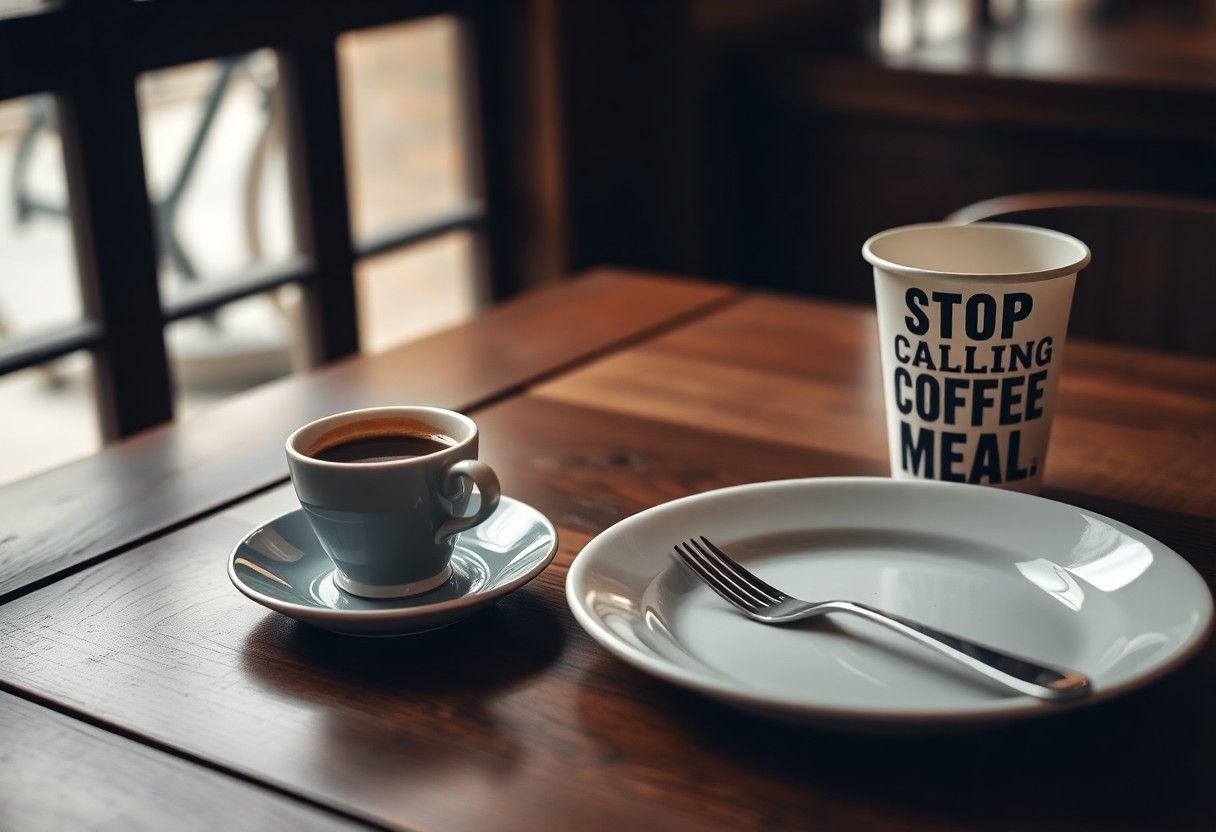
With your morning espresso in hand, you might feel ready to conquer the day, but relying on coffee as a meal replacement is a dangerous habit. It delivers a sharp jolt of energy without the nutrients your body needs to function. You’re not just skipping breakfast-you’re bypassing crucial fuel, setting up for energy crashes, irritability, and long-term metabolic strain. A latte is not a lunch. A cold brew is not a substitute for real food.
Key Takeaways:
- A single cup of coffee lacks the macronutrient balance required to sustain energy, leaving blood sugar unstable by mid-morning and increasing cravings for refined carbohydrates.
- Branding coffee as a meal normalizes nutritional shortcuts, particularly in high-pressure work environments where skipping breakfast is worn as a badge of dedication.
- A mid-sized SaaS firm reported a 30 percent increase in midday snack purchases after leadership began praising “coffee-only mornings,” signaling a direct link between meal replacement rhetoric and downstream consumption patterns.
The Great Liquid Deception
Caffeine is not a calorie
You consume a large coffee thinking it sustains you, but caffeine delivers no nutritional energy. It stimulates alertness without providing protein, fat, or carbohydrates your body needs. A mid-sized SaaS firm’s employee may skip breakfast for a double shot, yet by 10:30 a.m., mental fatigue sets in. Coffee delays hunger signals but cannot replace fuel.
Masking the hunger pangs
You rely on coffee to suppress appetite, yet the effect is temporary and misleading. Caffeine may blunt short-term hunger, but it does not stop your stomach from signaling need. Blood sugar drops, focus wanes, and irritability rises by mid-morning.
Stomach acid increases with each sip, creating a false sense of fullness that lasts only minutes. You mistake stimulation for satiety, ignoring biological cues. By noon, you face a ravenous crash, often leading to poor food choices. This pattern repeats daily in offices worldwide, accepted as normal productivity culture.
The Cult of the Busy
Busy has become a badge of honor, worn like a medal earned in a war against downtime. You equate skipped meals with dedication, as if an empty kitchen table proves commitment. This performance of productivity is a trap, one that rewards exhaustion over effectiveness, where looking overwhelmed passes for leadership. A startup founder bragging about surviving on espresso shots signals not strength but a dangerous miscalculation.
Glorifying the empty stomach
Hunger is reframed as discipline, an empty stomach mistaken for ambition. You praise the colleague who skips breakfast for a conference call, ignoring the brain fog that follows. Starvation is not strategy, yet in offices and group chats, it’s celebrated like a virtue. A junior analyst working through lunch may seem diligent, but their focus fractures by mid-afternoon.
Grind culture lies
Grind culture sells the myth that constant motion equals progress. You absorb the message that rest is laziness, that pausing for a proper meal is a sign of weakness. The lie is subtle but corrosive: if you’re not burning out, you’re not trying hard enough. A mid-sized SaaS firm once promoted “no-lunch Wednesdays” as a productivity hack, only to see error rates spike the following month.
That SaaS firm reversed the policy within six weeks after incident reports doubled and two senior engineers resigned citing chronic fatigue. The expectation to work through meals didn’t increase output-it eroded precision and morale. Sustained attention requires sustained fuel, not caffeine-fueled endurance stunts. Your body responds to rhythm, not relentless pressure, and cognitive performance declines without consistent nourishment.
Respect for the Plate
One registered dietitian puts it plainly: I’m an RD, and Trust Me: Your Body Is Begging You To Stop… treating coffee as breakfast. When you skip real food, you bypass important nutrients your metabolism expects upon waking. This pattern signals your body to run on stress hormones instead of sustained energy, leading to afternoon crashes and insulin imbalances that accumulate over time.
The dignity of actual food
A bowl of oats with nuts and fruit offers fiber, protein, and complex carbohydrates that stabilize blood sugar. You’re not just feeding yourself, you’re honoring the biological need for structure and nourishment. Coffee poured into a to-go cup does not qualify as a meal, no matter how many shots or oat milk you add. Real food demands recognition, not substitution.
Chewing as a lost art
Chewing initiates digestion by signaling the stomach and pancreas to prepare for incoming nutrients. When you skip solids and rely on liquid calories, you disrupt this primal sequence. The act of mastication regulates appetite and supports gut health in ways sipping cannot replicate. Every chew matters, not just for digestion but for satiety and metabolic signaling.
Consider a mid-sized SaaS firm where employees routinely replace breakfast with cold brew and protein powder blended into lattes. Despite the added protein, many report mid-morning fatigue and difficulty concentrating. Without the mechanical process of chewing, the brain receives weaker satiety cues, often leading to overeating by noon. The physical engagement of breaking down food triggers the release of ghrelin and leptin in balanced waves, a rhythm liquids fail to support. Skipping this step dulls your body’s natural feedback loops, turning meals into afterthoughts.
The Corporate Scam
Companies quietly reframe coffee breaks as meal replacements to extend productive hours without adding compensation. By normalizing caffeine as breakfast, employers gain extra work time while employees lose real nourishment. This silent exchange benefits only the bottom line, not the person pouring their third cup at 10 a.m.
Productivity over health
Leaders praise back-to-back meetings with “coffee instead of lunch” as a badge of efficiency. Calling this sustainable ignores the cognitive decline from sustained caloric deficit. A mid-sized SaaS firm reported higher afternoon error rates after eliminating lunch breaks, yet still promotes the practice.
Desk lunch delusions
Eating at your keyboard creates the illusion of time saved, but attention fragments with every bite and keystroke. True meal breaks last at least twenty minutes away from the screen, allowing mental reset and proper digestion, not rushed bites between emails.
Staring at spreadsheets while chewing a sandwich does not constitute a break, no matter how many productivity gurus claim otherwise. Your brain needs disengagement to process and consolidate information. Continuous partial attention degrades both work quality and metabolic function, leading to afternoon crashes and poor decision-making by 3 p.m.
Reclaiming the Morning
Starting your day with only coffee delays nourishment and reinforces a cultural habit that dismisses real sustenance, one perpetuated by myths as flimsy as the claim that Why do we call coffee a “cup of joe”? : r/etymology. You are not merely skipping a meal-you are signaling acceptance of a norm that prioritizes speed over health.
Real fat and protein
Eggs, avocado, or full-fat Greek yogurt provide sustained energy and stabilize blood sugar, unlike coffee on an empty stomach, which can trigger cortisol spikes. Choosing whole foods over liquid placeholders ensures your body receives the building blocks it needs to function effectively from the first hour.
Breaking the fast with intent
Your body expects more than caffeine after hours of rest, and acknowledging this need reshapes your relationship with food. Treating breakfast as a deliberate act of nourishment-not a box to check-sets a precedent for mindful choices throughout the day.
Intentional eating means recognizing that fasting ends with nutrition, not stimulation. A plate with eggs, nuts, and leafy greens does more than quiet hunger-it supports metabolic balance, sharpens focus, and prevents the mid-morning crash that coffee alone guarantees. This is not ritual; it is biology.
Summing up
You call coffee a meal because it fits your schedule, not your biology. A barista at a tech startup once told me their morning oat milk latte with syrup pumps passes as breakfast for half their office. Your body registers the caffeine and sugar spike, not the absence of protein, fiber, or fat. That gap shows up as fatigue, hunger, and poor focus by mid-morning. Real food takes time, and skipping it costs more than you think.
FAQ
Q: Why is drinking coffee not the same as eating breakfast?
A: Coffee lacks the macronutrients necessary to fuel the body after an overnight fast. While it may provide a temporary alertness boost through caffeine, it contains negligible protein, fat, or carbohydrates needed for sustained energy. A person consuming only coffee in the morning risks blood sugar fluctuations, increased cortisol levels, and mid-morning fatigue. For example, a construction worker starting their shift on black coffee alone is far more likely to experience a crash by 10 a.m. than someone who ate a balanced meal with eggs, whole grains, and vegetables.
Q: Can adding cream or sugar to coffee make it a meal replacement?
A: No amount of cream or sugar transforms coffee into a nutritionally complete meal. Even a large latte made with whole milk provides insufficient protein and fiber to meet breakfast needs. A typical 16-ounce latte contains about 15 grams of protein at best, mostly from milk, but lacks complex carbohydrates and healthy fats in balanced proportions. Compare this to a simple homemade meal of oatmeal with nuts, fruit, and a boiled egg, which offers sustained satiety, diverse micronutrients, and better metabolic stability.
Q: What are common signs that someone is using coffee as a meal substitute?
A: Frequent reliance on coffee instead of food often shows in afternoon energy slumps, irritability before lunch, and overeating later in the day. People may drink multiple cups in rapid succession to stay alert, mistaking caffeine jitters for productivity. A mid-sized SaaS firm once reported that employees who skipped breakfast and relied on office espresso machines were more likely to take extended snack breaks by mid-morning and leave work earlier, citing exhaustion. These behavioral patterns reflect the body’s response to inadequate fueling, not lack of discipline.
Leave a Reply