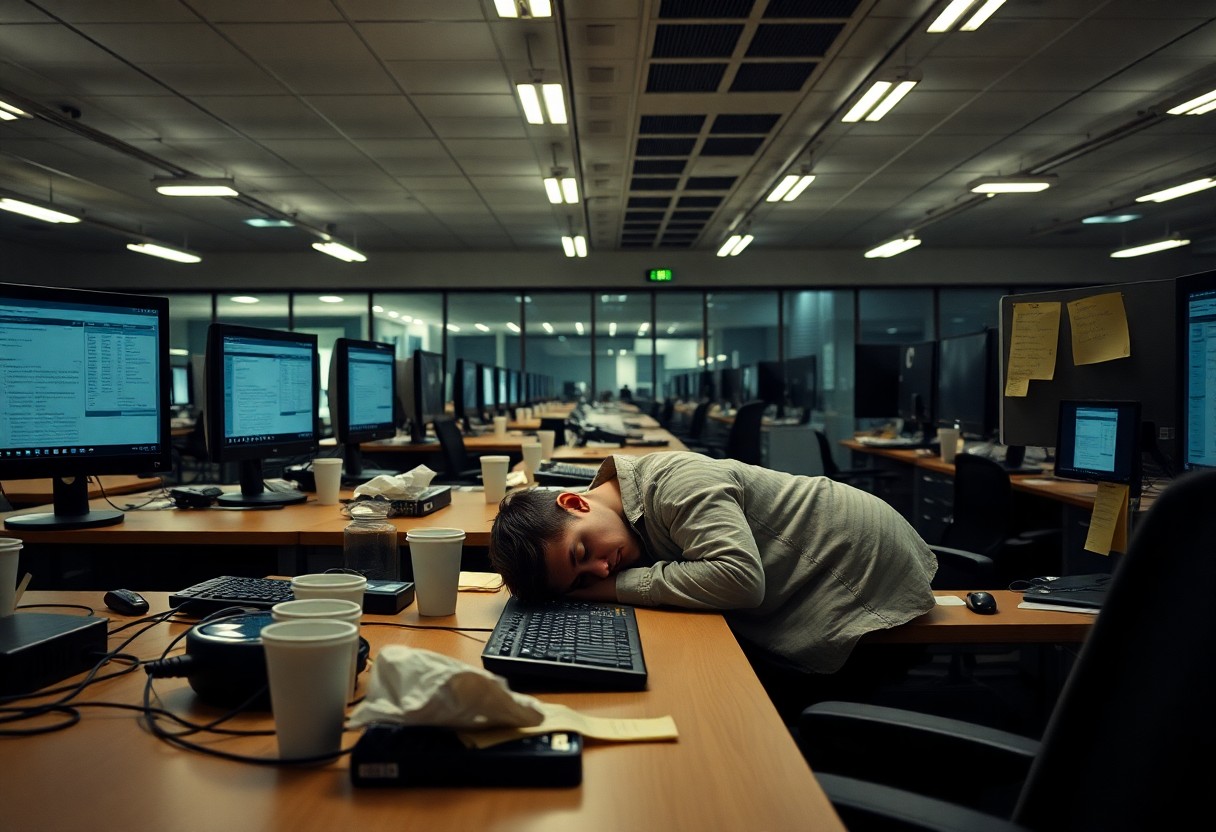
Emotions shape how you move through the day, yet the persistent claim of being “fine” often masks a deeper truth. You say you’re okay even as fatigue accumulates, meetings blur together, and rest feels unearned. Exhaustion has become so widespread it now operates silently, normalized rather than questioned. This pattern isn’t personal failure-it’s a signal embedded in the way modern life is structured. A mid-sized SaaS firm’s employee survey revealed recurring burnout themes despite uniformly positive performance reviews, illustrating how deeply this dissonance runs.
Key Takeaways:
- A mid-sized SaaS firm recently conducted an internal pulse survey revealing that 87 percent of employees described their stress levels as “manageable” while simultaneously reporting sleep disturbances, difficulty concentrating, and reliance on after-work sedatives-highlighting a widespread normalization of strain masked by socially acceptable responses.
- Therapists across urban clinics report a surge in patients seeking help not for acute crises but for a persistent, low-grade fatigue that resists conventional diagnosis, often traced not to overwork alone but to the emotional labor of projecting competence and contentment in digital interactions.
- Silicon Valley engineers, finance analysts, and remote educators alike describe a shared experience of “quiet depletion,” where the absence of overt distress becomes its own metric of endurance, measured not in breakdowns but in the number of consecutive days one can reply “I’m fine” without hesitation.
The Stories We Tell to Get Through the Day
Every morning, you repeat a version of the same story: I am fine, I am ready, I am in control. That narrative, rehearsed at the mirror or muttered into a phone before walking into the office, is not harmless. The lie is not in the words but in the silence around what they conceal. A teacher in Denver says it quietly between grading papers; a project manager in Seattle laughs it off during a stand-up call. These phrases are not confessions but shields.
The social contract of the white lie
People expect you to say you are fine, even when your shoulders carry the weight of unfinished tasks and unresolved grief. Admitting strain risks discomfort, inefficiency, or being labeled difficult. So you comply, joining a collective fiction that preserves surface harmony. A nurse in Toronto logs twelve-hour shifts saying it, a founder in Austin raises seed funding while believing it. The lie becomes policy, not choice.
Masking the fraying edges of the self
You learn to tuck fatigue into the margins, folding it beneath jokes or caffeine or the careful timing of bathroom breaks. The self you present is edited, a highlight reel running on depleted bandwidth. A designer in Portland sleeps four hours a night to meet deadlines, then smiles through team check-ins. The performance feels necessary, even as it hollows.
Over time, the effort to appear intact begins to erode the very reserves it was meant to protect. You stop recognizing the difference between acting composed and being so. One freelance developer reported working through migraines for weeks, not out of dedication but because pausing felt like admitting failure. The boundary between endurance and erosion blurs, and the cost accumulates in silence.
The Metabolic Cost of Constant Vigilance
Every time you suppress frustration during a meeting or force a smile after a passive-aggressive text, your body registers a subtle stress response. This low-grade, persistent activation of the sympathetic nervous system exacts a measurable metabolic toll, burning energy even when you appear still. You’re not imagining the fatigue; it’s the physiological residue of perpetual emotional regulation. Why You Feel Exhausted Even When You Haven’t “Done” … stems from this unseen exertion.
Navigating the shifting landscape of normalcy
Normalcy now means adapting to unpredictable work rhythms, blurred boundaries, and sudden disruptions without acknowledgment. You absorb these changes internally, recalibrating expectations daily while appearing unfazed. The cumulative strain of this flexibility, often without institutional support, becomes a silent contributor to your depletion.
The weight of invisible labor
Mental load-tracking deadlines, anticipating needs, managing emotional undercurrents-falls disproportionately on certain individuals. You carry the unacknowledged burden of ensuring things run smoothly, even when no one notices the effort. This constant cognitive tracking is as exhausting as physical labor, yet rarely counted as work.
Consider the planning behind a simple team lunch: remembering dietary restrictions, scheduling around shifting availability, and diffusing last-minute conflicts. These micro-tasks, repeated across projects and personal commitments, form a relentless cognitive backdrop. You perform them not for recognition but because the system assumes they’ll be done, often by you.
The Illusion of Connected Solitude
Alone time no longer means disconnection. Even in silence, your devices hum with latent demands, each notification a thread pulling you back into collective motion. Solitude now arrives with conditions, its peace provisional, dependent on the next alert. True rest becomes impossible when presence is always partial, split between inner stillness and external responsiveness.
Digital noise as a substitute for presence
Background music, autoplaying videos, constant pings-these fill the silence not to enhance focus but to mask absence. You treat quiet as a problem to solve, not a state to inhabit. The noise reassures, falsely, that someone is always with you, even when it only amplifies the loneliness it pretends to soothe.
The exhaustion of the curated identity
Maintaining a polished online self requires constant emotional labor. Every post, photo, or story demands alignment with an image you project, not who you are. The effort to appear effortless drains more than time-it depletes authenticity, leaving you fatigued by your own visibility.
Consider a mid-sized SaaS firm where employees routinely share weekend hikes or meditation routines on internal networks. These glimpses suggest balance and fulfillment, yet behind the scenes, many schedule posts in advance to preserve the illusion. The pressure to perform well-being becomes its own workload, one that never pauses. You aren’t just working-you’re curating proof that you’re coping, even when you’re not.
The Commodification of the Unfilled Hour
Every blank space in your schedule is now a target for optimization, sold back to you as self-improvement. That quiet moment between meetings? A podcast urges you to “hack” it. The walk home? Framed as wasted unless you’re tracking steps or listening to a productivity course. Even stillness is monetized, repackaged as mindfulness apps with premium subscriptions. You’re told rest must produce value, or it isn’t rest-it’s failure in disguise. Why do I feel tired around large groups of people, but as soon as I go home I feel better becomes less a personal inquiry and more a market opportunity.
When rest becomes another metric
Sleep is no longer just recovery; it’s a data stream analyzed by wearables that assign you a score. Your body’s natural rhythms are reduced to a nightly performance review, where anything below 85% triggers corrective action. The goal isn’t feeling refreshed-it’s hitting a number. You’re not resting; you’re training for better biometrics, and the pressure to optimize never sleeps.
The anxiety of unproductive time
Leaving time unfilled feels like a personal failing, as if an idle hour is a moral lapse. You scroll not because you want to, but because stopping without purpose triggers unease. This guilt over stillness turns free moments into sources of stress, where doing nothing registers as falling behind.
That discomfort with unstructured time stems from a culture that equates existence with output. A mid-sized SaaS firm once rebranded lunch breaks as “recharge sprints,” complete with guided breathing videos and follow-up surveys. When downtime requires documentation, even solitude becomes labor. The mind learns to distrust peace, scanning for the next task before the current one ends.
The Structural Roots of Modern Malaise
Modern exhaustion is not a personal failure but a systemic condition, embedded in institutions that equate busyness with worth. You operate within frameworks designed to extract maximum output, often at the expense of sustained well-being, where rest is treated as resistance rather than renewal. The structure itself feeds the fatigue.
Systems that demand infinite growth
Capitalist economies rely on perpetual expansion, pushing you to produce, consume, and perform at rates that ignore human limits. This unrelenting pressure transforms time into a resource to exploit, making chronic overwork a structural necessity, not an individual choice. Growth at all costs becomes the default logic.
The biological limit of the current pace
Your nervous system evolved for rhythmic cycles of activity and rest, not the constant stimulation of modern life. Pushing beyond these thresholds leads to hormonal dysregulation, impaired cognition, and immune suppression. The body cannot adapt indefinitely to a pace it was never designed to sustain.
Consider a mid-sized SaaS firm where employees routinely work past midnight during product launches, sustained by caffeine and urgency. Over months, error rates rise and turnover spikes, not from lack of motivation but from sustained cortisol elevation eroding focus and resilience. The body’s need for recovery is not negotiable, even when culture demands otherwise.
Reclaiming a Vocabulary of Weariness
You rarely name what you carry, yet the weight persists in silence. A culture that equates endurance with virtue leaves little room for confession. When every check-in defaults to “fine,” the truth goes underground, festering in unmeasured fatigue. To speak of weariness is not weakness-it is resistance. Admitting depletion disrupts the illusion of limitless capacity that modern life demands.
Moving beyond the binary of fine
You have more ways to describe weather than you do your inner state. Reducing your experience to “fine” or “not fine” erases nuance. A mid-sized SaaS firm recently replaced wellness surveys with open-text mood logs, revealing patterns no checkbox could capture. Language shapes perception; without words for low-grade strain, you remain blind to its spread.
The necessity of authentic depletion
You are not broken when you tire; you are functioning as designed. Rest is not a reward for collapse but a requirement for continuity. Ignoring depletion guarantees diminished returns, not resilience. A teacher who admits exhaustion after parent-teacher conferences isn’t failing-she’s signaling system strain.
Pushing through fatigue without acknowledgment trains your body to dissociate from warning signs. Chronic overextension dulls your ability to detect when rest is due, leading to cycles of burnout that feel inevitable. Yet in a design studio in Portland, teams now begin meetings with a one-word emotional temperature check, normalizing fluctuation. Recognizing depletion as data, not defect, shifts the burden from individual stamina to collective awareness.
FAQ
Q: Why do people say they’re “fine” when they’re clearly struggling?
A: Saying “fine” has become a reflexive social buffer, a way to avoid uncomfortable disclosures in environments where emotional honesty is often met with impatience or dismissal. In many workplaces, for example, admitting fatigue can be interpreted as a lack of resilience or commitment. A mid-sized SaaS firm conducting internal pulse surveys found that over 70% of employees selected “doing well” or “fine” when asked about their well-being, yet nearly half reported regularly working past scheduled hours and skipping breaks. The phrase acts as a shield, preserving surface harmony while concealing the strain beneath.
Q: Can chronic low-grade stress really lead to long-term exhaustion?
A: Yes, sustained exposure to low-level stressors-such as constant email pings, ambiguous deadlines, or the pressure to appear perpetually available-triggers a persistent activation of the body’s stress response. Unlike acute stress, which resolves quickly, this background hum of alertness prevents the nervous system from returning to baseline. Over time, this state mimics adrenal fatigue, even if not clinically diagnosable, leading to symptoms like brain fog, irritability, and disrupted sleep. Teachers in urban school districts, for instance, often describe a kind of “invisible overtime,” where the mental load of managing student needs, administrative demands, and personal recovery never fully switches off.
Q: How does the expectation to be constantly productive contribute to collective burnout?
A: Productivity has shifted from a measure of output to a moral imperative, where worth is tied to output and availability. Leisure without purpose-reading for pleasure, sitting quietly, walking without tracking steps-feels increasingly unjustifiable. Apps that gamify task completion or monitor screen time reinforce the idea that every moment must be optimized. A freelance graphic designer might log 12 hours across multiple projects, yet still feel unproductive because part of the day was spent in unbillable coordination. This internalized pressure to extract value from every minute erodes the psychological safety needed to rest, making exhaustion not just common but expected.
Leave a Reply