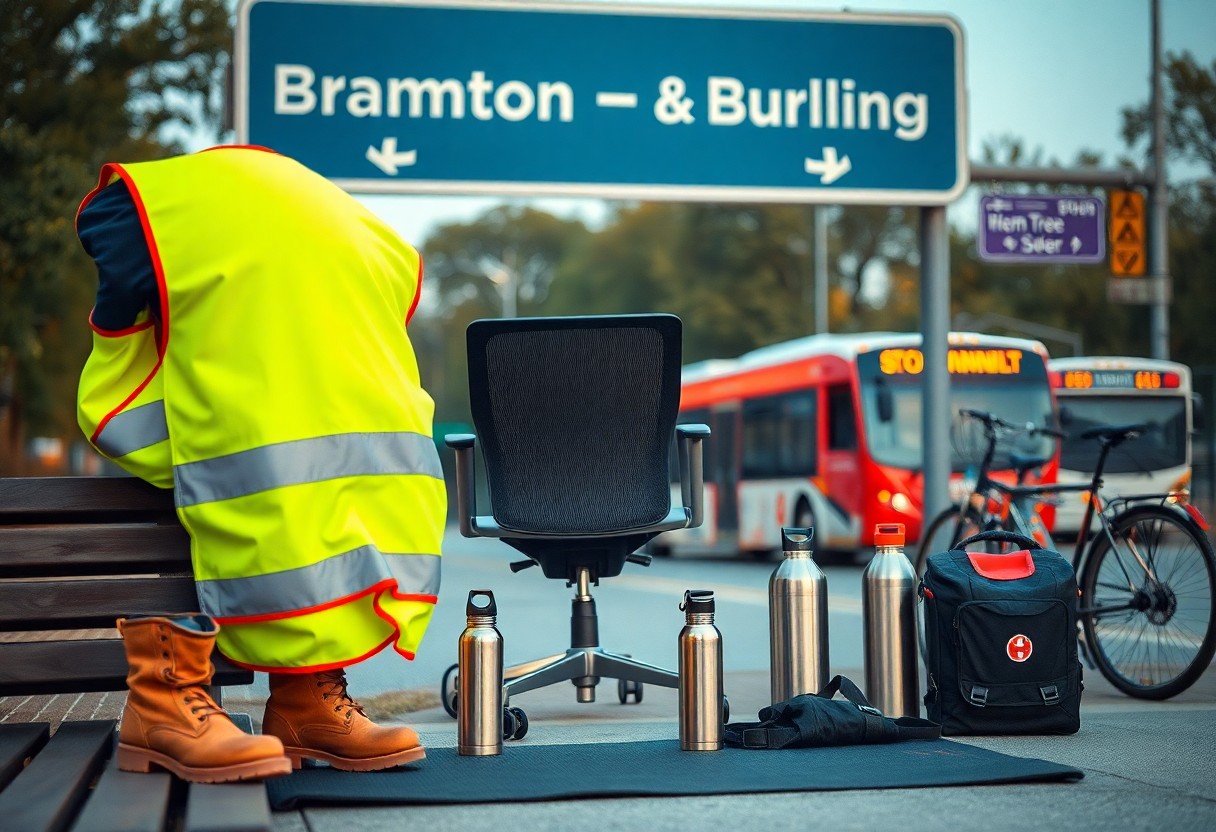
It’s easy to confuse free snacks and yoga classes with real support, but for workers commuting from Brampton to Burlington, wellness means more than perks. Long drives, unpredictable schedules, and rising costs turn abstract benefits into hollow promises. What matters most is not a meditation app subscription, but having time to sleep, eat, and see family. You feel the gap when corporate wellness feels like performance, not care.
Key Takeaways:
- A mid-sized SaaS firm in Burlington found that employees from Brampton reported higher stress levels not due to job demands but because of unpredictable transit delays on GO Transit, highlighting how commute logistics directly impact mental well-being more than office perks like free snacks or yoga classes.
- Wellness apps and virtual meditation sessions show low engagement among warehouse and service workers in the Greater Toronto Area, where shift work and fragmented schedules make structured digital programs impractical, exposing a gap between offered resources and real-life usability.
- Pay advances and no-interest microloans introduced by a manufacturing cooperative in Hamilton led to a measurable drop in self-reported financial anxiety, proving that time-bound financial tools addressing immediate needs have a stronger impact than generic wellness stipends or annual bonuses.
The Deception of Surface Level Benefits
You might have access to free snacks, a relaxed dress code, or a ping-pong table in the break room, but these perks rarely address the daily stressors of long commutes and unpredictable schedules. A mid-sized SaaS firm near Oakville discovered that despite offering yoga classes and fruit baskets, employee burnout rates remained high. The illusion of support created by such benefits can actually deepen dissatisfaction when core needs like time and stability go unmet. Real wellness starts not with perks, but with structural change.
The Geographic Weight of the Commute
Your daily drive from Brampton to Burlington often takes over 90 minutes each way, a stretch where traffic on Highway 403 or the QEW turns your morning into a test of endurance. That time lost isn’t just minutes-it’s energy, sleep, and time with family. For a customer service representative at a Mississauga-based tech firm, two hours a day spent commuting adds up to nearly a full workweek each month vanished before the first task is completed. This is not an outlier. It is the norm.
The Failure of Digital Wellness
Your employer might offer a meditation app subscription or a virtual yoga class, but these digital solutions rarely address the root of workplace stress. For a warehouse worker in Brampton or an admin clerk in Burlington, logging into a wellness portal after a 10-hour shift is not realistic. These tools often serve as PR-friendly checkboxes, masking deeper systemic issues. Ontario’s Working for Workers by Moving Towards safer, fairer conditions has begun to challenge such superficial fixes, emphasizing enforceable rights over downloadable mindfulness guides. Real wellness starts with time, pay, and dignity-not another notification.
The Essential Need for Time
Every extra hour spent commuting from Brampton to Burlington erodes the time you can spend resting, with family, or tending to personal health. Time poverty is not a minor inconvenience-it directly undermines wellness initiatives no matter how well funded. A mid-sized SaaS firm discovered that employees with commutes exceeding 90 minutes daily were twice as likely to report chronic fatigue, regardless of access to meditation apps or gym stipends. Employee wellness: lower retention rates and other benefits depend more on reclaiming time than adding perks. Flexible start times and remote work options have proven more effective than any wellness lounge. A regional logistics company reduced turnover by shifting to compressed workweeks, giving employees back entire days. Real progress happens when employers acknowledge that time is the scarcest resource.
The Reality of Financial Health
One in four workers in the Greater Toronto and Hamilton Area lives paycheck to paycheck, despite holding full-time roles. Your income may cover rent and groceries, but unexpected expenses like car repairs or medical bills expose how fragile financial stability really is. Perks like free snacks or gym discounts do nothing to address the stress of rising debt or the cost of commuting from Brampton to Burlington. A recent case at a logistics firm showed that employee turnover dropped 30 percent after introducing no-fee emergency loans and financial coaching, proving that real support targets actual pressures, not just comfort.
The Path to Sincere Support
You recognize that real change begins when employers stop offering gimmicks and start addressing daily struggles. A manufacturing worker in Hamilton no longer needs another branded water bottle, but predictable shifts that allow childcare planning. A customer service rep in Mississauga benefits more from on-site mental health first aiders than a once-a-year yoga day. When a Burlington call center introduced paid time to attend therapy appointments, absenteeism dropped without a single corporate retreat or free snack bar being added. Support that respects lived experience outlasts any perk.
Final Words
You see the shift already in how teams across Brampton and Burlington are redefining support, trading flashy perks for predictable schedules, local mental health partnerships, and transit subsidies that reflect actual commutes. A manufacturing supervisor in Oakville now starts her day an hour later to align with school drop-offs, while a customer service rep in Mississauga accesses no-cost financial coaching through his employer’s credit union tie-in. Real wellness takes shape not in beanbag chairs or fruit baskets, but in choices that honor your time, route, and lived reality.
FAQ
Q: Why is traditional corporate wellness programming ineffective for workers commuting from Brampton to Burlington?
A: Standard corporate wellness initiatives often assume employees have consistent schedules and proximity to office-based resources, which does not reflect the reality for many regional commuters. A mid-sized SaaS firm found that less than 12% of its Burlington-based staff participated in its downtown Toronto meditation sessions, not due to disinterest but because the sessions ended after their last feasible transit connection. For employees spending three or more hours daily in transit, attending after-work yoga or lunchtime nutrition talks is physically impossible. These programs, designed for a downtown workforce, ignore the geographic and temporal constraints faced by those living outside the core.
Q: How does financial stress specifically impact workers on extended commutes in the Greater Toronto Area?
A: Rising fuel costs, toll road usage, and public transit fare hikes disproportionately affect regional commuters who have no alternative routes. One logistics coordinator in Mississauga reported spending nearly 18% of her net income on monthly transit passes and occasional ride-share top-ups when trains were delayed. This kind of financial strain undermines the value of perks like free snacks or gym discounts, which do little to offset the real cost of simply getting to work. Financial health cannot be separated from commute logistics, yet most employer programs treat them as unrelated issues.
Q: What does practical wellness look like for a worker traveling from Brampton to a job in Burlington?
A: Practical wellness starts with schedule stability and access to midday rest spaces. For a customer support representative making the round-trip commute, a predictable shift that avoids rush hour and access to a quiet room for a 20-minute break improves well-being more than an annual mental health webinar. One manufacturing plant near Highway 403 introduced staggered breaks and partnered with a nearby community center to offer shower facilities and meal vouchers, resulting in a measurable drop in self-reported fatigue. Solutions grounded in daily logistics, not abstract self-care ideals, are what make a tangible difference.
Leave a Reply