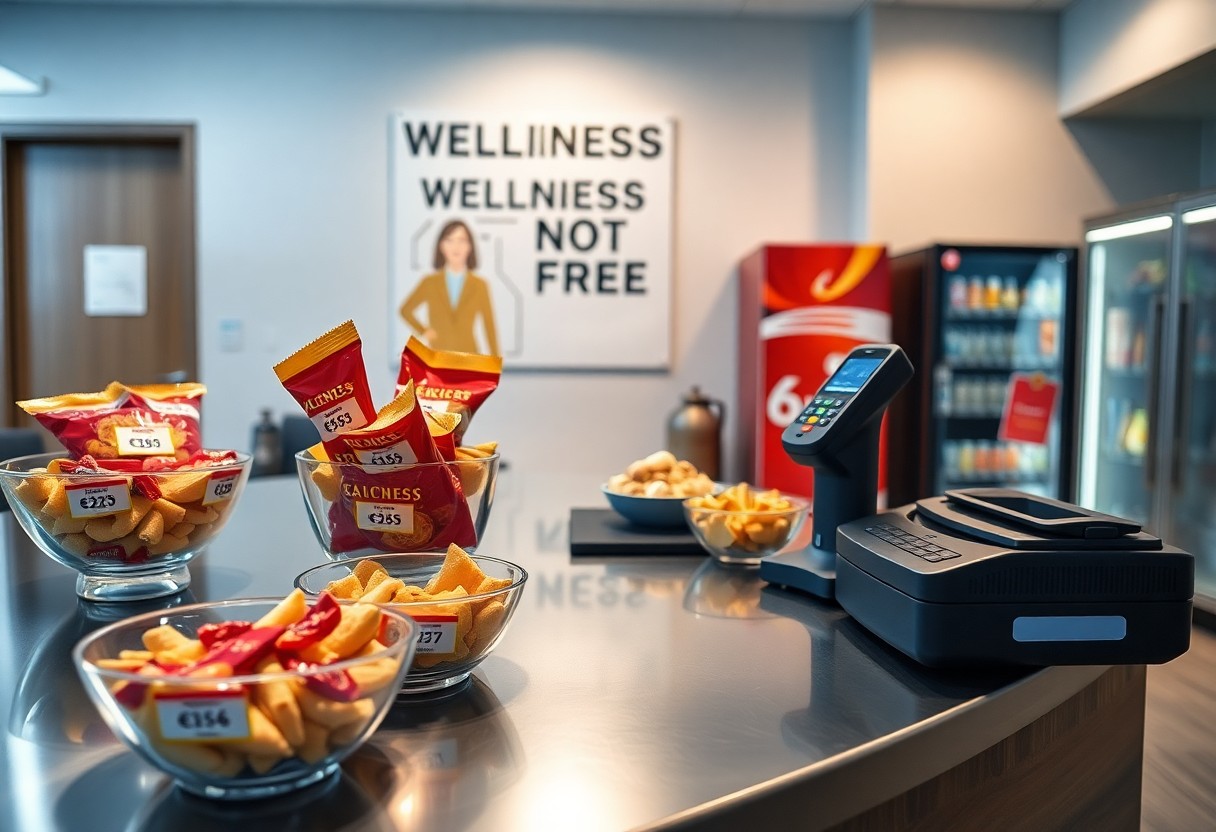
Workplace wellness programs often mask deeper issues behind free granola bars and motivational posters urging you to “Stay Balanced.” You’re expected to feel grateful for fruit bowls while enduring burnout, unrealistic deadlines, and stagnant wages. These gestures are not wellness-they are performance tools, designed to project care without altering conditions. Real well-being requires structural change, not snacks.
Key Takeaways:
- Wellness initiatives that consist solely of free snacks, yoga classes, or motivational posters often serve as symbolic gestures, doing little to address systemic issues like excessive workloads or inflexible schedules, a pattern observed in a mid-sized SaaS firm where employee burnout rates remained unchanged despite a heavily promoted wellness program.
- When companies equate wellness with perks rather than structural support, they shift responsibility for mental and physical health onto individuals, ignoring workplace design flaws such as constant after-hours messaging, which one tech company normalized under the guise of “flexible collaboration.”
- Genuine wellness requires measurable policy changes, such as capped work hours, mental health leave, and transparent promotion paths, as demonstrated by a European consultancy that reduced turnover by aligning its culture with actual rest and recovery, not just branded wellness campaigns.

The Facade of Office Benevolence
Free granola bars and motivational posters do little to offset 70-hour workweeks masked as passion. You are expected to feel grateful for a kombucha fridge while your autonomy erodes. These gestures are not generosity; they are calculated distractions from systemic issues like stagnant wages and burnout. A ping-pong table cannot compensate for a lack of psychological safety.
Hollow calories and empty promises
Unlimited M&Ms and fruit bowls signal care while actual healthcare access remains inadequate. You are offered sugar instead of support during mental health crises. These snacks create the illusion of investment in well-being, yet they cost less than one hour of therapy coverage. Nutrition is not a substitute for dignity.
The tyranny of the breakroom snack
A stocked kitchen implies generosity, but you are expected to eat lunch at your desk anyway. The breakroom becomes a stage where you perform leisure without actually resting. Presence is prioritized over recovery, and snack access is used to extend hours subtly. What looks like perk is, in fact, pressure in disguise.
One mid-sized SaaS firm reported a 40% increase in after-hours logins following the introduction of “24/7 snack access,” a policy framed as employee-friendly. You may enter for a protein bar but stay to answer emails, conditioned by proximity and expectation. The fridge hums louder than any wellness policy ever has.
Propaganda in the Workplace
Leaders often mistake visibility for value, promoting campaigns that signal care without delivering it. I created the Mayor’s Wellness Campaign when I took office, a sentiment echoed across corporate walls where posters replace policy, mirroring empty civic gestures. These displays rarely reduce burnout or improve mental health.
Decoding the inspirational poster
That framed quote urging you to “Dream Big” beside the elevator does not constitute support. Its presence often correlates with suppressed dissent, not psychological safety. You’re meant to feel inspired while working through lunch, not question why rest feels forbidden.
Slogans as a substitute for rest
“Hustle harder” glows on the break room wall, a paradox disguised as motivation. You absorb the message: pause is weakness. The campaign thrives on your silence during unpaid overtime, reframing exhaustion as dedication.
Wellness slogans rarely appear in unionized spaces with enforced break policies. A mid-sized SaaS firm replaced nap pods with a “Think Positive” mural after layoffs. Posters cost less than therapists, and they demand nothing from management but wall space. You’re expected to internalize the message while ignoring the lack of paid sick days.
The Mechanics of Exploitation
Wellness programs often function as a smokescreen, masking deeper structural issues. You are expected to perform at peak output while being told self-care is a priority, even as workloads increase and boundaries dissolve. The contradiction is not accidental. These systems are designed to extract more while appearing to give, turning personal well-being into another metric to manage.
Efficiency at the expense of sanity
Deadlines tighten, expectations escalate, and response times shrink under the banner of productivity. You answer emails at midnight, attend back-to-back meetings, and absorb tasks once handled by departed colleagues. What is praised as efficiency often erodes mental resilience, normalizing exhaustion as a sign of commitment rather than a warning signal.
Measuring souls by the spreadsheet
Performance metrics reduce complex human contributions to lines of data. You log hours, track outputs, and rate engagement, all while emotional labor and creative strain go uncounted. What cannot be quantified is often dismissed, making empathy, intuition, and long-term thinking invisible in evaluations.
Consider a mid-sized SaaS firm that implemented a wellness app tracking employee login frequency, meeting attendance, and after-hours communication. Managers received dashboards ranking staff by “engagement,” conflating burnout indicators with dedication. One engineer, consistently top-ranked, was later diagnosed with severe anxiety and sleep deprivation. The tool had not measured well-being but proxies for overwork disguised as commitment, reinforcing a cycle where presence mattered more than health.
Beyond the Corporate Curtain
Real wellness initiatives extend far beyond ping-pong tables and fruit baskets. Consider Harris County Public Health‘s mobile clinics, which deliver free blood pressure screenings and diabetes testing directly to underserved neighborhoods. These efforts address root causes of health disparity, not just symptoms.
Authentic support systems
You experience genuine care when your manager respects boundaries after hours, not when a poster urges mindfulness. A mid-sized SaaS firm reduced burnout by training leads to recognize emotional exhaustion and adjust workloads accordingly. Follow-up conversations replaced annual surveys, creating accountability instead of optics.
Reclaiming time from the machine
You regain autonomy when meetings default to 25 or 50 minutes, freeing space for focused work. One engineering team eliminated all recurring invites, requiring each to be re-justified monthly. Calendar clutter dropped by half within three weeks.
Reclaiming time from the machine means rejecting the assumption that every minute must be optimized for output. When a design agency replaced mandatory daily stand-ups with asynchronous video updates, employees reported fewer interruptions and higher-quality deliverables. Productivity shifted from visibility to actual results, measured in client satisfaction rather than logged hours.
Final words
You maintain wellness not through fruit bowls or motivational slogans but through boundaries, fair compensation, and meaningful work. A company that equates well-being with free snacks while demanding constant availability reveals its priorities. You recognize the difference when your time, health, and autonomy are respected without requiring a poster campaign to prove it.
FAQ
Q: Why do companies invest in wellness programs if they don’t address core workplace stressors?
A: Many organizations implement wellness initiatives not to resolve systemic issues but to project an image of care, deflect criticism, and reduce liability. A mid-sized SaaS firm might offer free yoga classes while maintaining a culture where employees routinely work past midnight during product launches. These programs serve as symbolic gestures, allowing leadership to claim progress on employee well-being without altering unsustainable workloads or hierarchical decision-making. The optics of support often matter more than measurable improvements in mental or physical health.
Q: Can free snacks and posters actually harm employee well-being?
A: When superficial benefits substitute for fair compensation, reasonable hours, or psychological safety, they can deepen resentment and burnout. A graphic designer at a tech startup reported feeling insulted when her request for a salary adjustment was met with an expanded fruit basket in the break room. Such responses signal that management equates convenience with care, ignoring structural inequities. Over time, employees recognize these perks as substitutes for meaningful investment in their long-term health and career development.
Q: What does an effective workplace wellness strategy look like in practice?
A: Genuine wellness support includes capped workweeks, transparent promotion pathways, and mental health resources that don’t require employees to justify their need. One unionized publishing house negotiated a policy limiting after-hours communication, resulting in a measurable drop in self-reported anxiety. Paid sabbaticals, accessible therapy stipends, and participatory decision-making on team workflows reflect a commitment that goes beyond aesthetics. These measures address root causes of stress rather than its symptoms.
Leave a Reply