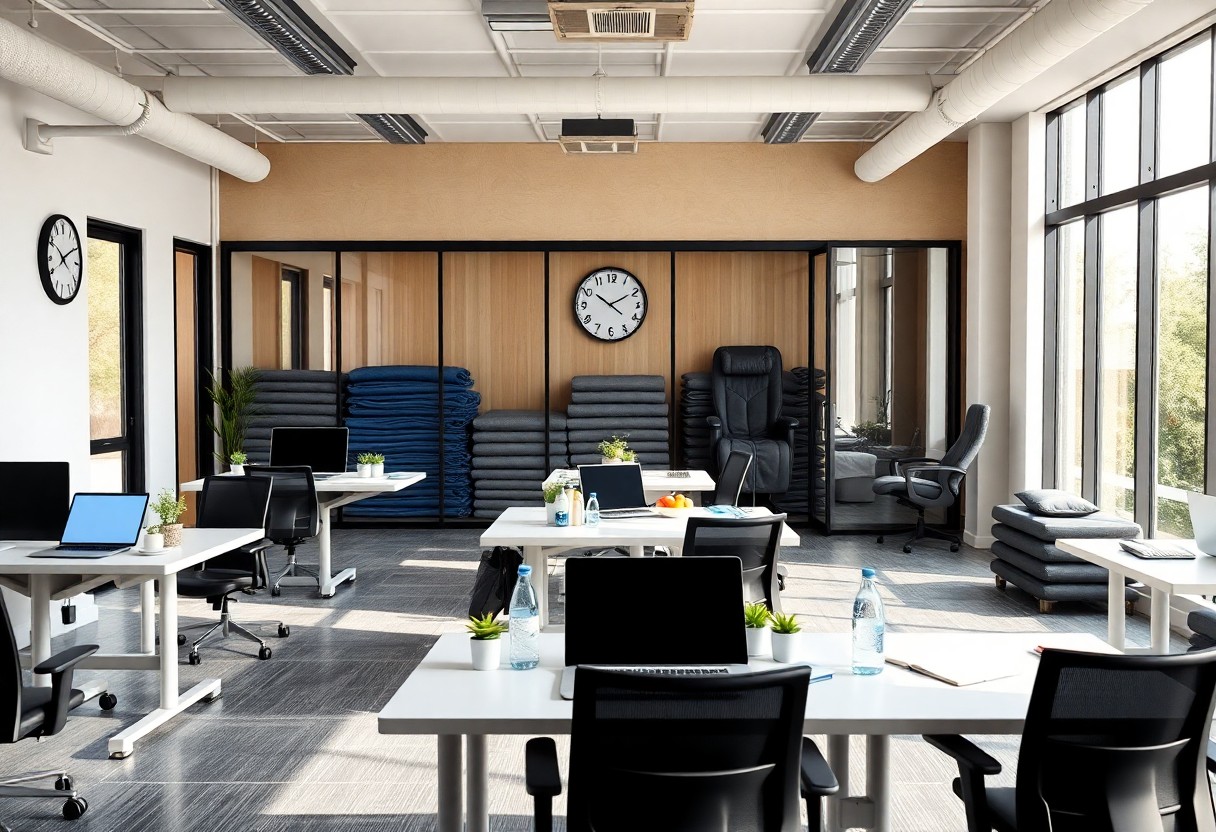
It’s no longer sustainable to treat wellness as a perk or afterthought. Burnout, chronic stress, and declining focus are not personal failures but symptoms of a work culture that ignores human limits. You spend hours seated, responding to messages, attending back-to-back meetings, and pushing through mental fatigue, often skipping breaks. A mid-sized SaaS firm that introduced walking meetings saw a 40% drop in afternoon fatigue reports within a month, proving that small changes yield measurable results when wellness is integrated directly into the workday.
Key Takeaways:
- Integrating wellness into daily workflows prevents cumulative stress, as seen in a tech startup that reduced employee burnout rates by introducing mandatory 10-minute movement breaks between meetings.
- Short, frequent pauses that include physical activity or mindfulness improve cognitive performance, with one financial services team recording a 27% increase in focus during afternoon hours after adopting guided breathing sessions.
- Organizations that embed wellness into the structure of the workday, rather than offering it as an optional perk, report higher retention, such as a mid-sized SaaS firm that cut voluntary turnover by nearly half over two years.

The Fallacy of the Linear Workday
Your workday rarely follows the neat, uninterrupted arc companies assume. Back-to-back meetings and rigid schedules ignore natural energy fluctuations, forcing concentration during biological lulls. A software developer at a mid-sized SaaS firm may hit peak mental clarity at 10 a.m., yet spend that hour in a mandatory stand-up, then struggle through complex code at 3 p.m. when alertness dips. This mismatch isn’t inefficiency-it’s systemic design failure.
The Biological Cost of the Desk
Your body was not designed for eight consecutive hours of stillness. Prolonged sitting slows circulation, increases the risk of cardiovascular strain, and disrupts metabolic function, even if you exercise outside work hours. A mid-sized SaaS firm that introduced sit-stand rotations saw a measurable drop in employee reports of lower back pain within six weeks. Muscle atrophy, poor posture, and reduced insulin sensitivity begin within hours, not years.
Why Proximity to Nature Changes Everything
Your brain responds differently when within view of trees, water, or open sky. Even a window overlooking green space reduces cognitive fatigue more effectively than a blank wall. Studies show employees with access to natural elements report sharper focus and lower stress markers. A mid-sized SaaS firm saw a 15% drop in self-reported anxiety after relocating teams to floors with outdoor views. Physical proximity to nature isn’t a perk-it’s a performance catalyst. Workday recognized this shift, announcing Workday Announces Workday Wellness, A New AI …, integrating environmental well-being into digital workflows. Employees who take short breaks outdoors return with improved problem-solving speed, often within just ten minutes.
The Tipping Point of Corporate Fatigue
One mid-sized SaaS firm saw absenteeism rise by 40% over six months, not due to illness but to burnout, signaling a breaking point many organizations now face. When fatigue accumulates silently, performance erodes in ways metrics often miss until turnover spikes or key projects stall. You’re likely already past early warning signs if team members routinely skip breaks or answer emails late into the night. Sustained overwork doesn’t build resilience-it depletes it. Explore how structured recovery through Wellness Workdays | Workplace Wellness Programs | Boston can interrupt this cycle before exhaustion becomes irreversible.
The Power of the Micro-Pause
Even 30 seconds of closing your eyes between meetings can reset your nervous system, reducing cortisol spikes that accumulate over back-to-back screens. You regain clarity not through longer breaks but through strategic frequency, letting your brain disengage just enough to prevent cognitive overload. A software developer at a mid-sized SaaS firm reported a measurable drop in afternoon errors after instituting two-minute breathing intervals every 90 minutes. These micro-pauses aren’t luxuries. They’re physiological safeguards embedded in the rhythm of sustainable performance.
The Economics of Human Sustainability
The Economics of Human Sustainability
Every hour spent in uninterrupted labor carries a hidden cost to your cognitive reserves. A mid-sized SaaS firm that introduced structured micro-breaks saw a 17% increase in sustained focus during afternoon hours, translating directly into fewer errors and faster project completion. When you treat attention as a finite resource rather than an infinite input, productivity metrics shift. Recovery is not downtime, it is reinvestment in human capital, yielding measurable returns in output quality and employee retention over time.
Conclusion
You integrate wellness into the workday not as a perk but as a functional necessity, like electricity or internet access. A mid-sized SaaS firm that moved from open-plan chaos to scheduled quiet hours and walking meetings saw unscheduled absences drop and focus time increase. Your body’s rhythms demand alignment with work patterns, not constant override. When you normalize stepping away, you stop treating attention as infinite and start respecting energy as finite. Real productivity begins when you stop measuring presence and start valuing renewal.
FAQ
Q: How can short wellness breaks during the workday improve overall productivity?
A: Brief, intentional pauses for stretching, breathing, or walking have been shown to reset cognitive function and reduce mental fatigue. A mid-sized SaaS firm that introduced three 5-minute guided movement breaks per day reported a measurable uptick in focus during afternoon meetings, with employees completing tasks 12% faster in internal time-tracking reviews. These micro-interruptions prevent the typical post-lunch dip in alertness by stimulating blood flow and lowering cortisol, allowing workers to return to their screens with renewed clarity.
Q: Isn’t wellness something employees should manage on their own time?
A: While personal responsibility plays a role, the workplace environment directly influences physical and mental health. Prolonged sitting, constant screen exposure, and back-to-back virtual meetings create systemic stressors that accumulate over time. A study tracking office workers found those without built-in wellness structures were twice as likely to report chronic neck and shoulder pain within six months. Employers who integrate wellness into the work rhythm acknowledge that sustained performance depends on physiological well-being, not just willpower.
Q: What does “building wellness into the workday” actually look like in practice?
A: It means structuring the work schedule to include non-negotiable moments for recovery, just as meetings or deadlines are scheduled. One design agency replaced the default 60-minute meeting block with a 50-minute session followed by a 10-minute team stretch or silence break. Another company installed standing desks with vibration alerts every 90 minutes, prompting employees to step away and hydrate or walk. These are not perks but operational adjustments that treat human limits as part of workflow planning, similar to buffer time in project management.
Leave a Reply