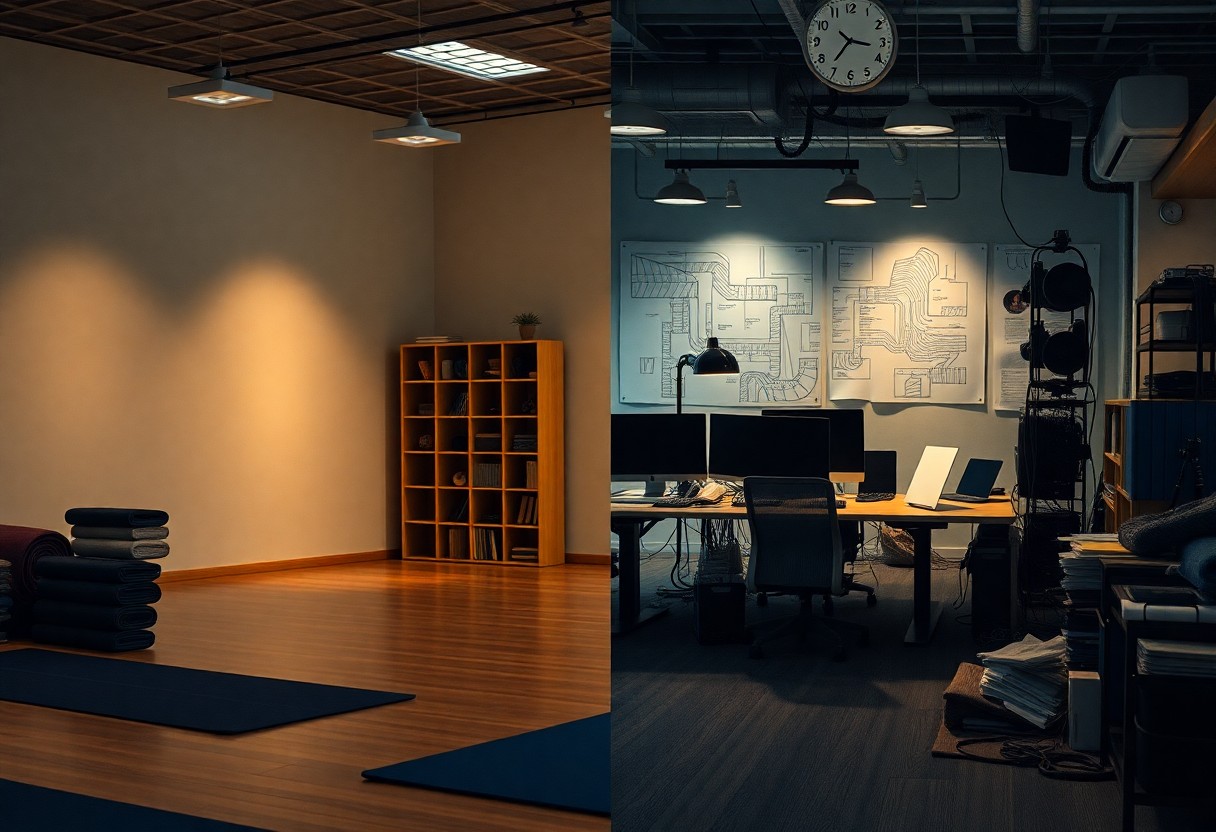
Key Takeaways:
- Wellness initiatives like yoga and meditation often place the burden of well-being on individuals, distracting from deeper structural issues in how work is organized and managed.
- Poor work design-such as unrealistic deadlines, lack of autonomy, and constant interruptions-directly contributes to stress and burnout, making superficial wellness programs ineffective.
- Real improvements in employee health require rethinking job roles, workloads, and workplace culture, not just offering stress-relief activities that don’t address root causes.
The Corporate Band-Aid Fallacy
You’re told that wellness comes from meditation apps, standing desks, or midday stretching. These solutions feel helpful, but they’re designed to manage symptoms, not fix broken systems. Companies promote them because they’re cheap and keep you working harder without changing toxic workloads or unrealistic deadlines.
The Limits of Desk Yoga
Stretching at your desk might ease tension for five minutes, but it won’t stop burnout caused by back-to-back meetings and after-hours emails. No pose can compensate for a job that drains your time and energy without offering control, rest, or meaning in return.
Subscription Apps as Distraction
You pay monthly for guided breathing exercises while your manager sends late-night messages. These apps offer temporary calm but shift responsibility from employer to employee, framing stress as a personal failure rather than a structural problem built into how work is designed.
Those mindfulness subscriptions generate profits from your exhaustion, promising peace while ignoring the root cause: unsustainable work rhythms. They collect data, renew automatically, and rarely improve your actual conditions. You’re being conditioned to adapt to harm instead of demanding change, and that’s exactly what makes these tools so convenient-for employers, not you.
The Architecture of Exhaustion
You’re not burned out because you’re weak. You’re burned out because your workday is engineered to extract maximum output with minimal regard for human limits. The real problem isn’t your self-care routine-it’s the invisible blueprint shaping your fatigue.
Structural Overload
Meetings stack back-to-back, deadlines collide, and your calendar holds no space to breathe. This isn’t poor time management-it’s structural overload, designed to keep you reacting, not thinking. You’re expected to perform at peak capacity without the conditions that make it possible.
The Myth of the Infinite Workday
Your inbox never closes, and neither does the expectation to respond. This illusion of an infinite workday blurs the line between availability and obligation. Rest becomes guilt, and disconnection feels like failure-by design.
Every notification trains you to stay plugged in, reinforcing the false idea that productivity never sleeps. But your body does. The danger lies in believing you can match an endless workflow, when in truth, chronic overwork erodes focus, health, and judgment. This isn’t dedication-it’s exploitation masked as ambition.
Reimagining the Workflow
You don’t need another mindfulness app to fix burnout. The real shift starts when work itself is designed around human limits. Forced efficiency drains more than time-it erodes focus, creativity, and health. Redesigning workflow means building in rest, reflection, and flexibility as non-negotiables, not luxuries.
Autonomy as Medicine
Control over your time and tasks isn’t a perk-it’s protective for mental health. When you can choose when to focus, pause, or collaborate, stress drops and engagement rises. Autonomy restores agency, turning work from a source of exhaustion into a space of purpose and balance.
Sustainable Output Models
Performance doesn’t require constant output. True productivity includes rest, recovery, and rhythm. Sustainable models reject the myth of nonstop hustle, replacing it with cycles of effort and renewal that protect long-term well-being and performance.
Sustainable output models challenge the assumption that more hours equal more value. Instead, they integrate planned downtime, realistic deadlines, and energy-aware scheduling. You’re not a machine-your focus wanes, your creativity needs space, and your body demands rest. Ignoring these needs doesn’t boost results-it undermines them. By aligning work节奏 with natural human capacity, these models prevent burnout and support consistent, high-quality contribution over time.
Beyond the Ergonomic Chair
Workplace wellness is often misunderstood. It’s not just about standing desks or posture-it’s about power. You’re sold comfort while your workload grows. Real change starts when companies stop treating symptoms and confront the toxic systems behind burnout. Workplace wellness is often misunderstood. It’s not just… designed for profit, not people.
Redefining Productivity Metrics
You measure what matters. When success is tied to hours logged, not outcomes achieved, you reward presence over purpose. This distorts health and incentivizes overwork. Shift to measuring impact, creativity, and sustainable effort-metrics that honor human limits-and watch well-being rise without yoga mats in sight.
Psychological Safety in Design
You can’t innovate under fear. A workplace designed for wellness must protect your right to speak up, make mistakes, and disagree without punishment. Silence is not compliance-it’s a symptom of broken trust. Safety isn’t soft; it’s the foundation of resilient, adaptive teams.
True psychological safety is engineered into workflows, not declared in mission statements. It means you can pause a meeting, question a deadline, or say “I’m overwhelmed” without career consequences. When design assumes you’ll endure pressure silently, it enables harm. Systems must be built so your voice shapes decisions, not just fills reports.
The Economic Cost of Friction
You pay more than salaries when work design ignores human limits. Every hour lost to burnout, turnover, or disengagement carries a dollar value-one that silently drains profitability. Poorly structured roles don’t just harm people; they erode organizational efficiency in ways balance sheets rarely capture until it’s too late.
Burnout as a System Failure
Blaming individuals for burnout ignores the reality: you are working within systems built to overextend and exhaust. When roles demand constant availability, unclear priorities, and emotional suppression, fatigue becomes inevitable. The failure isn’t personal-it’s embedded in how work is structured and expected to function.
Retention and Structural Integrity
People don’t leave companies; they leave roles that offer no sustainability. High turnover signals broken design, not broken employees. When workflows lack rhythm, autonomy, or recovery time, retention becomes impossible-no amount of yoga or meditation can compensate for structural collapse.
Retention falters not because workers lack resilience, but because roles lack intelligent design. Jobs that ignore cognitive load, emotional toll, and time poverty create predictable exits. You can’t fix this with perks or platitudes. Real retention comes from rethinking tasks, authority, and pacing-building roles that support enduring human performance, not just short-term output.
Summing up
Your wellness isn’t undermined by a lack of yoga or meditation. It’s eroded by work designs that demand constant availability, ignore biological limits, and reward burnout. You face fatigue not because you’re doing too little self-care, but because the systems you work within make sustained well-being nearly impossible.
FAQ
Q: Why does the article argue that work design-not yoga-is the real wellness problem?
A: The article challenges the common corporate approach of offering yoga, meditation, or mindfulness programs as solutions to employee stress. These programs place the responsibility for wellness on individuals, suggesting that if workers just breathe deeply or stretch more, they’ll feel better. But the real issue lies in how work is structured-long hours, lack of control, constant interruptions, and unrealistic deadlines. No amount of yoga can offset a job that demands constant availability or offers no autonomy. The problem isn’t people’s inability to relax; it’s that the work itself is designed in ways that create chronic stress. Fixing wellness means changing the conditions of work, not just offering temporary relief.
Q: What are some examples of poor work design that harm employee well-being?
A: Poor work design includes jobs with high demands and low control, such as customer service roles where employees must follow strict scripts and can’t make simple decisions. It also includes knowledge work where people face back-to-back meetings, fragmented tasks, and after-hours emails that blur the line between work and personal life. Another example is shift work with unpredictable schedules, which disrupts sleep and family routines. These conditions lead to burnout, anxiety, and physical health problems. When people have no say in how or when they work, even passionate, dedicated employees become exhausted. The structure of the job, not personal resilience, determines much of this outcome.
Q: What changes to work design could actually improve employee wellness?
A: Real improvements come from giving workers more control over their time and tasks. This means allowing flexible schedules, reducing unnecessary meetings, and setting clear boundaries around after-hours communication. Employers can design roles that include meaningful work, opportunities to learn, and room for decision-making. Teams that can shape how they complete projects report higher engagement and lower stress. Some companies have adopted four-day workweeks or meeting-free days with positive results. The key is treating employees as thinking, feeling humans-not productivity machines. When work is organized around respect and sustainability, wellness doesn’t need to be outsourced to yoga classes.
Leave a Reply