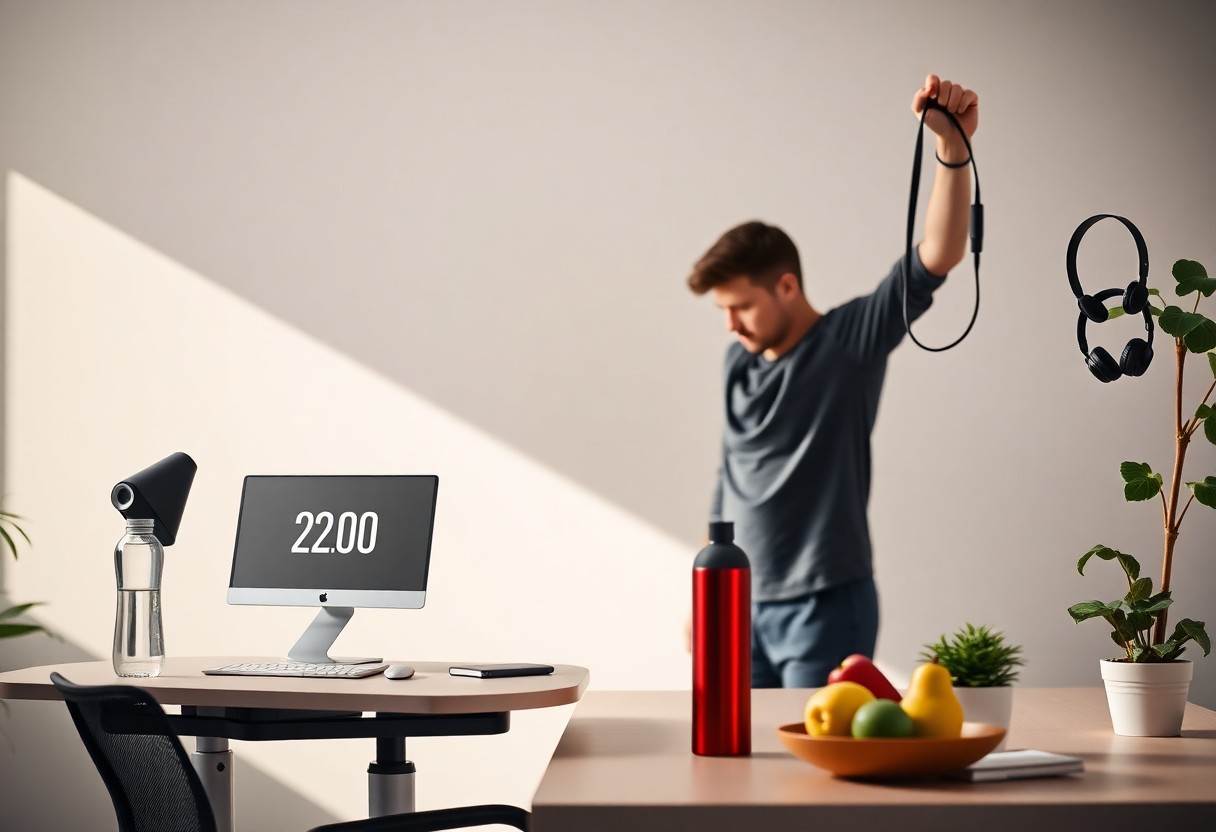
Health routines at work help you stay sharp: short breaks reduce fatigue, standing and movement combat sedentary risks, and mindful breathing boosts focus so you can perform consistently and avoid burnout.

Key Takeaways:
- Regular movement breaks and ergonomic setups reduce physical strain and improve alertness.
- Designated deep-work blocks and fewer interruptions increase sustained focus and task completion.
- Healthy snacks, consistent hydration, and clear work-hour boundaries maintain energy and mental clarity.
Optimizing Physical Ergonomics and Movement
You should set desk height and chair support so your wrists and elbows align, and schedule movement to cut fatigue; these adjustments lower injury risk and boost sustained concentration.
Implementing Dynamic Movement Intervals
Micro-breaks of 1-3 minutes every 30-60 minutes let you stretch, walk, or reset posture, helping to reduce fatigue, sharpen attention, and limit repetitive-strain buildup.
Correcting Posture for Long-Term Spinal Health
Adjust your chair, monitor, and keyboard so your spine stays neutral; use lumbar support and set feet flat to avoid chronic back pain and maintain clear focus throughout the day.
Maintaining a neutral spine helps you when you perform tasks: raise your screen to eye level, pull your shoulders back, and practice quick core-engagement cues; combine with stretching and periodic ergonomic reviews to prevent chronic pain and sustain productivity over years.
Mastering Deep Work and Cognitive Focus
You protect deep focus by scheduling uninterrupted sessions and eliminating distractions so you sustain attention, cut errors, and lower mental fatigue; deep, uninterrupted work improves concentration and overall health.
Utilizing Time-Blocking for Complex Tasks
Schedule fixed blocks for complex tasks on your calendar, reserving high-focus windows and brief recovery breaks so you maintain momentum, make steady progress, and avoid decision fatigue.
Minimizing Context Switching and Digital Interruptions
Limit context switches by silencing nonvital alerts and grouping small tasks so you protect cognitive energy and maintain flow; frequent switches raise error rates and sap productivity.
Reduce interruptions by enforcing a personal Do Not Disturb, batching email to set times, and using single-task timers so you reclaim sustained attention. Close unrelated tabs and mute chat during focus windows, and set clear team norms so colleagues know when you’re unavailable. These habits lower stress and mistakes while increasing output; consistent focus routines can raise quality and reduce burnout.

Strategic Hydration and Brain-Centric Nutrition
Hydration supports cognitive stamina: you should sip water throughout the day, pair fluids with protein or low-glycemic snacks, and avoid sugary drinks that provoke crashes to keep attention steady during focused work.
Impact of Fluid Intake on Mental Processing Speed
Dehydration of even 1-2% can reduce your processing speed and increase errors; you should drink regularly, check urine color, and favor water over sugary or excess-caffeine options to preserve clear, quick thinking.
Sustaining Energy Through Low-Glycemic Fueling
Choose low-glycemic carbs combined with protein and healthy fats so you maintain steady blood sugar; this approach helps you avoid energy crashes and supports sustained focus, with stable glucose improving task endurance.
Pairing oats, legumes, berries, or sweet potato with nuts, yogurt, or a boiled egg slows glucose uptake so you sustain attention; aim for small snacks every 3-4 hours, a balanced lunch, and avoid pastries or sugary drinks that cause an energy crash, while prioritizing protein-rich choices to keep focus consistent.
Mitigating Sensory Overload and Eye Strain
Sensory overload and eye strain sap focus and raise headache risk; you should dim harsh lighting, switch to warmer screen tones, and apply anti-glare filters. Short, scheduled breaks and nearby quiet areas reduce cumulative stress and help you sustain steady productivity.
Applying the 20-20-20 Rule for Visual Recovery
Practice the 20-20-20 rule: every 20 minutes look at something 20 feet away for 20 seconds to relieve eye fatigue and reset focus. Use alarms or apps so you and your team build the habit without interrupting workflow.
Reducing Auditory Distractions in Open-Plan Environments
Manage noise with noise-cancelling headphones, soft furnishings, and designated quiet zones so you lower interruptions and protect concentration. Clear signage and private rooms prevent constant background chatter that drives up stress and mistakes.
Create office norms you can enforce: set scheduled quiet hours, install acoustic panels and sound-masking systems, and stock shared spaces with booths or headphones. Train teams on noise etiquette, favor brief written updates over drop-in talks, and monitor decibel hotspots so you catch problems before they increase stress and errors.
Establishing Boundaries for Mental Recovery
Set clear work hours and rules so you can recover mentally; enforce no-contact periods, encourage short breaks, and protect evenings to maintain focus and reduce stress.
Protecting Focus with Asynchronous Communication
Asynchronous channels let you handle tasks on your schedule; limit meetings, set expected response windows, and mark messages urgent only when necessary to protect deep focus.
The Role of Scheduled Disconnection in Preventing Burnout
Scheduled disconnection gives you predictable off-time; block daily breaks and full days off, encourage device-free evenings, and track recovery to lower burnout risk.
When you commit to regular disconnection, you create windows for real psychological recovery that cut mistakes and restore attention. Encourage managers to model device-free evenings, enforce clear off-hours policies, and rotate on-call duties so most people enjoy uninterrupted rest. Tracking sleep, error rates, and engagement shows improved focus and reduced burnout, while ignoring off-hours raises chronic stress.
Cultivating Behavioral Consistency in the Workplace
Consistency makes it easier for you and your team to turn small actions into habits by using clear cues and repeatable routines; align schedules, set reminders, and reward attempts to lock in lasting health gains. See practical tips: 5 Workplace Health Tips Your Employees Need to Hear Today.
Overcoming Common Barriers to Habit Formation
Identify the biggest friction points that stop you-time limits, conflicting priorities, or unclear expectations-and remove them with small, testable changes like shorter actions or shared accountability that reduce failure and sustain practice.
Integrating Wellness Practices into Daily Workflows
Design routines that fit your workflow: schedule micro-breaks, embed standing or stretching prompts into meetings, and use visible cues so employees try healthy choices consistently; these simple shifts produce measurable boosts in focus and resilience.
Schedule wellness into your calendar so you and your team treat health tasks like meetings: block 5-10 minute pauses, add walking agendas, and assign rotating prompts. Pair these with quick metrics-participation rates and reported focus-and adjust. Ignoring ergonomics or prolonged sitting can cause chronic pain and reduced productivity, so prioritize small, consistent changes that yield rapid, positive returns.
FAQ
Q: What are five workplace habits that improve employee health and focus?
A: Five workplace habits that reliably improve health and focus are movement breaks, ergonomic workstations, structured focus periods, hydration and balanced snacks, and clear work-life boundaries. Movement breaks consisting of brief standing, walking, or stretching every 45-60 minutes reduce stiffness, improve circulation, and reset attention. Ergonomic workstations with adjustable chairs, monitor height at eye level, and proper keyboard/mouse placement lower musculoskeletal strain and reduce fatigue. Structured focus periods use time blocks (for example, 25-90 minutes) with short breaks to limit multitasking and support deeper concentration. Hydration and balanced snacks-easy access to water and whole-food options while reducing sugary drinks-help stabilize energy and cognitive performance. Clear work-life boundaries such as meeting-free windows, limited after-hours communications, and consistent time-off policies reduce burnout and preserve sustained focus during work hours.
Q: How can managers implement these habits without disrupting productivity?
A: Managers can introduce these habits through simple policies, role modeling, and removing practical barriers. Start by adding daily short movement breaks and shared calendar blocks that mark focus time to reduce interruptions. Offer ergonomic assessments, adjustable equipment, or stipends for home-office improvements and make workstation setup guidance available. Provide water stations and healthier snack choices in common areas or subsidize healthier options. Train teams on time-blocking, single-tasking techniques, and the use of status indicators to minimize unnecessary messages during deep work. Pilot changes with one team for 4-8 weeks, measure outcomes, then refine and scale the practices based on participation and feedback.
Q: How should organizations measure the impact of these habits on health and focus?
A: Measure impact using a mix of quantitative and qualitative indicators collected at baseline and at regular intervals. Run short pulse surveys that ask about energy, focus, discomfort, and stress at baseline, 4 weeks, and 12 weeks. Track productivity metrics relevant to the team-output per hour, task completion rates, error rates, and project velocity-alongside absenteeism and short-term sick leave. Monitor meeting metrics such as number and average length of meetings and the proportion of calendar time reserved for focus blocks. Gather qualitative feedback through focus groups or one-on-one check-ins to capture lived experience and barriers. Where consent and privacy policies permit, use anonymized activity or wearable data to verify increases in movement or sleep improvements, and report changes against baseline while noting participation rates to link outcomes to the interventions.
Leave a Reply