
Many workers underestimate how fatigue harms performance and increases accident risk, so you must monitor hours, rest, and conditions to protect teams; proactive scheduling and breaks reduce incidents and improve alertness.
Key Takeaways:
- Fatigue reduces alertness, slows reaction times, and impairs decision-making, increasing likelihood of errors, near-misses, and serious accidents.
- Workplace policies that include fatigue risk management, optimized shift scheduling, mandatory rest breaks, and return-to-work assessments lower incident rates.
- Training, fatigue reporting procedures, and access to countermeasures such as strategic naps and sleep hygiene resources improve detection and management of worker fatigue.
The Physiology of Fatigue
Biology shows that prolonged wakefulness and sleep debt reduce alertness, impair judgment, and increase accident risk; you depend on restorative sleep cycles to sustain safe performance.
Circadian Rhythm Disruptions
Shift work and irregular hours misalign your internal clock, causing sleep loss, impaired vigilance, and a spike in fatigue-related incidents that threaten workplace safety.
Cognitive Impairment and Reaction Time
Sleep deprivation slows your processing speed, degrades decision-making, and lengthens reaction times, raising the likelihood of errors and injuries during critical tasks.
Reaction time losses multiply when you combine sleep restriction with stress; you may miss hazard cues and your response delays can turn routine actions into high-risk events.
Identifying Workplace Risk Factors
You must identify common risk factors that increase fatigue and threaten workplace safety.
- Extended shifts
- Irregular hours
- High-stress environments
Knowing these lets you prioritize targeted controls.
Extended Shifts and Irregular Hours
Working extended shifts or irregular hours makes you prone to fatigue, slowing reactions and increasing on-the-job accident risk.
High-Stess Environmental Stressors
Noise, glare, vibration, and extreme temperatures push you toward fatigue, amplifying distraction and raising safety hazards.
Exposure to continuous noise, chemical fumes, poor lighting, or thermal extremes erodes your alertness and disrupts sleep patterns; implement engineered noise reduction, proper ventilation, adequate illumination, climate controls, and scheduled breaks to reduce fatigue and lower the likelihood of serious incidents.
Quantifying the Impact on Safety and Productivity
Data show you face heightened injury risk and output drops when fatigue accumulates; explore mental strain at Recognizing Mental Load to Prevent Physical Injury – WorkWell for strategies that reduce errors and protect teams.
Correlation Between Exhaustion and Incident Rates
You see higher incident rates as fatigue rises; reaction times slow and judgment slips, increasing near-misses and accidents. Track hours and enforce rest to cut your exposure to dangerous events.
Economic Costs of Fatigue-Related Errors
Lost time and mistakes mean you absorb direct repair costs and indirect productivity declines; fatigue-driven errors can saddle teams with steep expenses that erode margins and safety budgets.
When you tally overtime, rework, insurance claims, and turnover, the true price of fatigue becomes clear-small errors scale into large losses. Use targeted audits, shift redesign, and recovery policies to reduce lost revenue and safety liabilities while improving retention.
Fatigue Risk Management Systems (FRMS)
FRMS gives you a structured framework to monitor and reduce workplace fatigue, combining policy, training, and real-time data so you can lower fatigue-related incidents and protect staff during high-risk tasks.
Data-Driven Risk Assessment
Data analysis lets you spot trends in sleep, shift patterns, and performance, enabling targeted interventions and use of objective metrics to predict and prevent dangerous fatigue peaks.
Implementation of Mitigation Protocols
Implementing controls lets you deploy adjusted schedules, mandatory breaks, and fatigue reporting to immediately reduce operational risk and sustain alertness during critical operations.
You must track compliance, audit outcomes, and incorporate near-miss and incident data to refine protocols, enforcing shift limits and rest policies that measurably cut serious accidents.
Organizational Strategies for Prevention
Teams must implement clear policies that reduce fatigue risk, including mandatory rest periods, fatigue reporting, and supervisor training so you avoid fatigue-related incidents and maintain workplace safety.
Scheduling Optimization and Rest Requirements
Optimize schedules so you get adequate sleep, enforce minimum rest between shifts, and limit extended overtime to reduce errors and injuries.
Cultural Shifts Toward Safety Reporting
You should encourage reporting of fatigue without penalty so near-misses surface early and teams correct hazards; emphasize non-punitive reporting and clear follow-up.
Make reporting confidential, and you should track incidents, analyze trends, share corrective actions, and reward openness so the organization reduces repeat fatigue risks; highlight timely responses and anonymous options.
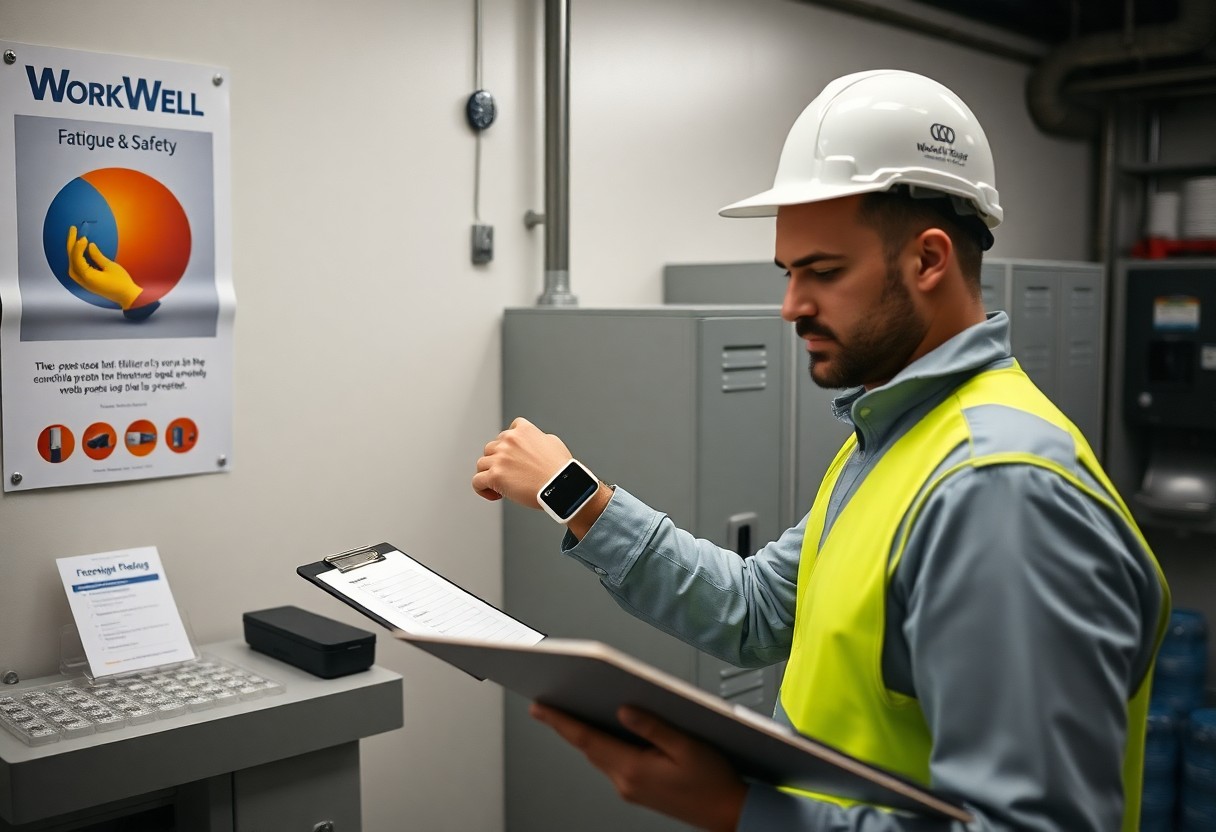
Employee-Centric Wellness Initiatives
Programs designed around your needs reduce fatigue and workplace accident risk, combining schedule flexibility, mandated rest breaks, and accessible wellness resources to maintain your alertness on shift.
Sleep Hygiene and Nutritional Education
Sleep routines and targeted nutrition teach you to avoid drowsiness and sustain focus; consistent bedtimes, limiting caffeine before shifts, and balanced meals improve your reaction time and lower error rates.
Mental Health Support and Stress Management
Counseling and training help you manage stress and prevent burnout, offering confidential support, brief interventions, and coping tools that keep your decision-making sharp and reduce safety incidents.
You gain quicker recovery from fatigue when programs offer on-site counseling, rapid access to employee assistance programs, and manager training to spot warning signs; untreated stress raises error and injury risk, so timely support and practical stress-reduction techniques preserve your safety and performance.
To wrap up
Considering all points you must prioritize fatigue management, enforce rest policies, monitor risks, and train staff so you maintain safer operations and reduce incidents.
FAQ
Q: What is WorkWell – Fatigue and Workplace Safety and what components does it use to reduce risk?
A: WorkWell – Fatigue and Workplace Safety is a workplace program that targets fatigue-related risk through policy, education, scheduling, and monitoring. The program combines a fatigue risk assessment, a fatigue risk management system (FRMS) tailored to the workplace, written policies for hours of work and break requirements, and training for managers and workers on sleep health and fatigue recognition. Engineering and administrative controls are included, such as task redesign, additional staffing for high-risk tasks, and scheduled breaks or strategic nap opportunities. The program also uses reporting and incident-analysis procedures to link fatigue indicators to corrective actions and continuous improvement. Data collection methods can include self-report surveys, fatigue reporting systems (non-punitive), operational metrics (near-misses, errors), and, where appropriate and privacy-compliant, wearable or biometric monitoring to inform risk controls.
Q: What common signs indicate a worker is fatigued and what immediate steps should a supervisor take?
A: Observable signs of fatigue include slowed reaction time, frequent yawning, heavy eyelids or microsleeps, lapses in attention, increased error rates, poor coordination, irritability, and declining productivity. Immediate supervisor actions should remove the worker from safety-critical duties, provide a safe place for an on-shift rest break or brief nap if operationally allowed, and reassign tasks to a rested worker. The supervisor should document the event, ask about contributing factors (recent sleep, medications, health issues), and follow the employer’s fatigue policy for reporting and follow-up. If fatigue appears chronic or linked to a medical condition, the supervisor should arrange occupational health assessment and consider temporary work restrictions or adjusted schedules until cleared.
Q: How can employers implement practical fatigue-reduction measures in scheduling, training, and monitoring while respecting worker privacy?
A: Employers should start with a risk assessment that identifies tasks sensitive to fatigue and peak risk times. Scheduling best practices include limiting shift length (for example, keeping most shifts ≤12 hours), providing adequate time off between shifts (minimum 10-12 hours preferred), minimizing consecutive night shifts, and using forward-rotating schedules when rotations are necessary. Implementing protected break periods and allowing short strategic naps (typically 20-30 minutes) during long or night shifts can reduce acute impairment. Training programs should cover sleep hygiene, signs of fatigue, reporting procedures, and supervisor response protocols. Monitoring should rely first on non-intrusive methods: fatigue reports, safety incidents, absenteeism, and targeted surveys. If wearables or biometrics are considered, obtain informed consent, limit data collection to what is necessary, anonymize or aggregate data where possible, and define strict data-use and retention policies. The employer should adopt a non-punitive reporting culture, track KPIs such as fatigue-related incidents and near-misses, and review controls regularly to adjust schedules, staffing, and training based on outcome data and worker feedback.
Leave a Reply