
Most workplace stress skews your decisions; be aware that stress impairs judgment and increases risky choices, while simple practices like brief pauses and checklists restore clarity and improve outcomes.
Key Takeaways:
- Stress narrows attention and increases reliance on heuristics, raising the likelihood of biased or impulsive choices.
- Acute stress impairs working memory and cognitive flexibility, making it harder to weigh options and adapt plans.
- Simple interventions such as deep breathing, short breaks, structured checklists, and pre-commitment rules improve decision quality under stress.
The Physiology of Pressure
Pressure compresses cognitive bandwidth, flooding you with stress hormones that favor speed over accuracy; attention narrows and complex reasoning weakens. Watch for stress-induced tunnel vision that makes decisions faster but riskier.
The Impact of Cortisol on Executive Function
Cortisol spikes reduce prefrontal cortex function, so you lose working memory and mental flexibility, increasing reliance on habits and instinctive choices.
Recognizing the Cognitive Shift from Logic to Survival
You enter survival mode under acute stress, prioritizing immediate threats while strategic thought and long-term planning get sidelined, raising error-prone reactions.
Monitoring signs like shallow breathing or a racing heart helps you detect the shift early; pausing and focused breathing can reduce cortisol and restore deliberative control, letting you make clearer, safer choices.
Common Decision-Making Pitfalls Under Stress
Stress pushes you toward quick, familiar choices, increasing the chance you’ll default to the status quo and miss better options; this amplifies error rates and slows recovery from mistakes.
Risk Aversion and the Status Quo Bias
When stressed, you prefer safe bets, inflating risk aversion and anchoring you to familiar routines, which can block needed change and reduce team agility.
Hypervigilance and Information Overload
You can become hypervigilant, chasing more data until information overload paralyzes decision speed and increases false positives.
Hypervigilance forces you to scan endlessly, which makes small cues seem urgent and floods working memory; decision paralysis, heightened error rates, and burnout follow unless you apply filters, time limits, or trusted heuristics to restore clarity.
Cognitive Resilience Strategies for Leaders
You can build cognitive resilience by scheduling short recovery breaks, delegating low-value choices, and using evidence-based resources like Coping with stress at work to protect your decision clarity under pressure.
Mindfulness Techniques for Real-Time Clarity
Practice brief breath checks and a two-minute grounding scan to reduce reactivity and sustain real-time clarity during complex decisions.
Reframing Stress as a Performance Catalyst
Reframe pressure as a signal to focus effort; treat short spikes as performance fuel while scheduling recovery to avoid the danger of burnout.
When you treat stress as usable information, run micro-experiments: timebox high-focus work, track outcomes, and adjust exposure so you amplify short-term performance while protecting long-term wellbeing. You should also set clear recovery cues and delegate decisions that drain attention to minimize risk of burnout and sustain high decision quality.
Implementing Structural Safeguards
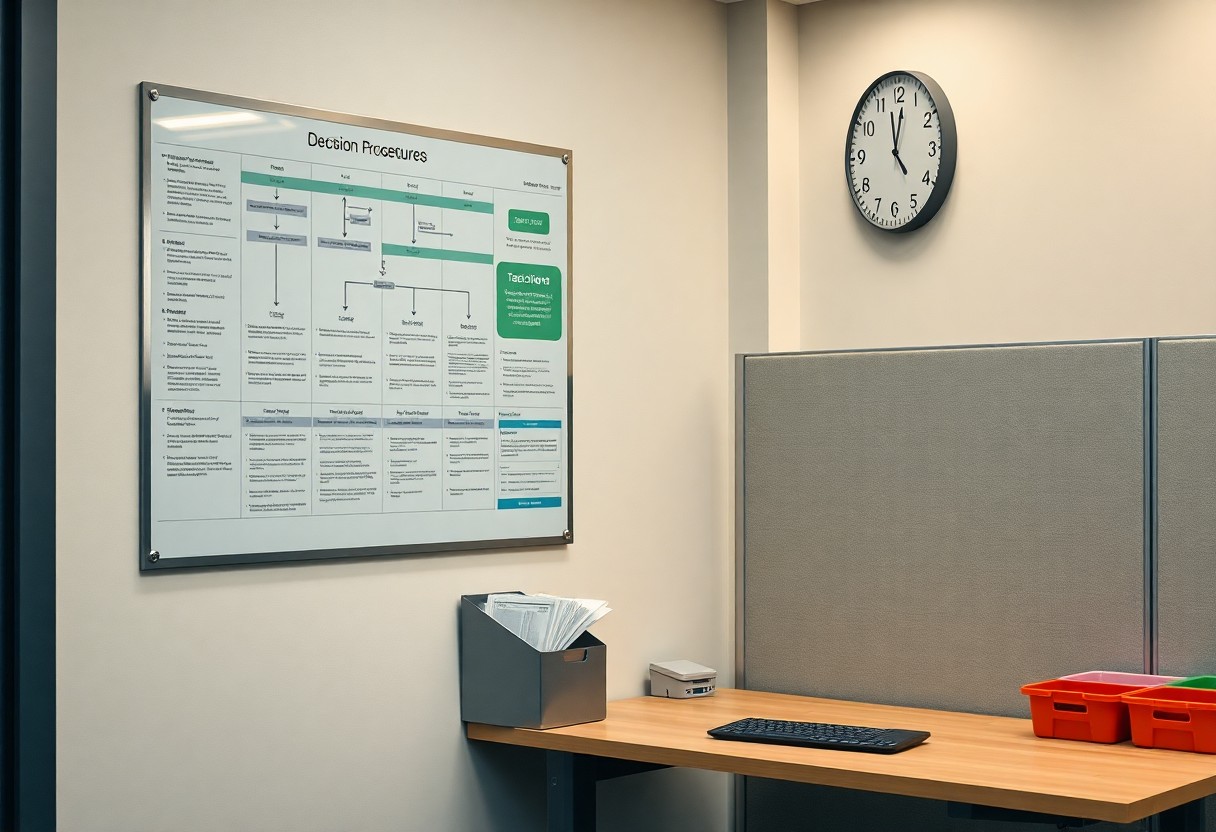
Teams must design procedural guards that reduce stress-driven errors and protect choices under pressure; you should implement checklists, escalation rules, and redundant verification for high-impact tasks.
Collaborative Decision-Making Frameworks
Shared structures help you balance perspective and accountability; require cross-functional reviewers, rotating leads, and a single tie-breaker authority for stalled choices.
Establishing “Cool-Down” Protocols for High-Stakes Choices
Pauses compel you to step back before irreversible actions, use short timeouts, and mandate written rationales to lower decision fatigue and prevent impulsive errors.
During crises you should define explicit triggers, minimum delay windows, and exception paths; combine timers, peer checks, and automatic rollback plans so high-stakes errors are caught before they cascade, and train teams to apply the protocol under pressure for consistent enforcement.
Long-term Wellness and Decision Quality
Sustained self-care and recovery practices help you maintain decision quality over months, reducing the risk of burnout and impulsive choices so you make clearer long-term judgments.
The Correlation Between Physical Health and Mental Sharpness
Better sleep, balanced nutrition, and regular movement sharpen your focus so you spot trade-offs faster and choose wisely; poor fitness raises your risk of cognitive lapses.
Building a Culture of Psychological Safety
When you can speak up without blame, the team surfaces doubts early and you avoid costly errors; consistent psychological safety improves collective decision accuracy and reduces hidden risks.
You should model candor and reward raised concerns so colleagues learn that reporting near-misses prevents escalation into crises. Offer regular debriefs, clear incident channels, and feedback training; those practices increase trust, cut the risk of catastrophic errors, and sustain higher decision quality across your team.
To wrap up
To wrap up, you must monitor stress signals, apply short grounding techniques, set simple decision rules, and pause before high-stakes choices so you preserve clarity and make better decisions under pressure.
FAQ
Q: How does stress influence decision making in WorkWell?
A: Stress alters neural and hormonal states that support decision processes. Acute stress spikes cortisol and adrenaline, reducing working memory capacity, narrowing attention, and increasing reliance on heuristics and habits; those shifts raise the chance of impulsive or conservative choices depending on the person and context. Prolonged stress weakens executive control and cognitive flexibility, producing higher error rates, slower recovery after mistakes, and greater decision fatigue across the day. WorkWell links self-reports, contextual workload data, and optional physiological signals to map when stress-related impairment coincides with critical decisions, enabling targeted adjustments to task timing and support.
Q: What features does WorkWell provide to help employees make better decisions under stress?
A: Real-time stress indicators notify users and authorized managers when cognitive load or physiological markers exceed personalized thresholds, suggesting brief breaks or simpler choices. Context-aware decision templates reduce complexity by presenting the most relevant options, checklists, and default recommendations when stress risk is high. Micro-break prompts and guided breathing exercises restore attentional resources and lower arousal before high-stakes tasks. Training modules teach recognition of stress-driven biases and rehearsed decision rules that perform better under pressure. Aggregated analytics highlight systemic bottlenecks and peak-risk times so teams can adjust schedules or redistribute tasks to reduce overload.
Q: How should organizations implement WorkWell while protecting privacy and autonomy?
A: Start with voluntary pilots that use minimal, clearly described data streams and explicit consent for any physiological monitoring. Policy documents must specify which data are collected, how long data are retained, who can access individual-level information, and how aggregated reports are generated for management. Default settings should favor local device processing and data minimization, with opt-in toggles for sharing beyond the individual; anonymized, aggregated metrics should inform workflow changes rather than individual surveillance. Leadership should combine technical safeguards with transparent communication and training so employees understand controls, expected benefits, and limits on managerial use of the system.
Leave a Reply