
You should design onboarding that balances orientation with wellbeing, so your new hires avoid information overload and stress while you promote psychological safety, clear expectations, and paced learning; integrating rest, mentorship, and realistic goals helps you prevent burnout, increase retention, and accelerate productive contribution from day one.
Key Takeaways:
- Embed wellness into the onboarding design: balanced schedules, clear expectations, gradual workload, and built-in breaks to reduce overwhelm.
- Provide accessible wellness resources and personalized support: mental-health access, ergonomics guidance, mentorship check-ins, and reasonable accommodations.
- Measure and iterate using wellbeing metrics: new-hire feedback, short wellbeing surveys, and retention/productivity signals to refine onboarding.
The Importance of Employee Onboarding
Well-designed onboarding shortens your ramp time and reduces early turnover: a Glassdoor analysis found structured programs can improve new-hire retention by up to 82% and boost productivity by around 70%. You should pair a 30-60-90 plan with role-specific checklists, a peer buddy, and clear milestone tracking so new hires hit competence faster while avoiding overload that leads to burnout.
Benefits of Effective Onboarding
Effective onboarding delivers measurable wins: you accelerate time-to-productivity (often within 60-90 days), lift engagement scores, and cut first-year turnover. For example, instituting a structured first-week schedule plus weekly manager check-ins reduced early attrition by 20-30% in several mid-sized tech firms. You gain consistency, faster contribution, and clearer career-path signals that make employees more likely to stay and perform.
Impact on Employee Well-Being
Onboarding that embeds wellness elements-ergonomic setups, manageable workload pacing, and access to an EAP-directly lowers stress and absenteeism. You can mitigate early overload by limiting first-week meetings, providing documented processes, and scheduling 15-30 minute wellness check-ins twice weekly for the first month; these steps reduce the risk of early disengagement and stress-related turnover.
Digging deeper, you should measure well-being outcomes with simple KPIs: first-90-day NPS, early sick-days, and one-month engagement surveys. For instance, tracking a 30% drop in first-month sick days after adding ergonomic training or flexible hours gives you hard evidence. Prioritize quick wins-buddy support, transparent goals, and a small wellness stipend-to produce tangible improvements in retention and daily functioning.
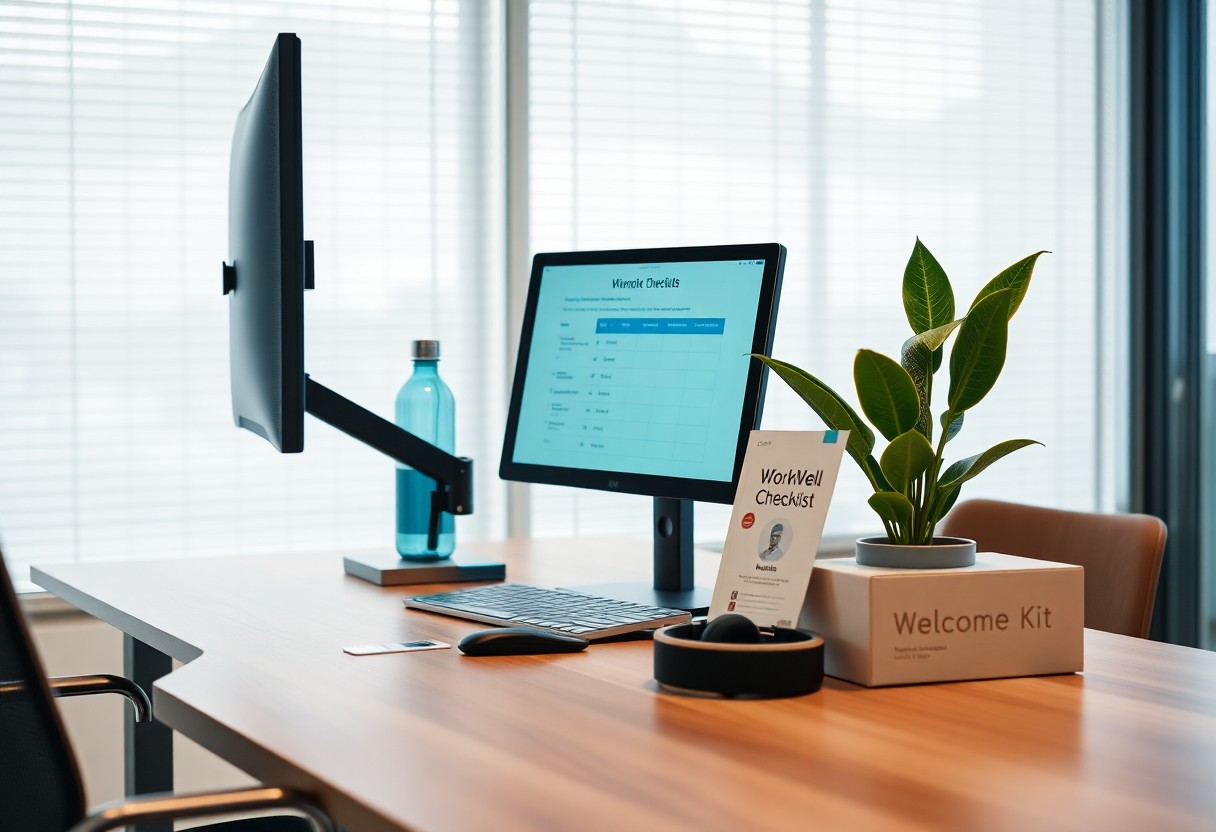
Principles of Wellness-Centric Design
Understanding Wellness in the Workplace
When you treat workplace wellness as a design requirement, you align onboarding to lower long-term costs: WHO estimates depression and anxiety cost the global economy about $1 trillion per year in lost productivity, and working 55+ hours/week raises stroke and heart disease risk. Use those figures to secure buy-in, set measurable targets (for example, reduce early turnover by 20%), and prioritize interventions like role clarity, predictable schedules, and ergonomic basics.
Designing for Emotional and Physical Health
You can design onboarding to support both minds and bodies by embedding practical elements: provide adjustable desks, 10-15 minute microbreak prompts, and mandatory manager check-ins at day 3 and week 2. Gallup finds highly engaged teams deliver about 21% higher profitability, so include psychological safety training, clear expectations, and accessible EAP resources during the first month to convert wellbeing into business impact.
You should operationalize this with clear metrics: track onboarding Net Promoter Score, time-to-productivity, 90-day attrition, and weekly pulse scores for the first 12 weeks. Set targets-e.g., aim to cut time-to-productivity by 20-30% and lower 90-day attrition by 10%-and run A/B pilots (cohort A receives ergonomic kit + mindfulness; cohort B baseline) then iterate using exit interviews and manager ratings to validate effects.
Integrating Wellness into Onboarding Programs
Embed wellness from day one by mapping clear touchpoints: a pre-start survey, a 30‑minute wellness orientation, and scheduled follow-ups at days 7, 30 and 90. Pair practical supports-ergonomic setup, mental-health resources-and autonomy-building tools like goal templates; see Building Autonomy Into Your Wellness Plan – WorkWell for program design ideas. Research suggests targeted onboarding can improve early retention by up to 20% when paired with measurable participation metrics.
Pre-Onboarding Strategies
Before your new hire’s first day, send a 5‑question wellness survey and a digital welcome kit with three options: coaching intro, ergonomic checklist, and local activity discounts. Use the survey to tailor their first-week schedule-reserve a 20‑minute benefits walkthrough if they indicate mental-health priorities. This front-loading reduces early overwhelm and boosts participation in first‑month offerings.
Active Onboarding Practices
During week one, schedule a 30‑minute live wellness orientation, a paired mentor check‑in, and two short, optional micro-sessions (15 minutes) on stress management and movement. Track attendance and aim for ≥70% engagement in these sessions to validate approach and iterate quickly.
Operationally, provide a simple tracker: participation, satisfaction (1-5), and one personal wellness goal per new hire. Run weekly pulse surveys for the first month and adjust timing or formats if engagement falls below 70%. Offer low‑barrier options-recordings, brief walking meetups, and asynchronous resources-to accommodate shift workers and remote hires.
Post-Onboarding Follow-Up
At 30, 60 and 90 days, conduct structured check‑ins that review their wellness goal progress, benefits usage, and workplace adjustments. Tie these conversations to performance check‑ins so wellness is integrated into your regular feedback rhythm and not siloed.
For sustained impact, convert insights into program changes: if >30% report ergonomic issues, deploy targeted workstation assessments; if participation drops after 60 days, experiment with incentives or micro‑learning bundles. Use these data points to expand offerings and build long‑term autonomy in employee wellness planning.
Metrics for Measuring Success
Key Performance Indicators
You should track a mix of quantitative KPIs: time-to-productivity (benchmark 30-60 days), 30/60/90-day retention (aim for >85% at 90 days), onboarding NPS (>40), completion rates for mandatory modules (>80%), and wellness participation (>60%). Use cohort analysis and A/B tests to compare cohorts with wellness checkpoints versus standard onboarding, and report trends monthly so you can tie design changes to measurable outcomes.
Employee Feedback and Engagement
You want regular pulse surveys (1-3 questions) at day 7, 30, and 90 with a target response rate >50%, plus anonymous channels and structured 1:1s to capture sentiment. Combine eNPS, qualitative comments, and usage data from your LMS to spot friction points and improve engagement quickly.
Implementing thematic coding of open responses gives you actionable themes: onboarding pace, manager support, workload, and wellness resources. You can prioritize fixes by impact-if comments about burnout double in a cohort and correlate with a 10% dip in task completion, escalate manager coaching and reduce early workload. In practice, firms that add wellness check-ins and act on feedback see measurable lifts in engagement; translate themes into A/B experiments, track effect sizes, and iterate until the feedback trend lines move positively.
Case Studies of Successful Wellness-Onboarding
These examples give you measurable outcomes from wellness onboarding programs that cut injuries and boost retention. You’ll see varied approaches-holistic curricula, tech-enabled training, and mental-health integration-each with clear metrics. For a focused playbook on physical roles consult Onboarding new hires in a physically demanding job – WorkWell and compare how training completion and injury rate shifted across pilots.
- Company A (Manufacturing): 1,200 hires/year, 4-week integrated program; injuries down 35%, 12‑month retention up 18%, training completion 96%, ROI recouped in 9 months.
- Company B (Logistics): 800 hires, microlearning + wearable posture sensors; musculoskeletal claims down 42%, time-to-competency cut from 8 to 6 weeks (−24%), estimated $420,000 annual claims savings.
- Company C (Healthcare): 500 frontline hires, mental-health modules + peer coaching; burnout scores improved 30%, voluntary turnover reduced 12%, EAP utilization up 60% in 6 months.
- Company D (Construction): 300 new workers in pilot, ergonomics + pre-shift movement routines; strains fell 50% in 6 months, productivity up 8%, OSHA recordables decreased by 0.5 per 100 FTE.
Company A: A Holistic Approach
You’ll notice they blended physical-safety coaching, ergonomics assessments, and mental-health check-ins into a 4-week phased onboarding, applied to 1,200 annual hires. Implementation produced a 35% drop in injuries, 96% training completion, and an 18% lift in 12‑month retention, showing how combining ergonomics with social support moves both safety and retention metrics.
Company B: Innovative Techniques
You can adopt their mix of 3-5 minute microlearning modules and wearable posture sensors that delivered a 42% reduction in musculoskeletal claims across 800 hires and shortened time-to-competency by 24%, producing clear cost savings and faster operational readiness.
More detail: their pilot paired real-time sensor feedback (vibrations for dangerous lifting patterns) with adaptive e-learning-3-minute modules triggered by flagged behaviors-and weekly dashboards for supervisors. You’d run a 90-day pilot with 100 new hires, baseline injury and productivity metrics, and iterate content monthly; they tracked a net savings payback within 10 months and used analytics to cut the top three risky motions by >60% in the first quarter.
Future Trends in Employee Onboarding
Personalization and continuous support will dominate, with onboarding expanding into a 90-day wellness continuum that blends microlearning, manager check-ins, and access to mental health resources. You can expect hybrid-first programs to emphasize asynchronous wellbeing modules plus live cohort sessions; for example, a 200-employee startup that added 15-minute daily check-ins and an EAP access saw a reported 18% drop in first-year attrition in a pilot cohort, showing measurable ROI for wellness-led onboarding.
Technology in Wellness Integration
Wearables, AI coaching, and LMS-HRIS integrations let you deliver tailored interventions and measure outcomes in real time. Combine biometric-informed fatigue alerts with privacy-preserving dashboards and single sign-on to streamline use; some implementations cut admin time by 30-40%. Prioritize data privacy-you must minimize identifiable health data and obtain clear consent when using sleep or stress metrics in onboarding workflows.
Emerging Best Practices
Adopt a modular 90-day roadmap that sequences basic orientation, a resilience module, and manager-led growth conversations, with touchpoints at days 3, 14, and 30. You should pair each hire with a peer mentor (typical ratio 1:8-10) and offer 10-20 minute microlearning wellness units that integrate into your LMS to keep engagement high without overloading schedules.
Operationalize measurement by tracking onboarding NPS, 30- and 90-day retention, absenteeism, and simple stress scores from periodic check-ins. Use monthly cohort reviews to iterate: if NPS lags or early attrition exceeds targets, adjust module timing or mentor load. Emphasize voluntary participation-mandatory wellness tasks often reduce trust-while ensuring leaders model participation and your EAP and teletherapy are visible benefits.
Conclusion
Presently you should treat onboarding as a wellness-driven design: align pacing, clear role expectations, supportive check-ins, ergonomic and mental-health resources, and measurable milestones so your new hires feel safe, capable, and productive. By embedding wellbeing into each step, you reduce turnover, accelerate engagement, and strengthen long-term performance.
FAQ
Q: What does “wellness-focused onboarding” mean for WorkWell and what core elements should it include?
A: Wellness-focused onboarding at WorkWell integrates physical, mental, social and ergonomic support into the standard orientation process. Core elements include pre-boarding communications that set expectations and options for flexible schedules; an ergonomic and technology checklist with guidance and stipend options; an explicit introduction to mental-health benefits, EAPs and confidential support channels; structured social connections such as a peer buddy, team welcome rituals and small-group check-ins; pacing of role responsibilities with an adjustable 30-90 day ramp plan; and manager training on psychological safety, workload calibration and inclusive communication.
Q: How should teams sequence and deliver onboarding activities to protect new hire wellbeing during the first 90 days?
A: Deliver onboarding in phased, measurable stages: pre-boarding (days before start) shares logistics, access and options for ergonomic setup or accommodations; day 1 focuses on belonging and clarity-welcome from leaders, a short orientation, and immediate access to support resources; week 1 balances core role training with low-stakes social time and a scheduled ergonomic/setup check; 30-day review assesses workload, stressors and goal clarity and adjusts timelines; 60-day focuses on skill-building and integration into regular workflows with manager feedback; 90-day includes a holistic wellbeing and performance review to finalize ongoing support. Use short pulse surveys and one-on-one check-ins at each phase so managers can tune pace and resources in real time.
Q: What metrics and practices should WorkWell use to evaluate and improve wellness-centered onboarding?
A: Combine quantitative and qualitative measures: track new-hire engagement scores, early retention, time-to-productivity benchmarks, sick-leave and EAP utilization, and pulse survey indicators for stress, belonging and workload balance. Supplement with qualitative data from structured 30/60/90 interviews, manager observations and onboarding feedback forms. Use small-scale experiments (A/B test onboarding variations) and cohort comparisons to identify what reduces burnout and speeds healthy integration. Ensure confidentiality for wellbeing responses, loop findings into manager training and onboarding materials, and update checklists and timelines quarterly based on outcomes.
Leave a Reply