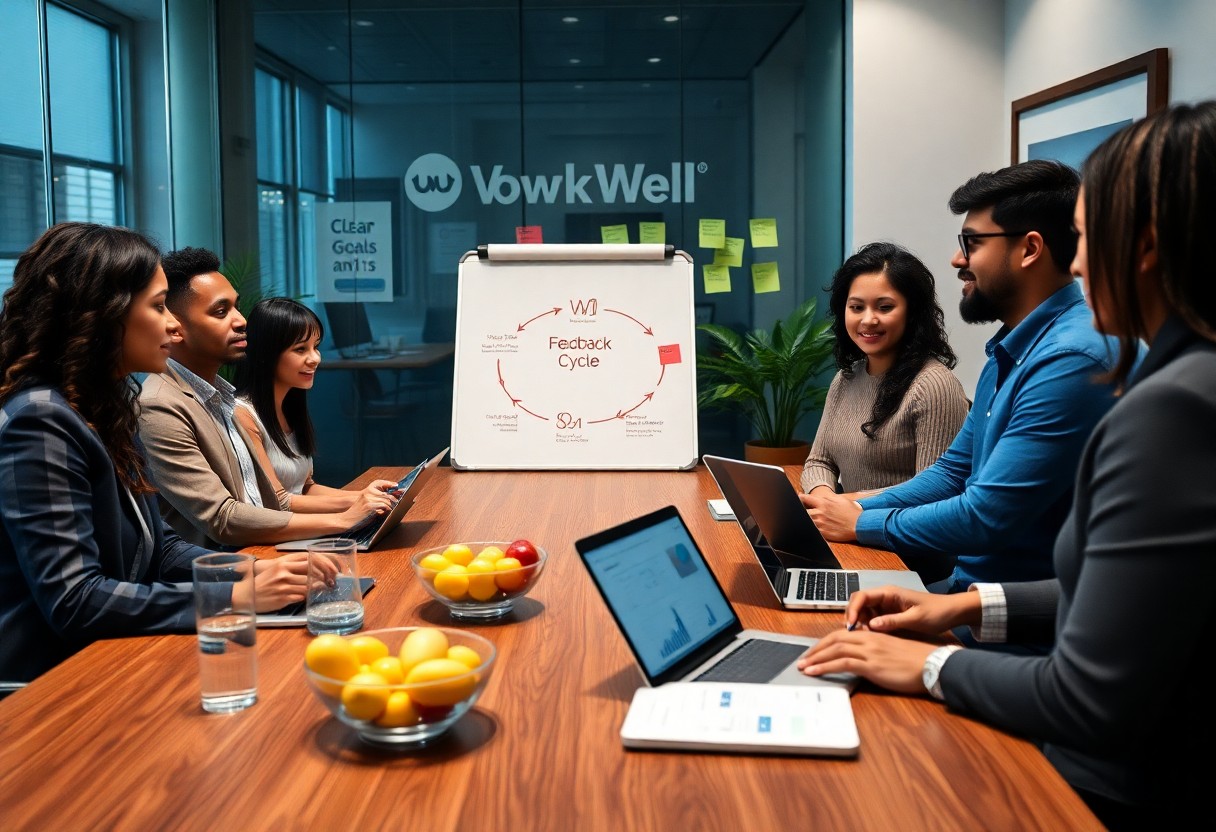
Just because feedback targets performance doesn’t mean it must erode wellbeing; when you design systems that prioritize psychological safety, you reduce burnout and improve outcomes. You should train managers to deliver regular, compassionate feedback, embed anonymous channels for concerns, and act on patterns that signal risk-because unaddressed stress can drive turnover and legal exposure. With clear policies and measurement, feedback becomes a tool for engagement and resilience, aligning business goals with your team’s long-term health.

Key Takeaways:
- Embed psychological safety and empathy into feedback-prioritize specific, actionable, growth-focused comments and predictable timing to reduce anxiety.
- Train leaders and peers in wellness-centered delivery-teach active listening, nonjudgmental language, clear follow-up plans, and when to connect people with support resources.
- Track and iterate on outcomes-combine wellbeing indicators (stress, engagement) with performance metrics, solicit input on the feedback experience, and refine policies to prevent burnout.
Understanding Wellness in the Workplace
Defining Wellness
You should treat wellness as an integrated strategy covering physical, mental, social, and financial health-examples include on-site ergonomics, mental health counseling, flexible schedules, and nutrition programs. Many organizations track outcomes like absenteeism, engagement scores, and healthcare spend; you might aim for measurable goals such as a 10% reduction in sick days year-over-year. Practical tools include periodic stress surveys, biometric screenings, and targeted coaching to prevent chronic conditions and sustain performance.
Importance of a Wellness-Driven Culture
You experience tangible returns when wellness is embedded: Gallup data shows engaged teams have 41% less absenteeism, and long-term initiatives like Johnson & Johnson’s Live for Life reported roughly $250 million in savings over two decades. Embedding wellness improves retention, productivity, and employer brand, making it a strategic investment rather than a perk.
To operationalize this, you need aligned manager training, clear policies, and measurable KPIs-track EAP utilization, absenteeism, healthcare costs, and engagement surveys. Set concrete targets (for example, 10% fewer sick days, a 5-point engagement lift) and run pilot programs to validate impact. Otherwise you risk hidden costs such as turnover and untreated burnout, where replacement can exceed 20% of annual salary, eroding any short-term gains.
The Role of Feedback in Enhancing Wellness
When feedback is structured around wellness goals, you reduce stress drivers and strengthen engagement; targeted programs have shown up to a 25% drop in reported burnout indicators within six months. Embed feedback loops into regular workflows, link outcomes to wellbeing metrics, and use audits like WorkWell – How to Audit Your Work Culture for Wellness to align action with data so your initiatives are measurable and sustainable.
Types of Feedback
You should differentiate feedback by purpose: reinforcement, correction, development, upward insight, and peer support, because each type drives different wellness outcomes and engagement levels. Match delivery method and frequency to intent-for example, praise delivered immediately boosts morale while developmental feedback benefits from a follow-up plan. After you segment feedback into positive, constructive, developmental, upward, and peer, assign owners and KPIs for each stream.
- Positive feedback – reinforces desired behaviours and builds psychological safety
- Constructive feedback – corrects course without undermining confidence
- Developmental feedback – focuses on skills and career growth
- Upward feedback – surfaces manager impact on team wellbeing
- Peer feedback – increases day-to-day support and belonging
| Type | Impact / Use |
| Positive | Immediate morale boost; increases retention |
| Constructive | Targets performance gaps; reduces repeated stressors |
| Developmental | Builds skills; links to career and wellbeing goals |
| Upward | Improves leadership behaviours and team climate |
| Peer | Daily support; fosters psychological safety and belonging |
Techniques for Effective Feedback
Use the SBI model (Situation-Behavior-Impact), keep feedback timely-ideally within 48 hours-and maintain a 1:3 ratio of corrective to positive comments; these methods increase receptivity and reduce defensiveness. Encourage short, weekly check-ins (10-15 minutes) to catch issues early and make feedback a regular habit rather than a sporadic event.
When you implement techniques, coach managers in phrasing and pacing: start with observable facts, avoid generalized labels, and pair corrective notes with specific next steps and resources. For example, in a four-month pilot, teams that adopted weekly 10-minute feedback huddles reported a 15% decline in unplanned absences and a measurable rise in engagement scores. Train peer reviewers on confidentiality and bias mitigation, set clear metrics (response rates, action completion, wellbeing indices), and automate reminders so feedback becomes routine. Prioritize follow-up-document actions, track progress monthly, and escalate unresolved patterns to prevent chronic stress and preserve trust.
Implementing a Wellness-Driven Feedback Culture
You scale wellness-driven feedback by aligning rituals, metrics, and leadership behavior: have leaders model open dialogue, embed brief feedback rituals into weekly workflows, and track progress with pulse surveys and a simple KPI (e.g., engagement score + NPS). Piloting a 90-day program with 15-minute weekly feedback huddles often surfaces quick wins, while avoiding token gestures that erode trust. Use data to iterate every month and tie outcomes to development plans and recognition.
Steps to Initiate Change
You start with a small audit, map current touchpoints, then design low-friction practices: introduce 15-minute weekly huddles, run a 2-hour manager workshop on feedback skills, and pilot with a 50-200 person team for 90 days. Collect baseline metrics (engagement, retention, pulse scores) and set targets (for example, a 10% engagement lift). Follow with weekly check-ins and a clear escalation path for safety concerns.
Best Practices for Sustaining Culture
You sustain momentum by institutionalizing recurring rituals, transparent metrics, and reinforcement systems: schedule quarterly pulse surveys, embed feedback prompts into your tools, and link positive feedback to recognition programs. Protect psychological safety with clear guidelines and training, and ensure managers receive ongoing coaching; otherwise well-intentioned efforts can backfire.
You can deepen sustainment through practical tactics: rotate feedback facilitators monthly, dedicate about 1% of the workweek (~24 minutes/week) to structured feedback, and run a short feedback sprint before performance reviews. Combine anonymous channels with open follow-ups, surface trends on a live dashboard, and avoid punitive reactions to negative input-teams that act on data and coach managers see measurable retention and engagement improvements.
Measuring the Impact of Wellness-Driven Feedback
Key Metrics to Consider
You should establish a baseline and track changes quarterly using metrics like eNPS (range -100 to +100), engagement index, turnover rate (voluntary separations per 100 employees annually), average sick days per employee, and wellbeing-program utilization (%). Aim for a 5-10% improvement in engagement or a measurable reduction in turnover within 6-12 months, and segment by team to spot hotspots and prioritize interventions.
Tools for Assessment
You can deploy pulse surveys every 2-4 weeks, annual engagement surveys, HRIS analytics, EAP usage reports, and validated instruments like the MBI or GAD‑7 for deeper insight. Combine these with passive, consented signals-calendar overload, meeting hours, and aggregated wearable activity-to correlate behaviors with wellbeing outcomes, and set automated alerts for rapid escalation when risk thresholds are reached.
You should evaluate vendors (Qualtrics, Culture Amp, Lattice, Peakon) for HRIS integration, customizable dashboards, and anonymized reporting; enforce a minimum cell-size (commonly 5-10 employees) to protect identity, enable exportable raw data for advanced analysis, and verify GDPR/CCPA compliance to mitigate privacy and legal risk.
Overcoming Challenges in Implementation
You will face barriers like habit, time pressure, and measurement gaps; studies estimate that about 70% of change efforts struggle to meet goals, so design implementation with short pilots, clear KPIs, and visible wins. Use leader modeling and data dashboards to track participation, well-being metrics, and productivity impact, and iterate every 30-90 days to convert skepticism into measurable momentum.
Addressing Resistance
You should map stakeholders and run targeted 60-90 day pilots with frontline managers to surface concerns early; require pilot KPIs such as ≥75% participation and two measurable outcomes (engagement score, turnover intent). Provide role-specific training, peer champions, and a transparent feedback loop so you can show hard results and reduce pushback from skeptics.
Ensuring Engagement
You must equip managers-Gallup finds they account for at least 70% of variance in engagement-and set operational habits: 10-minute weekly check-ins, monthly pulse surveys, and explicit coaching templates. Tie feedback to development plans and recognize contributors publicly; engaged teams also deliver about 21% higher profitability, so frame engagement as financial as well as human impact.
You can drive sustained uptake by personalizing touchpoints: segment teams by role, use nudges (reminders, calendar blocks), and deploy 5-10 minute microlearning on giving/receiving feedback. Set SLAs to acknowledge feedback within 48 hours, integrate insights into OKRs, and monitor cohort metrics so you catch drop-offs before they spread.
Case Studies of Successful Implementation
Across industries, pilots using WorkWell show measurable gains: a 120-person tech team cut sick days by 22% in six months, while a manufacturing site reduced turnover by 18% after introducing wellness-driven feedback. You can review program design and benchmarks at WorkWell – Employee Wellness Solutions, then adapt the metrics to your team to track employee engagement and ROI.
- Tech startup (120 employees): Implemented weekly micro-surveys and peer coaching; results included a 22% reduction in sick days, 14% increase in NPS, and a 6-month ROI of 1.9x.
- Manufacturing plant (450 employees): Launched shift-based feedback sessions and ergonomics interventions; achieved 18% lower turnover, 30% fewer lost-time incidents, and safety compliance rose to 98%.
- Regional health system (2,300 staff): Integrated staff well-being check-ins into schedules; saw 12% drop in burnout scores, a 9% improvement in patient-satisfaction, and saved an estimated $420K annually in agency staffing.
- Remote services firm (85 remote staff): Deployed asynchronous feedback loops and manager training; recorded a 25% jump in retention, 20% higher productivity per FTE, and reduced voluntary exits from 15% to 9%.
- Retail chain pilot (600 employees): Combined wellness stipends with feedback analytics; increased part-time conversion rates by 11%, decreased absenteeism by 16%, and improved sales per labor hour by 4.3%.
Company Examples
For your rollout, mirror tactics from the pilots: use fast, frequent pulse surveys like the tech startup, pair data with tangible supports as the retail chain did, and schedule feedback into shifts like the manufacturing site. These approaches produced clear metrics – reduced absenteeism, higher NPS, and measurable cost savings – you can replicate at scale across departments.
Lessons Learned
Successful implementations prioritized manager training, simple feedback loops, and visible action on results; projects that delayed action saw engagement dip. You should set short review cycles (30-90 days) to keep momentum and show staff that feedback drives change.
Digging deeper, you’ll find the most effective programs combined quantitative metrics (attendance, turnover, productivity) with qualitative insights (open comments, focus groups). When you tie outcomes to clear incentives and manager accountability, adoption accelerates; conversely, weak follow-through is the main failure mode, so plan resources to sustain the program beyond the pilot stage.
Conclusion
Taking this into account, you can embed wellness into everyday feedback by modeling empathy, setting clear psychological-safety norms, and training managers to give and solicit constructive input that supports growth. By measuring well-being outcomes and iterating policies, you align performance and care so your organization sustains engagement, reduces burnout, and fosters continuous improvement.
FAQ
Q: What is WorkWell and how does it create a wellness-driven feedback culture?
A: WorkWell is a framework that integrates psychological safety, empathetic communication, and practical routines so feedback supports both performance and wellbeing. It emphasizes short, regular check-ins, clear intent behind feedback (growth and support, not punishment), leader modeling, and accessible resources for mental health and coaching. Concrete practices include structured 1:1s with wellbeing prompts, “strengths + one opportunity” feedback formats, asynchronous channels for non-urgent input, and guidelines that set tone, frequency, and confidentiality. The goal is feedback that is timely, specific, and paired with support or development options.
Q: How do we roll WorkWell out across a team or organization?
A: Start with a brief diagnostic of current feedback habits and wellbeing indicators, then secure visible leader endorsement. Pilot with one team for 6-8 weeks using defined rituals: weekly short check-ins, monthly 1:1s with wellbeing agenda items, and a feedback template for peer-to-peer notes. Provide focused training on giving and receiving feedback with empathy, de-escalation techniques, and cultural norms (e.g., private vs. public feedback). Equip managers with coaching scripts and a process to escalate wellbeing concerns. Use lightweight tools (shared docs, pulse surveys, anonymous forms) and iterate based on pilot data before scaling. Maintain clear policies about confidentiality and how feedback links to performance processes.
Q: How do we measure impact and handle pushback or negative effects?
A: Track quantitative and qualitative signals: pulse survey wellbeing scores, engagement and trust metrics, retention, absenteeism, frequency and tone of feedback exchanges, and uptake of support resources. Collect anecdotal case studies showing behavioral change. For pushback, identify root causes (fear of repercussion, workload, unclear purpose) and respond with targeted actions: clarify intent and boundaries, offer skills coaching, reduce cadence if teams feel overloaded, and provide anonymous feedback routes while building psychological safety. Address systemic issues that surface (workload, role clarity) rather than attributing problems solely to individual behavior. Escalate serious mental health or safety concerns to HR or appropriate support immediately and document follow-up steps.
Leave a Reply