
Just because offices hum with conversation doesn’t mean you should ignore quiet: you can deploy silence as a strategic tool to enhance productivity, reduce interruptions, and signal respect. Applying quiet zones helps you avoid noise-related errors and stress, while intentional pauses and private space boost focus, creativity, and decision clarity-practical measures you can implement to protect your deep work and team wellbeing.
Key Takeaways:
- Silence fosters deeper focus and productivity by reducing distractions and cognitive load.
- Intentional quiet periods improve team communication by encouraging active listening and thoughtful responses.
- Designated silent zones and breaks lower stress, enhance creativity, and support employee well-being.
The Importance of Silence in the Workplace
When you minimize background noise, your team experiences measurable cognitive and emotional gains: interruptions happen every 3 minutes and, after an interruption, it can take about 23 minutes to fully refocus, so noise habits translate directly into lost hours and more mistakes. Quiet spaces lower stress markers and improve complex decision-making, making silence an operational lever for performance and wellbeing.
Psychological Benefits
You gain emotional clarity from silence: lower anxiety, reduced cortisol spikes, and improved mood regulation follow brief undisturbed periods. Short silent breaks support memory consolidation and divergent thinking; when you schedule 10-15 minutes of quiet, your creativity and resilience increase, which reduces burnout risk and strengthens team morale.
Enhancing Focus and Productivity
You see faster deep work when distractions fall: with task switches every 3 minutes and refocus taking about 23 minutes, dedicated quiet windows boost throughput on complex tasks. Introduce quiet hours or rooms and monitor task completion times and error rates to make the productivity case.
Practical implementation matters: you can set 90-minute silent blocks aligned with natural focus cycles, enforce phone-free zones, and use visual cues for ‘do not disturb.’ Track KPIs such as cycle time, error rate, and engagement before and after pilots-measure before and after to capture the ROI of silence and refine policies.
Types of Workplace Silence
You encounter a range of workplace silence types that shape outcomes: defensive withdrawal, compliant quiet, strategic withholding, productive silence, and contemplative silence. Research indicates teams with balanced silence report up to 20% higher focus on deep work, while persistent withholding can cut innovation rates sharply. For a practical perspective see Silence is golden at work too : The power of silence at work.
- Workplace silence
- Productive silence
- Contemplative silence
- Psychological safety
| Type | Impact |
| Defensive Silence | Reduces reporting of problems; raises risk of costly errors |
| Acquiescent Silence | Maintains short-term harmony but stifles improvement |
| Opportunistic Silence | Used to gain advantage; can erode trust fast |
| Productive Silence | Supports deep work, concentration, and clear deliverables |
| Contemplative Silence | Fuels creativity, strategy, and reflective decisions |
Productive Silence
You can use productive silence to protect focused work: block 60-90 minute intervals, mute notifications, and set clear goals so your team sees silence as a tool, not avoidance. In one pilot, developers logged 40% fewer interruptions and shipped features 15% faster when structured silence was enforced; that demonstrates how you can convert quiet into measurable throughput.
Contemplative Silence
You tap into contemplative silence when you need strategy: scheduling solo reflection after a meeting or before decisions often yields better alternatives and fewer biases. Case studies show leaders who dedicate 30 minutes daily to reflection generate more diverse solutions and report stronger long-term planning.
Perceiving the subtle shift between withholding and intentional quiet helps you design norms that protect focus while keeping psychological safety intact.
Creating a Silent Workplace Culture
You can embed silence by codifying behaviors: designate quiet zones with signage, set measurable targets (aim for under 40 dB in focus areas), and alter schedules so focused work gets protected time. Managers should model silence-leading by example during silent hours-and track outcomes with simple KPIs like task completion rate and error reduction. Small pilots across 2-3 teams reveal quicker buy-in than broad rollouts.
Practical Strategies for Implementation
You can start by blocking two daily silent hours (for example 10-11am and 3-4pm), installing simple visual signals like red desk flags, and funding noise-cancelling headphones at $75-150 per role for high-focus staff. Train managers to run weekly 15-minute planning huddles to replace ad hoc interruptions, and measure change with a 4-week baseline of tasks completed versus a 4-week pilot.
Encouraging Mindfulness Practices
You should offer brief, guided practices: start with 5-minute meditations twice daily, provide access to apps like Headspace or Insight Timer, and reserve a quiet room for silent reflection. Encourage teams to pilot an 8-week program tracking self-reported focus and stress scores to quantify benefits and adjust timing to fit peak cognitive windows.
You can increase uptake by embedding practices into calendars, having managers lead the first session, and offering incentives like wellness points. Pilot targets of 30% participation in month one are realistic; collect weekly pulse surveys and compare task throughput and error rates before and after. If voluntary uptake stalls, try mandatory five-minute starts to team meetings for two weeks to normalize the habit.
The Impact of Noise on Employee Well-being
Stress and Distraction
When sudden speech or phone rings break your focus, research shows it can take up to 23 minutes to fully return to the original task. Chronic acoustic intrusion links to elevated cortisol and higher blood pressure, accelerating fatigue and burnout risk. Surveys report more than half of employees experience concentration problems from background chatter, and error rates climb on complex tasks when speech is intelligible-so your ability to think deeply and meet deadlines is directly compromised.
Organizational Outcomes
Beyond individual strain, noisy environments produce measurable business effects: more than 50% of workers list acoustics among top complaints, which correlates with lower engagement and higher turnover intentions. Teams handling client calls or compliance work face increased errors and complaint rates when ambient speech rises, and your project timelines lengthen as people rework interrupted work-translating into lost revenue and higher hiring costs.
You can reverse that trajectory with targeted interventions: install absorptive panels, create designated quiet zones, enforce phone etiquette, and route calls to enclosed rooms. Pilot programs that reduce speech intelligibility by a few decibels often show improved task throughput, fewer mistakes, and higher satisfaction; when you track error rates, absenteeism, and retention, acoustic improvements typically pay back through productivity gains and lower turnover.
Success Stories: Companies Embracing Silence
Case Studies
You can point to pilots where silence policies produced measurable gains: a bank increased individual deep-work time by 32%, a tech startup saw developer commit rates rise 22%, and a design studio reported a 14% uptick in creative output after instituting quiet hours and dedicated silent zones, with concurrent drops in sick days and turnover that confirmed broader wellbeing benefits.
- 1) Financial services firm – implemented silent rooms and meeting-free afternoons: deep-work time +32%, customer-response time –8%, sick days –12%; primary focus: noise reduction, efficiency.
- 2) San Francisco tech startup – introduced daily quiet hours and phone-free pods: focused coding time +27%, code commits +22%, attrition –6%; emphasized focus and productivity.
- 3) Creative agency – scheduled silent creative blocks: meeting time –18%, delivery speed +15%, creative metrics +14%; targeted creativity.
- 4) Manufacturing plant – staggered noisy operations and installed acoustic barriers: safety incidents –22%, defect rate –9%, morale +11%; highlighted safety and wellbeing.
- 5) Remote-first software company – enforced asynchronous norms and quiet collaboration windows: meeting load –40%, sprint throughput +20%, burnout scores –25%; focused on asynchronous work and wellbeing.
Lessons Learned
You should pilot quiet initiatives, measure outcomes like focused time, error rates, and turnover, and let data guide scaling; many teams saw 10-30% productivity gains, but you must guard against policies that create isolation or reduce cross-team signals, which can be dangerous for collaboration.
In practice you’ll succeed by combining physical changes (acoustic panels, designated silent zones) with behavioral rules (scheduled quiet hours, optional policies) and clear metrics (time-on-task, NPS, incident rates). Leadership modeling and training matter: when managers honor quiet blocks, adoption rises. Pilot duration of 6-12 weeks lets you collect baseline and post-intervention data; if you track changes in error rates, sick leave, and throughput you’ll see where adjustments are needed. Avoid blanket mandates-pair silence with structured touchpoints to preserve knowledge flow and prevent the negative effect of isolation while maximizing the positive gains in focus and wellbeing.
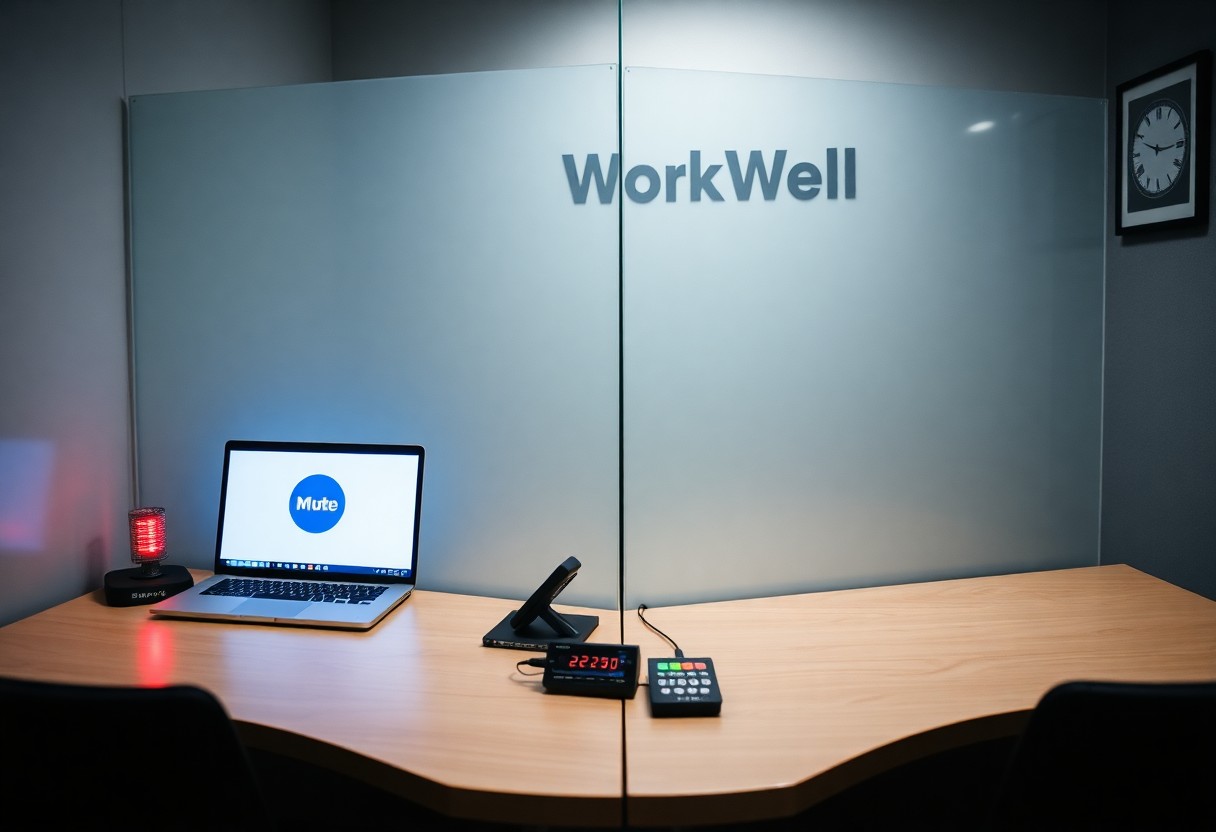
Balancing Silence and Communication
As you design policies, weigh measurable trade-offs: teams that schedule two 60-90 minute silent blocks often see a 20% uplift in deep-work output and faster delivery. At the same time, silence can hide misalignment-unaddressed issues escalate when communication drops. Use visible signals (status boards, calendar tags) and point your team to practical examples on The WorkWell Podcast for tested routines and outcome-based norms.
Collaborative Spaces vs. Silent Zones
When you plan workspace allocation, reserve at least one dedicated silent room per 8-12 people; teams that do report fewer context switches. Equip collaborative hubs with movable furniture, writable walls, and clear booking rules, while marking silent zones with visual cues and sound masking. If you mix functions without signals, you create friction and lost focus; if you over-isolate, you risk information silos. Use occupancy data and meeting-length metrics to tune the balance.
Encouraging Effective Dialogue
You can normalize concise, scheduled dialogue by enforcing meeting charters: publish agendas 24 hours ahead, cap meetings at 45 minutes, and assign clear action owners. Require async updates with 2-sentence decision summaries and promote a meeting-free block each day. Small pilots-try a two-week cap on recurring meetings-often cut meeting load by 30-40%, returning hours for focused work.
For implementation, add a decision log and a weekly 15-minute cross-team sync; one internal pilot reduced rework by 25% after adopting a register. Coach leaders to close every meeting with explicit next steps and owners, and track meeting count per person plus average length. Set a target-such as a 20% reduction in unnecessary meetings within a quarter-and iterate using those metrics.
Summing up
From above, you can see how WorkWell – The Power of Silence in the Workplace shows that intentional quiet sharpens focus, reduces stress, and improves collaboration; by setting norms, creating quiet zones, and modeling restraint, you protect deep work, increase empathy, and raise productivity.
FAQ
Q: What benefits does intentional silence bring to a workplace like WorkWell?
A: Intentional silence reduces interruptive noise and creates extended focus periods, which improves accuracy, problem-solving depth, and the ability to complete complex tasks. It lowers physiological stress by giving employees mental recovery time, supports deeper listening in meetings, and boosts creative incubation by removing constant stimulus. Teams that use silent focus blocks often report clearer priorities and faster completion of concentrated work.
Q: How can managers introduce silence without harming collaboration and spontaneity?
A: Start with small, defined practices such as daily or weekly “focus hours,” designated quiet zones, and clear signals for when silence is expected (e.g., calendar blocks or visual desk markers). Pair silence with scheduled collaboration windows, use async communication tools for updates, and set etiquette guidelines so people know when interruptions are acceptable. Train teams on switching modes-how to transition from silent focus to collaborative discussion-and solicit feedback to adjust the approach.
Q: Won’t more silence make employees feel isolated or reduce team cohesion?
A: Silence, when structured, complements social connection rather than replacing it. Preserve regular social rituals (team check-ins, lunches, brainstorming sessions) and create shared rituals that mark the end of focus periods to re-engage the group. Monitor engagement and morale through pulse surveys and one-on-ones, and offer options so individuals can opt into quieter or more social spaces. Balancing predictable collaboration times with protected focus time keeps cohesion strong while preserving the benefits of silence.
Leave a Reply