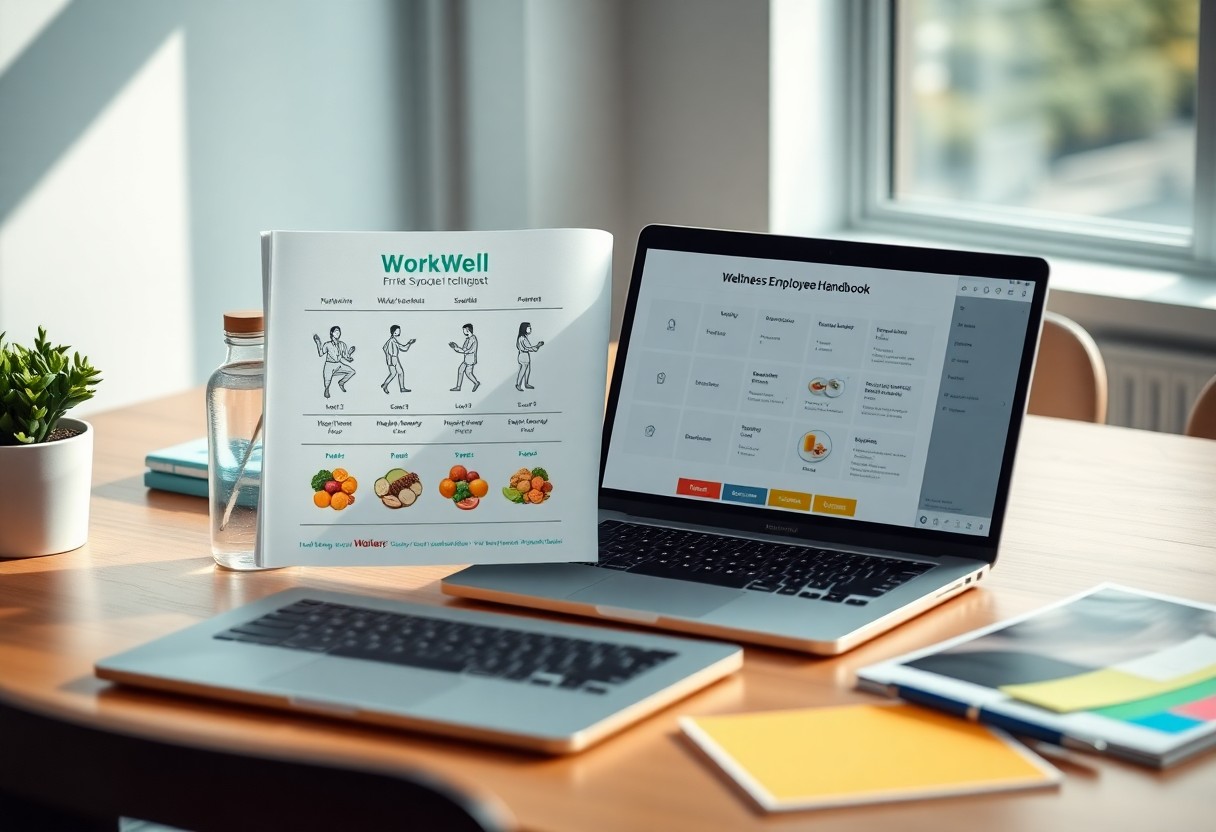
Handbook guidance helps you build policies that prioritize your team’s wellbeing, streamline expectations, and prevent burnout by setting clear boundaries; you should embed procedures that comply with employment law to avoid liability and ensure fairness, and you should promote flexible schedules and mental health support to boost retention and productivity while giving managers practical tools to measure impact.
Key Takeaways:
- Design policies that prioritize mental, physical, and social wellbeing-offer flexible work, PTO, mental-health support, and ergonomic resources.
- Keep the handbook clear and actionable with plain language, quick-reference sections, regular updates, and employee feedback loops.
- Embed wellbeing in culture through leadership modeling, inclusive benefits, privacy safeguards, and measurable wellbeing metrics.
The Importance of a Wellness-First Approach
You should treat wellness-first policies as strategic investments: companies that embed programs into daily operations report measurable gains. For example, Gallup links higher engagement to 21% greater profitability, and RAND’s meta-analysis showed wellness programs can return $1.50-$4.00 for every dollar spent. Implementing on-site screenings, flexible schedules, and mental health parity reduces both absenteeism and presenteeism, while lowering legal and occupational health risks when you provide ergonomic equipment and clear safety protocols.
Defining Wellness in the Workplace
You should define workplace wellness as physical, mental, social, and financial support that enables sustained performance. Include initiatives like annual biometric screenings, 8-week resilience training, ergonomic assessments, and access to EAPs. Successful programs set measurable KPIs-reduced sick days, improved engagement scores, and lower turnover-and tie them to HR dashboards so you can track ROI and adjust benefits based on utilization and feedback.
Benefits of Prioritizing Employee Health
When you prioritize employee health, you’ll lower absenteeism and boost productivity; studies link wellness investments to up to 30% fewer sick days and stronger engagement. Healthier teams also cut healthcare spend and turnover-some organizations report 10-20% drops in attrition after launching targeted mental health and return-to-work programs. Combine preventive care, flexible schedules, and manager training to multiply outcomes and measure impact quarterly against utilization and satisfaction metrics.
For example, a mid-size tech firm implemented on-site flu clinics, 12-week mindfulness courses, and standing-desk stipends; within 12 months they saw 35% fewer short-term disability claims, a 15% rise in engagement, and saved an estimated $250,000 in medical and productivity costs. You should set baseline metrics (claim rates, NPS, turnover) and run pilot cohorts to validate interventions before scaling, using quarterly dashboards to flag safety issues and optimize spend.
Key Components of a Wellness-First Handbook
Organize the handbook into actionable sections-policy, benefits, training, and return-to-work paths-so you can measure outcomes. Include clear PTO rules, ergonomic standards to prevent musculoskeletal injuries, and partnerships with providers such as Occupational Health. Aim for metrics: retention, engagement, and health spend, as research shows wellness programs can cut absenteeism by up to 25% when well implemented.
Health and Fitness Programs
You should list scalable options: subsidized gym memberships, on-site classes, walking meetings, and quarterly fitness challenges. Tie participation goals to incentives-financial or recognition-and track enrollment and outcomes. For example, a mid-size employer saw a 15% drop in health claims after a year of weekly classes and targeted coaching. Specify budgets, vendor SLAs, and clear eligibility so you can measure ROI.
Mental Health Support Initiatives
You must spell out confidential services: Employee Assistance Programs, therapy subsidies, manager training, and crisis protocols. Note prevalence-about 1 in 5 adults experience mental health conditions annually-so normalize access and remove barriers like high copays and complex approvals. Include clear signposting to resources, expectations for response times, and privacy assurances to build trust and increase utilization.
Drill down on access and measurement: set utilization targets (EAPs average 3-5% without outreach), aim for 10-15% in year one with active campaigns, and track wait times, satisfaction, and clinical outcomes. Offer multiple modalities-in-person counseling, teletherapy, and digital CBT-to lower barriers. Require manager training on spotting crisis signs and clear escalation steps for suicide risk or workplace safety, with vendor SLAs guaranteeing same-day triage for urgent cases.
Employee Engagement and Participation
Employee engagement drives measurable outcomes: Gallup reports teams with high engagement deliver 21% higher profitability, and wellness programs can yield 10-20% fewer sick days. You should track participation rates, Net Promoter Score for wellbeing, and retention shifts quarter-over-quarter. Use concrete targets-enrollment >60% in year one and a 10% improvement in wellbeing NPS-to prioritize initiatives and avoid mandating participation, which often reduces buy-in and trust.
Encouraging Healthy Workplace Culture
Start by having leaders model behaviors: when managers take mental-health days, you normalize them; when teams hold 15-minute daily stretch breaks, participation rises. Offer flexible schedules, quiet rooms, peer support groups, and at least one company-sponsored wellbeing event per quarter. Companies with strong culture report up to 30% lower turnover, so you should measure culture through active listening sessions and a quarterly culture score tied to manager performance.
Feedback Mechanisms for Continuous Improvement
Implement short pulse surveys (3 questions weekly) and an anonymous feedback channel; at one mid-size firm a 3-question pulse increased response from 45% to 78% in six months. You should combine quantitative pulses with monthly focus groups and a visible dashboard of actions taken. Avoid letting feedback queue unaddressed-lack of follow-up is the most common failure of wellbeing programs.
Operationalize feedback by defining SLAs: acknowledge submissions within 3 business days, resolve or assign actionable items within 14-30 days, and publish monthly status updates. Use a triage flow-urgent safety or mental-health flags escalate to HR/Occupational Health immediately, while program suggestions route to the wellbeing committee. Track closure rate, average resolution time, and employee satisfaction with resolutions to keep your system accountable.
Policies Supporting Work-Life Balance
Set clear policies that make flexible schedules, caregiving support, and recovery time standard so you provide predictability: define core hours and remote options, offer up to 2 remote days per week, provide a $500/month backup childcare stipend or contracted emergency care, and guarantee at least 5 paid mental-health days annually so employees can recover without guilt.
Flexible Work Arrangements
Allow hybrid models with core hours (e.g., 10:00-15:00), let teams choose 3 onsite days or full-remote when role permits, and document expectations for response times, meeting density, and asynchronous handoffs; pilot 3-month trials so you can measure productivity, with weekly check-ins to adjust schedules per team needs.
Leave Policies Focused on Wellness
Provide a mix of paid options so you support varied needs: separate 5-10 wellness or mental-health days apart from PTO, 12 weeks parental leave, short-term disability at defined rates, plus caregiver and bereavement leave; set clear eligibility, payout, and confidentiality rules so employees use benefits without stigma.
Operationalize by letting employees take up to 3 consecutive wellness days without a doctor’s note, require simple self-certification for single days, and have managers approve longer leaves within 48 hours; track utilization anonymously each quarter and link trends to turnover and engagement so you can adjust offerings and budget for projected usage.
Training and Development for Wellness Practices
Integrate practical training into regular workflows by offering short, actionable modules-5-15 minutes microlearning, plus quarterly 60-90 minute deep dives-that you can complete during work hours. Use measurable goals such as reducing absenteeism by 10-20% or improving engagement scores by a point on pulse surveys. Equip managers with coaching tools and track outcomes through HR metrics; failure to train managers is the most dangerous gap, while well-structured programs often yield noticeable gains within 3-6 months.
Workshops and Seminars
Schedule focused workshops on topics like sleep hygiene, ergonomic setup, and stress resilience-run 1-2 times per quarter and capped at 90 minutes for attention retention. Bring licensed facilitators for hands-on practice and follow-up resources, and pilot cohorts where you track pre/post stress or productivity metrics. Many organizations report pilot cohorts seeing roughly a 20-30% drop in self-reported stress within a month when workshops include practical homework and manager support.
Resources for Self-Care and Management
Provide a curated library of on-demand resources-guided meditations, 10-15 minute stretching videos, sleep tips, and cognitive behavioral worksheets-that employees can access anytime. Pair subscriptions (e.g., mindfulness apps) with an easy manager approval process and clear usage metrics so you can measure uptake; otherwise resources stay unused and the investment is wasted. Aim for simple, searchable channels and a baseline of 2 hours per month allotted for self-care.
Operationalize resources by offering a $100-$200 ergonomic stipend, company-paid app subscriptions for 100% of staff, and a searchable portal with 50+ short videos and tools. Train managers to model use and mandate 1:1 check-ins that include wellness goals; track adoption rates and set a target-such as 80% monthly engagement-to ensure impact. If you neglect follow-through, utilization falls below 25% and benefits evaporate, so build reporting into quarterly reviews.
Measuring the Impact of a Wellness-First Handbook
Tie measurement directly to outcomes you care about: baseline and follow-up comparisons of participation rate, absenteeism, healthcare claims, engagement scores and retention. Use quarterly checkpoints at 3, 6 and 12 months, and compare to a baseline period to quantify change. For example, target a >50% participation rate within six months and a measurable drop in sick days or short-term leaves to demonstrate the handbook is driving behavior and value.
Metrics for Success
Track a mix of utilization and outcome metrics: monthly benefit utilization, pulse survey NPS, turnover rate, average sick days per employee, and program ROI. Combine quantitative data with qualitative inputs like focus groups and exit interviews. You can set thresholds-such as under 40% participation triggers a review-or tie wellness KPIs to manager performance to ensure accountability and sustained improvement.
Continual Assessment and Adaptation
Build a feedback loop that uses real-time HRIS data, quarterly pulse surveys, and small pilots to iterate policies. When you see signs of declining participation or gaps in access, run A/B tests on communications, eligibility rules, or program formats. That iterative approach prevents policy stagnation and keeps benefits aligned with evolving employee needs.
Operationally, implement three practical steps: run a 3-question pulse each quarter to capture temperature, review utilization and claims monthly for early signals, and pilot changes with 5-10% of teams before scaling. Use dashboards that display participation, cost per participant, and engagement deltas; flag any policy gaps or sharp cost increases for immediate review. Finally, assign a cross-functional owner to translate data into policy updates every six months so your handbook stays evidence-driven and responsive.
To wrap up
With these considerations, you can finalize WorkWell – Designing a Wellness-First Employee Handbook to center your organization’s wellbeing while maintaining clarity and legal compliance. Make policies actionable and inclusive, align leaders with practice, provide accessible resources and clear procedures, and measure outcomes so you can iterate and sustain engagement. This approach ensures the handbook becomes a practical tool that supports your workforce’s health and productivity.
FAQ
Q: What core sections should a wellness-first employee handbook contain to effectively support employee well-being?
A: Begin with a clear wellness vision and purpose statement that ties employee health to organizational values and outcomes. Include these core sections: comprehensive benefits and leave policies (mental health leave, caregiving leave, parental leave, flexible scheduling); behavioral health and EAP details; physical wellness supports (ergonomics, on-site or stipend-based fitness, healthy food options); workplace design and hybrid work guidelines; accommodations and disability access; confidentiality and data privacy protocols for health information; manager responsibilities and training on mental health awareness and supportive conversations; procedures for reporting safety or harassment incidents; resource directories with internal and external providers; onboarding and ongoing education programs; measurement and feedback mechanisms. Use plain, inclusive language, provide examples and FAQs for application scenarios, and add quick-reference checklists and decision trees to help employees and managers apply policies consistently.
Q: How should organizations roll out a wellness-first handbook to maximize adoption and manager buy-in?
A: Use a phased launch that begins with stakeholder engagement-HR, legal, leadership, frontline managers, and employee representatives-to co-design priorities and pilot language. Have leaders model behaviors tied to the handbook (e.g., using flexible work policies). Deliver a multi-channel communication plan: handbook microsite, interactive FAQs, short manager toolkits, team meetings, and onboarding integration. Provide manager training focused on applying policies, having supportive conversations, and handling accommodations. Create wellness champions in teams to promote uptake and gather feedback. Pilot new policies with a subset of teams, collect feedback, refine, then scale. Track adoption through simple metrics (policy acknowledgment rates, training completion) and offer refreshers or office hours for questions. Maintain an issues log to capture edge cases and update guidance promptly.
Q: What metrics and processes should be used to evaluate the handbook’s impact and keep it up to date?
A: Define a balanced measurement approach combining utilization, experience, and business outcomes. Track utilization of wellness programs and EAPs, training completion and manager coaching activity, employee engagement and well-being survey items, absenteeism and short-term disability trends, internal mobility and retention rates, and qualitative feedback from focus groups. Aggregate health-related data to preserve privacy and comply with applicable laws. Establish review triggers: annual comprehensive review plus ad hoc updates for legal changes, major benefit shifts, or notable feedback patterns. Maintain an employee advisory group to surface frontline needs and test proposed revisions. Use A/B testing for communications and pilot modest policy tweaks before broad rollout to measure effect. Publish an annual summary of updates and high-level outcomes to maintain transparency and trust.
Leave a Reply